

Introduction
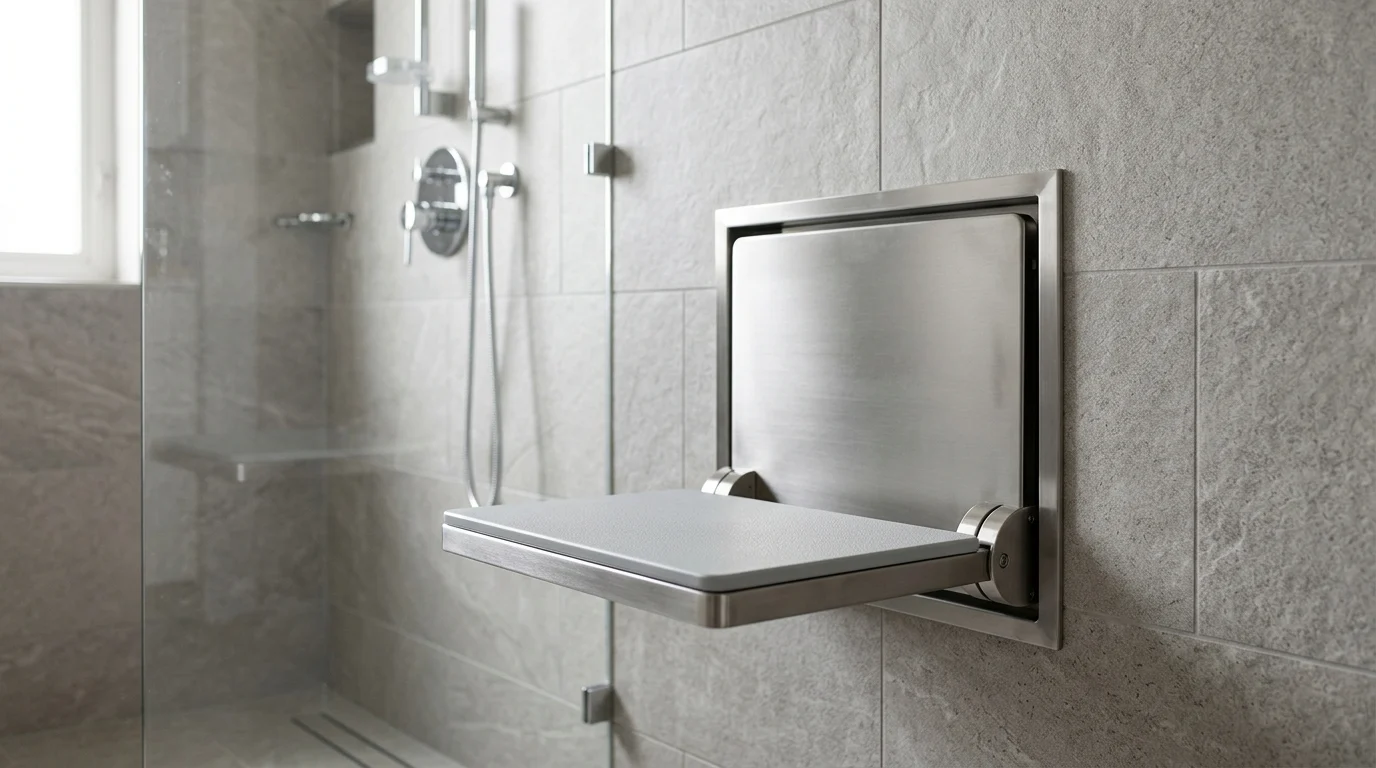
A premium concealed shower seat shows how contemporary bathrooms can support accessibility without looking clinical or visually heavy. Rather than treating seating as an add-on, designers now integrate it into the wall plane so the space stays clean, minimal, and architecturally coherent. This article explains why that matters across hospitality, residential, and care settings, and what makes a concealed model genuinely premium—from material quality and load-bearing performance to user comfort, safety, and installation strategy. It also sets out how these seats help specifiers balance universal design goals, commercial expectations, and refined spatial aesthetics in one solution.
Why Premium Concealed Shower Seats Matter
Modern architectural design increasingly rejects the dichotomy between high-end aesthetics and inclusive functionality. The premium concealed shower seat represents this paradigm shift, transforming a traditionally utilitarian accessibility aid into a sophisticated architectural feature. Driven by an estimated 8.5% compound annual growth rate in the luxury accessible fixture market, specifiers are moving away from bulky, institutional seating toward seamlessly integrated solutions.
By prioritizing both visual minimalism and structural integrity, these concealed systems allow architects to design universally accessible spaces without compromising the overarching design narrative.
Market demand across hospitality, residential, and healthcare
In the hospitality sector, the demand for spa-like environments necessitates fixtures that cater to diverse guest profiles without visually cluttering the space. High-end hotels are adopting concealed seats to maintain sleek, minimalist shower enclosures while remaining fully accessible to guests with varying mobility needs. The residential market is experiencing a similar surge, driven largely by an aging-in-place demographic seeking ergonomic support without the stigma of clinical medical equipment.
Furthermore, modern healthcare and assisted living facilities are transitioning toward resort-style recovery rooms. By integrating premium concealed seating, these institutions prioritize patient dignity and environmental aesthetics, which are increasingly recognized as vital components in accelerating the healing process.
Accessibility and commercial drivers
Beyond aesthetic integration, commercial drivers strongly support the specification of premium concealed seating. Hospitality operators report that universally designed luxury rooms can command Average Daily Rate (ADR) premiums of up to 15%, as these spaces appeal equally to able-bodied guests seeking a luxury spa experience and individuals requiring mobility support.
The space-saving nature of a foldaway seat also maximizes the usable footprint within high-value urban real estate. It allows for smaller overall bathroom dimensions—saving critical square footage across a multi-unit development—without violating mandatory accessibility clearances or compromising the premium user experience.
What Defines a Premium Concealed Shower Seat
A premium concealed shower seat is defined by its ability to completely disappear into the architectural envelope when stowed, while delivering uncompromised structural integrity when deployed. The distinction between a standard folding shower seat and a premium concealed unit lies in the precision of its engineering, the caliber of its materials, and its kinetic performance.
Design and engineering features
High-end concealed seats feature ultra-slim profiles, often protruding less than 1.5 inches (38mm) from the finished wall surface when folded, or recessing flush into a pre-built wall cavity. This level of integration requires exact manufacturing tolerances and sophisticated kinetic hardware.
Advanced engineering integrates soft-close mechanisms and gas-assisted dampening struts, ensuring the seat glides down smoothly without dropping abruptly. This dampening technology not only enhances the tactile user experience but also prevents impact damage to the hinges and surrounding tile over the product’s operational lifespan.
Materials, load capacity, and hinge performance
Material selection dictates both the aesthetic longevity and the load-bearing capabilities of the fixture in highly corrosive wet environments. Premium models utilize marine-grade 316L stainless steel or heavy-duty extruded aluminum for their structural frames, paired with seating surfaces crafted from phenolic resin, polyurethane, or sustainably sourced teak.
These assemblies are rigorously tested to support static loads ranging from 400 to over 500 pounds (181-227 kg), far exceeding standard commercial requirements. Furthermore, the hinge mechanisms undergo extensive cycle testing, frequently certified to withstand 50,000 folding cycles to guarantee uninterrupted performance in high-traffic commercial environments.
Material | Corrosion Resistance | Max Load Capacity (lbs) | Aesthetic Profile |
316L Stainless Steel | Exceptional | 500+ | Sleek, modern, highly reflective or brushed |
Extruded Aluminum | High | 400 | Matte, lightweight, easily powder-coated |
Phenolic Resin (Seat) | High | N/A (Surface) | Minimalist, highly durable, custom colors |
Teak Wood (Seat) | Moderate to High | N/A (Surface) | Organic, warm, requires periodic oiling |
Balancing Aesthetics and Safety
Achieving a seamless look in a wet environment requires a careful balance between sleek architectural lines and the rigorous safety demands of a shower enclosure. Specifiers must navigate the intersection of visual integration, ergonomic support, and long-term maintainability.
Flush profiles and coordinated finishes
To achieve a truly flush profile, recessed models require precise wall cavity depths, typically ranging from 3 to 4 inches. This architectural integration allows the seat to sit perfectly level with the surrounding tile, stone, or solid surface material, rendering it virtually invisible when not in use.
Coordinated finishes are critical for premium positioning. Leading manufacturers utilize Physical Vapor Deposition (PVD) to match the seat hardware with other bathroom fixtures. This ensures that custom finishes—such as matte black, brushed brass, and polished nickel—not only match the overarching design scheme but also resist the harsh chemicals found in commercial cleaning agents and hard water.
Safety, comfort, and maintenance trade-offs
While ultra-slim designs are visually appealing, they must never compromise user safety or comfort. Seating surfaces must achieve a dynamic coefficient of friction (DCOF) greater than 0.60 to prevent slipping in wet, soapy conditions. Specifiers face trade-offs between a completely flat, minimalist seating plane and ergonomically contoured designs that offer superior water drainage and posterior support.
Maintenance plays a crucial role in this balance. Premium designs eliminate exposed springs and complex hinge geometries, removing the dirt traps where mold, mildew, and soap scum typically accumulate. This streamlined approach significantly reduces housekeeping labor in commercial settings while maintaining pristine aesthetics.
Specification, Compliance, and Installation
The successful integration of a concealed shower seat relies heavily on meticulous specification, adherence to building codes, and flawless execution during the rough-in construction phase. Neglecting these technical parameters can result in structural failure or compromised waterproofing.
Codes, accessibility, and project requirements
Compliance with the Americans with Disabilities Act (ADA) and similar international accessibility codes dictates strict dimensional and performance criteria. ADA guidelines require shower seats to be mounted at a height of 17 to 19 inches (432-483mm) above the finished floor and support a minimum static load of 250 pounds.
However, premium concealed seats often engineer their structural capacities to double this baseline, providing a wider safety margin for bariatric use. Specifiers must ensure that the selected model maintains compliance with the geometric requirements of L-shaped or rectangular seat profiles while delivering these enhanced capacities.
Installation steps that reduce risk
The primary risk in shower seat installation is structural failure and subsequent moisture intrusion. Mitigating this risk requires robust in-wall blocking—typically utilizing heavy-gauge steel plates or dense solid wood blocking spanning multiple studs—installed during the initial framing phase.
Waterproofing the recess or mounting points is equally critical. Installers must use liquid-applied waterproof membranes or specialized flanged rough-in boxes that integrate seamlessly with the shower’s overall moisture barrier, ensuring zero water penetration into the structural cavity behind the hinges.
How to Choose the Right Option
Selecting the optimal concealed shower seat requires a systematic evaluation of the project’s specific architectural goals, user demographics, and long-term operational budget. Decision-makers must look beyond the initial visual appeal to assess lifecycle value.
Evaluation framework for decision-makers
Architects and procurement teams should utilize a structured evaluation framework that weighs upfront capital expenditure against lifecycle durability. Premium concealed shower seats generally fall into cost bands ranging from $500 for high-quality surface-mounted folding seats to upwards of $2,500 for fully customized, flush-recessed models with PVD hardware.
Evaluating the expected usage frequency—whether for a private luxury residence, a high-turnover boutique hotel, or a demanding healthcare environment—will dictate which price band and corresponding material specification offers the most secure return on investment.
Tier | Price Band (USD) | Typical Materials | Ideal Application |
Entry-Premium | $500 – $900 | Aluminum frame, polyurethane seat | High-end residential, assisted living |
Mid-Premium | $900 – $1,500 | 304 Stainless, phenolic resin | Boutique hospitality, luxury apartments |
Ultra-Premium | $1,500 – $2,500+ | 316L Stainless, teak, custom PVD | Five-star resorts, custom architectural builds |
Factors that support the final selection
The final selection should be supported by factors that guarantee long-term performance and mitigate liability. Specifiers must prioritize manufacturers that offer comprehensive warranties, ideally providing 5-year to lifetime coverage on the structural hardware and kinetic hinge mechanisms.
Post-installation support is equally vital. The availability of replacement dampening struts, kinetic hardware, or seating pads ensures that the fixture can be maintained over decades without requiring invasive tear-outs of the surrounding shower waterproofing. By aligning these robust support factors with rigorous engineering standards, architects can confidently deliver both uncompromising aesthetics and essential safety.
Key Takeaways
- The most important conclusions and rationale for Premium Concealed Shower Seat
- Specs, compliance, and risk checks worth validating before you commit
- Practical next steps and caveats readers can apply immediately
Frequently Asked Questions
What makes a premium concealed shower seat different from a standard folding seat?
A premium concealed seat folds nearly flush into the wall, uses higher-grade materials, and offers smoother, safer deployment with stronger load performance.
Why is a concealed shower seat a good fit for modern bathroom design?
It preserves clean lines and visual calm while adding practical support, matching Cassbern’s focus on elegant, space-smart bathroom solutions.
Which materials are best for a premium concealed shower seat?
316L stainless steel and extruded aluminum are top choices for wet areas because they resist corrosion, support high loads, and keep a refined finish.
How much wall depth is typically needed for a recessed concealed shower seat?
Most recessed models need about 3 to 4 inches of wall cavity depth for a flush installation, so planning should happen early in the design stage.
Where are premium concealed shower seats most commonly used?
They are popular in luxury homes, hotels, spas, healthcare suites, and aging-in-place bathrooms where both accessibility and upscale aesthetics matter.


