

Introduction
A shower seat can shape both the look and usability of a premium bathroom more than many fixtures do. The right choice needs to balance visual cohesion with practical factors such as material durability, weight capacity, comfort, installation method, and how the seat performs in a wet-room setting over time. This article explains how to evaluate those details without compromising a refined design scheme, whether your space leans minimalist, classic, or hospitality-inspired. By the end, you’ll have a clear framework for selecting a shower seat that supports comfort, accessibility, and a polished high-end finish.
Why the Right Shower Seat Matters in Premium Bathrooms
In high-end architectural design, bathrooms have evolved from strictly utilitarian zones into sophisticated wellness sanctuaries. Specifying the perfect shower seat is no longer an afterthought relegated to basic accessibility checklists; it is a critical design decision bridging ergonomic function with interior aesthetics. For architects, interior designers, and procurement managers, understanding the nuanced interplay between material science, structural engineering, and design language is essential for delivering premium wet-room environments.
Impact on comfort and perceived luxury
The transition from purely functional, institutional mobility aids to design-forward seating solutions directly influences user experience and property valuation. In luxury hospitality and elite residential projects, integrating a premium shower seat can elevate the perceived value of the space. Industry data indicates that wellness-focused bathroom upgrades, including architectural seating, can contribute to a 12% to 15% increase in Average Daily Rates (ADR) for premium hotel suites.
Comfort in this context extends beyond physical support. It encompasses the tactile experience of the materials, the fluid mechanics of folding mechanisms, and the visual harmony with surrounding fixtures. A well-specified seat eliminates the clinical stigma historically associated with accessible bathrooms, replacing it with a spa-like ambiance that appeals to a broad demographic, from aging-in-place homeowners to luxury resort guests.
Project types and selection priorities
Different environments dictate distinct specification priorities. High-end residential projects often prioritize seamless aesthetic integration and bespoke finishes, whereas commercial healthcare facilities demand rigorous infection control, leveraging non-porous materials capable of withstanding harsh hospital-grade disinfectants. Hospitality projects typically sit at the intersection, requiring both robust durability for high turnover and refined aesthetics.
Project Type | Primary Priority | Typical Material Specification | Target Budget Band (USD) |
Luxury Hospitality | Aesthetic integration & durability | Teak / PVD Coated Stainless Steel | $500 – $1,200 |
High-End Residential | Customization & tactile comfort | Solid Surface / Phenolic | $300 – $900 |
Premium Healthcare | Infection control & bariatric safety | 316 Stainless / White Phenolic | $400 – $1,500 |
How to Evaluate Shower Seat Design and Performance
Evaluating a shower seat requires a rigorous analysis of structural performance, spatial footprint, and material longevity. The ideal fixture must withstand constant exposure to moisture, fluctuating temperatures, and variable dynamic loads without compromising its aesthetic integrity or mechanical functionality.
Seat types, mounting methods, and materials
The architecture of the seat determines its spatial efficiency. Wall-mounted folding seats remain the industry standard for optimizing square footage in premium walk-in showers. These units rely on robust hinge mechanisms, often utilizing tension-calibrated springs to ensure a smooth, controlled descent and effortless stowing. Floor-supported models are specified when wall structures cannot accommodate the necessary shear loads, though they require careful detailing to maintain a minimalist aesthetic.
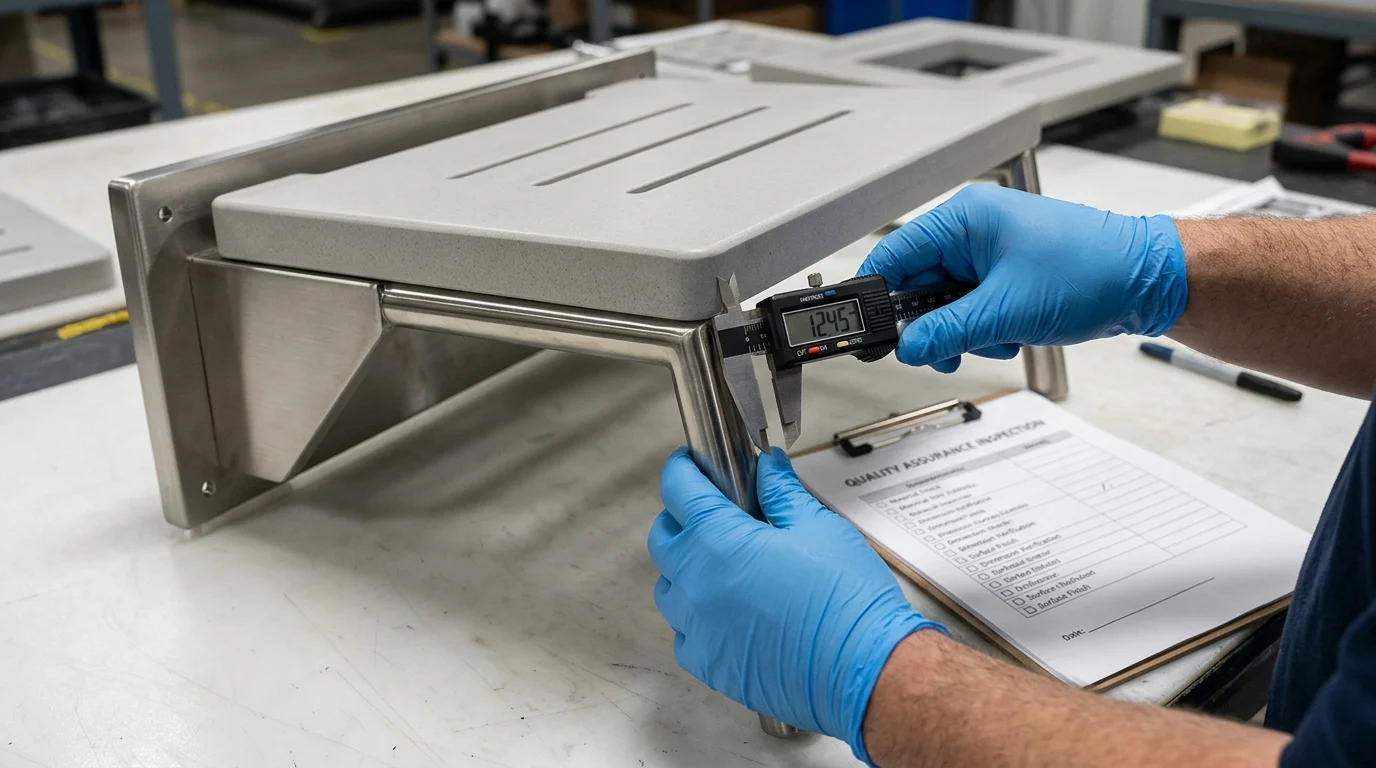
Material selection dictates both the lifecycle and the maintenance protocol of the seat. High-moisture environments necessitate exceptional corrosion resistance. Marine-grade 316 stainless steell](https://cassbern.com/product/stainless-steel-basin-with-towel-bar) is highly recommended over standard 304 stainless due to its higher molybdenum content, which provides superior resistance to pitting and crevice corrosion (achieving a Pitting Resistance Equivalent Number, or PREN, greater than 23). For the seating surface, solid phenolic core panels offer a non-porous, highly durable option, while sustainably sourced Burmese teak provides natural water resistance and a premium organic aesthetic.
Load capacity, dimensions, and drainage
Structural integrity is a non-negotiable metric. Standard commercial shower seats must support a minimum static load of 250 pounds, but premium specifications frequently demand capacities of 400 to 500 pounds to accommodate diverse user profiles. Specialized bariatric models push these thresholds further, engineered to support between 800 and 1,000 pounds through reinforced gussets and heavy-duty floor stanchions.
Ergonomic dimensions heavily influence user comfort. A standard seat depth of 15 to 16 inches provides adequate thigh support without encroaching excessively on the shower footprint. Furthermore, efficient water management is critical; seating surfaces must incorporate precision-milled drainage slots—typically optimized at 0.25 inches in width—to facilitate rapid water shedding, prevent pooling, and mitigate slip hazards while ensuring fingers cannot be entrapped.
Codes, Safety, and Accessibility Requirements
Regulatory compliance forms the baseline of any commercial or high-end residential specification. Navigating the matrix of accessibility codes and safety standards ensures that the selected shower seat not only meets statutory requirements but also delivers uncompromising safety for all users.
Key compliance standards for specification
In the United States, the Americans with Disabilities Act (ADA) provides strict parameters for shower seat installations under Section 610. To achieve compliance, the top of the seat must be installed at a precise height of 17 to 19 inches above the finished floor (AFF). This specific elevation is engineered to facilitate safe, lateral transfers from standard wheelchairs.
Clearance and positioning are equally regulated. Rectangular seats must be positioned closely to the shower controls, with a maximum distance of 3 inches from the adjacent wall, while L-shaped seats require specific dimensions for the main seating area and the rear extension. Specifiers must rigorously cross-reference these federal guidelines with local municipal building codes, which occasionally impose more stringent spatial tolerances.
Safety factors to compare across options
Beyond statutory compliance, engineers must evaluate the dynamic safety factors of the specified hardware. A high-quality shower seat should be engineered with a safety factor of 2.5x to 3x its rated load to prevent catastrophic failure under sudden dynamic impact. Additionally, the coefficient of friction on the seating surface must be evaluated to ensure adequate slip resistance in wet conditions.
Standard / Metric | Specification Threshold | Rationale |
Seat Elevation | 17 to 19 inches AFF | Ensures optimal ergonomic transfer height for wheelchair users. |
Structural Safety Factor | 2.5x to 3x rated load | Prevents structural failure from sudden dynamic impacts or user drops. |
Wall Clearance | 1.5 inches (minimum behind seat) | Allows proper water shedding and prevents mold/bacteria accumulation. |
How to Specify and Source the Best Shower Seat
Procuring the ideal shower fixture involves aligning architectural intent with supply chain realities. A systematic approach to specification and sourcing mitigates installation failures, prevents project delays, and guarantees long-term operational success.
Step-by-step specification process
The specification process begins long before the finished surfaces are applied. The most critical step is engineering the in-wall backing infrastructure. A premium wall-mounted seat requires substantial blocking—typically 2×6 or 2×8 solid wood framing, or heavy-gauge steel plates—installed directly between the studs. Fastener pull-out strength is paramount; structural engineers generally require anchoring systems capable of withstanding a minimum of 1,000 pounds of shear force.
Once the structural prerequisites are detailed, specifiers must define the exact finish codes. High-end projects often utilize Physical Vapor Deposition (PVD) coatings to match shower seats with adjacent brassware, such as brushed nickel, matte black, or satin brass. Ensuring finish parity across different manufacturers requires securing physical finish samples during the submittal phase.
Final Selection Criteria
The ultimate specification decision requires a holistic evaluation of the project’s unique demands. Selecting the perfect shower seat is an exercise in balancing uncompromising safety standards with elevated design principles, ensuring the fixture enhances the space rather than detracting from it.

Key Takeaways
- The most important conclusions and rationale for Perfect Shower Seat
- Specs, compliance, and risk checks worth validating before you commit
- Practical next steps and caveats readers can apply immediately
Frequently Asked Questions
What type of shower seat works best in a premium bathroom?
A wall-mounted folding seat is usually best. It saves space, keeps the shower sleek, and fits Cassbern’s modern, design-led bathroom style.
Which materials are best for a high-end shower seat?
Choose 316 stainless steel, solid phenolic, or teak. They resist moisture well and pair beautifully with premium fixtures and contemporary finishes.
How much weight should a quality shower seat support?
Look for at least 250 lb capacity, but 400–500 lb is a better premium standard for comfort, safety, and wider user needs.
What size shower seat is most comfortable?
A seat depth around 15–16 inches is a practical choice. It offers good support without taking up too much room in a walk-in shower.
How can I match a shower seat to my bathroom style?
Coordinate the seat finish and shape with your shower system, basin, and storage. Cassbern-inspired spaces look best with clean lines, premium textures, and minimal hardware.


