

Introduction
Consumer expectations for seated showering now vary sharply by region, shaped by aging populations, luxury hospitality standards, accessibility codes, and cultural preferences around bathing. This article examines how premium seated showering is evolving across Europe, the United States, and the Middle East, with attention to design language, material choices, installation formats, and purchasing drivers. Readers will gain a clearer view of where demand is strongest, which features command premium value, and how regional differences influence product positioning for residential, hospitality, and high-end development projects. With that context in place, the discussion turns to why this category has moved from practical support feature to strategic premium offering.
Why Premium Seated Showering Is a Strategic Category
The bathroom fixture industry is undergoing a profound transformation, shifting away from purely utilitarian designs toward integrated wellness and universal accessibility. Within this evolution, premium seated showering has emerged as a highly strategic category. Once relegated to the clinical or institutional sectors as basic mobility aids, shower seating has been successfully repositioned as a luxury amenity.
Manufacturers and specifiers are now capitalizing on the intersection of high-end residential design and demographic shifts. By integrating high-performance materials with sophisticated aesthetics, brands can capture substantial margin premiums while addressing a rapidly expanding global demographic.
Definitions, use cases, and market scope
Premium seated showering encompasses a range of high-end fixtures designed to provide comfort, safety, and spa-like experiences within the shower enclosure. The product scope includes fold-down seats featuring marine-grade hardware, built-in tiled benches with integrated radiant heating, and freestanding ergonomic stools crafted from advanced composites or exotic hardwoods.
The market scope for these products has broadened significantly. Industry data indicates that the global market for premium bathroom accessories is expanding at a compound annual growth rate (CAGR) of approximately 6.5%, but the specific sub-segment of luxury accessibility fixtures is outpacing this, growing at an estimated 8.2% annually. This accelerated growth is driven by the realization that ergonomic support is no longer a niche requirement but a mainstream expectation in luxury residential and commercial developments.
Accessibility, aging populations, and hospitality demand
Demographic realities are the primary catalyst for this category’s expansion. By 2030, the World Health Organization projects that one in six people globally will be aged 60 or older. This “aging in place” movement dictates that residential bathrooms must accommodate changing mobility needs without sacrificing aesthetic appeal. Consumers are proactively investing in premium shower seats to future-proof their homes.
Simultaneously, the hospitality sector is a major demand driver. Luxury hotels are adopting universal design principles to cater to a diverse guest profile without making rooms look institutional. Procurement data from major hospitality brands reveals a 35% increase in the specification of integrated, high-end shower seating in new builds and major renovations over the past five years. Hoteliers recognize that premium seated showering enhances the perceived value of the room, offering a spa-like wellness experience that appeals to guests of all ages.
Regional Demand Drivers
While the overarching trend toward premium seated showering is global, the specific drivers of demand vary sharply across North America, Europe, and the Middle East. Strategic market entry requires a nuanced understanding of these regional idiosyncrasies, encompassing demographic profiles, architectural norms, and cultural attitudes toward bathing and wellness.
Demographic, healthcare, and residential trends
In the United States and Canada, demand is heavily influenced by the suburban residential landscape and an aging baby boomer population. The prevailing trend is “aging in place,” where homeowners retrofit large, single-family homes to ensure long-term usability. Here, the focus is on integrating seating into expansive master bathrooms.
Conversely, European demand is shaped by denser urban living and multi-generational households. With smaller average floor plans, the emphasis is on space-saving, fold-away seating solutions that do not permanently footprint the shower area. In the Middle East, the dynamic shifts toward ultra-luxury residential compounds and high-end hospitality, where seated showering is viewed as an extension of the traditional hammam experience, demanding opulent materials and permanent, built-in structures.
Renovation cycles, wellness positioning, and institutional demand
Renovation cycles also dictate market velocity. In Europe, the average bathroom renovation cycle spans 15 to 20 years, necessitating highly durable, timeless designs. Consumers in this region view premium seating as a long-term capital improvement.
In the United States, wellness positioning drives shorter renovation cycles, with homeowners frequently updating master baths to incorporate steam showers and integrated seating as personal wellness retreats. Meanwhile, the Middle Eastern luxury market operates on a highly accelerated refresh rate, with high-end residential and hospitality interiors often undergoing major updates every 8 to 10 years, creating a continuous pipeline for institutional and luxury demand.
Climate, water-use expectations, and bathroom space
Regional climate and water-use expectations directly impact product design and spatial requirements. European markets, driven by strict environmental regulations and high energy costs, favor water-conserving fixtures in compact spaces; thus, shower seats must be slim and unobtrusive. European master bathrooms frequently average a compact 60 to 80 square feet.
In contrast, North American master bathrooms often exceed 160 square feet, allowing for substantial built-in benches. In the Middle East, where bathrooms can exceed 200 square feet in luxury villas, water use is less restricted, and seated showering is often paired with multi-jet, high-flow shower systems that require robust, water-resistant seating capable of withstanding prolonged moisture exposure.
Regional Market | Primary Demand Driver | Average Master Bath Size | Preferred Seating Format |
North America | Aging in place, Master bath expansions | 160+ sq ft | Large built-in benches, robust fold-down seats |
Europe | Space optimization, Multi-generational living | 60-80 sq ft | Slim, fold-away profiles, minimalist aesthetics |
Middle East | Hammam culture, Ultra-luxury wellness | 200+ sq ft | Opulent built-in seating, freestanding stone/resin |
Product Specifications and Compliance Requirements
Engineering premium seated showering solutions requires manufacturers to navigate a complex matrix of structural requirements, material science, and regulatory compliance. The challenge lies in delivering a product that meets rigorous commercial safety standards while maintaining the refined visual language expected in luxury environments.
Design features, materials, load ratings, and hygiene standards
Material selection is critical for both hygiene and aesthetics. Premium products frequently utilize marine-grade 316L stainless steel or PVD-coated brass for hinges and brackets to prevent oxidation in high-humidity environments. For the seating surfaces, manufacturers rely on naturally water-resistant hardwoods like Burmese teak, or advanced phenolic resins and solid surface composites that resist bacterial growth and mold.
Load ratings are a primary engineering constraint. In the North American premium market, products are typically engineered to support a minimum dynamic load of 400 lbs (181 kg), with many luxury brands over-engineering their brackets to withstand 500 lbs (226 kg) to exceed baseline expectations and project an image of uncompromising durability.
Safety, accessibility, plumbing, and certification requirements
Compliance with accessibility standards is non-negotiable, even in the luxury tier. In the United States, products must often align with the Americans with Disabilities Act (ADA) guidelines, which stipulate a seat height of 17 to 19 inches from the finished floor and specific dimensions for fold-down mechanisms.
In Europe, the EN 12182 standard dictates requirements for assistive products, focusing heavily on biocompatibility, pinch-point elimination, and anti-slip coefficients. Furthermore, installation hardware must comply with regional plumbing codes regarding waterproofing membranes to ensure that mounting bolts do not compromise the shower enclosure’s watertight integrity.
Trade-offs in durability, maintenance, and cost
Manufacturers must balance durability against maintenance requirements and production costs. Natural teak offers exceptional warmth and a premium tactile experience, but it requires periodic oiling to maintain its finish, which can be a deterrent in hospitality settings. Solid surface materials and phenolics offer a zero-maintenance alternative with high durability, but they entail significant upfront manufacturing costs.
The tooling costs for custom solid surface seat molds can easily exceed $15,000 per SKU. To amortize these costs effectively, manufacturers typically require a Minimum Order Quantity (MOQ) of at least 500 units. This capital-intensive production model forces brands to carefully evaluate their volume projections before introducing new ergonomic shapes or proprietary composite blends.
Sourcing, Distribution, and Go-to-Market Strategy
Successfully bringing premium seated showering products to market requires a robust go-to-market strategy that aligns sourcing capabilities with specialized distribution channels. Because these products bridge the gap between architectural hardware and luxury furnishings, standard retail paradigms are often insufficient.
Channel models across distributors, specifiers, and contractors
The channel model varies significantly by region and target audience. In the North American residential market, a two-step distribution model through decorative plumbing showrooms remains dominant. These showrooms provide the necessary physical context for consumers to evaluate the product’s weight, finish, and mechanism.
In the commercial and hospitality sectors, direct engagement with architectural specifiers and interior design firms is critical. Specifiers act as gatekeepers; if a premium shower seat is written into the master specification for a 300-room luxury hotel, the manufacturer secures a high-volume, high-margin contract. In the Middle East, the model often bypasses traditional distribution, favoring direct-to-developer sales for large-scale luxury compounds.
Customization, lead times, logistics, and installation support
Customization is a hallmark of the premium tier, but it introduces logistical complexities. High-end consumers and designers frequently demand bespoke finishes—such as brushed gold, matte black, or custom PVD coatings—to match the primary shower brassware.
While standard SKUs (e.g., polished chrome with teak) can typically be fulfilled with a 4 to 6-week lead time, custom PVD-matched brackets and bespoke seat dimensions often extend lead times to 12 to 16 weeks. To mitigate installation errors, premium brands must also supply comprehensive installation support, including precision CNC-machined mounting templates and specialized structural backing requirements for contractors.
Pricing architecture and value messaging
Pricing architecture must reflect the product’s dual value proposition: structural reliability and aesthetic luxury. Value messaging should pivot away from “disability aids” and focus entirely on “inclusive wellness” and “multi-generational luxury.”
Margins in this category are highly lucrative but require strict channel management to prevent price erosion. Manufacturers must establish clear pricing tiers that protect the margins of their showroom partners while remaining competitive in commercial bids.
Product Tier | Typical Material Composition | Estimated MSRP (USD) | Target Wholesale Margin |
Entry-Premium | ABS plastic, 304 Stainless Steel | $300 – $600 | 35% – 40% |
Mid-Luxury | Phenolic resin, 316L Stainless | $600 – $1,200 | 40% – 45% |
Ultra-Luxury | Solid surface, Teak, PVD Brass | $1,200 – $2,500+ | 45% – 55% |
Decision Framework for Market Entry and Expansion
For manufacturers evaluating market entry or portfolio expansion into premium seated showering, a rigorous decision framework is essential. Success depends on accurately assessing regional readiness, aligning product tiers with local purchasing power, and executing a phased rollout that minimizes capital risk.
Prioritizing regions, product tiers, and customer segments
The first step is prioritizing regions and customer segments based on a matrix of demographic urgency and luxury spending power. North America and Europe offer immediate, high-volume opportunities driven by aging populations and established renovation markets. These regions are ideal for mid-luxury, ADA/EN-compliant fold-down seats.
Conversely, the Middle East represents a lower-volume but higher-margin opportunity, perfect for ultra-luxury, bespoke seating solutions targeting the hospitality and ultra-high-net-worth residential segments. Brands must align their R&D and certification budgets with the specific regulatory hurdles of their prioritized region.
Implementation steps to reduce risk and improve adoption
To reduce risk, manufacturers should adopt a phased implementation strategy. Rather than launching a comprehensive global catalog, brands can initiate market entry through targeted hospitality pilot projects. Securing placement in a boutique luxury hotel builds brand equity and provides real-world durability testing.
Financially, a phased entry into a new major market (e.g., a European brand entering the US) typically requires $250,000 to $500,000 in localized certification (like IAPMO/UPC), tooling adaptations, and targeted B2B marketing spend. Companies should forecast a 24 to 36-month runway before achieving break-even on these initial market entry investments.
Signals of portfolio fit and long-term potential
Long-term potential and portfolio fit can be measured through specific performance signals. A strong indicator of success is a high attachment rate—for instance, if 20% of a brand’s premium thermostatic shower valve sales are accompanied by a shower seat purchase, the portfolio integration is successful.
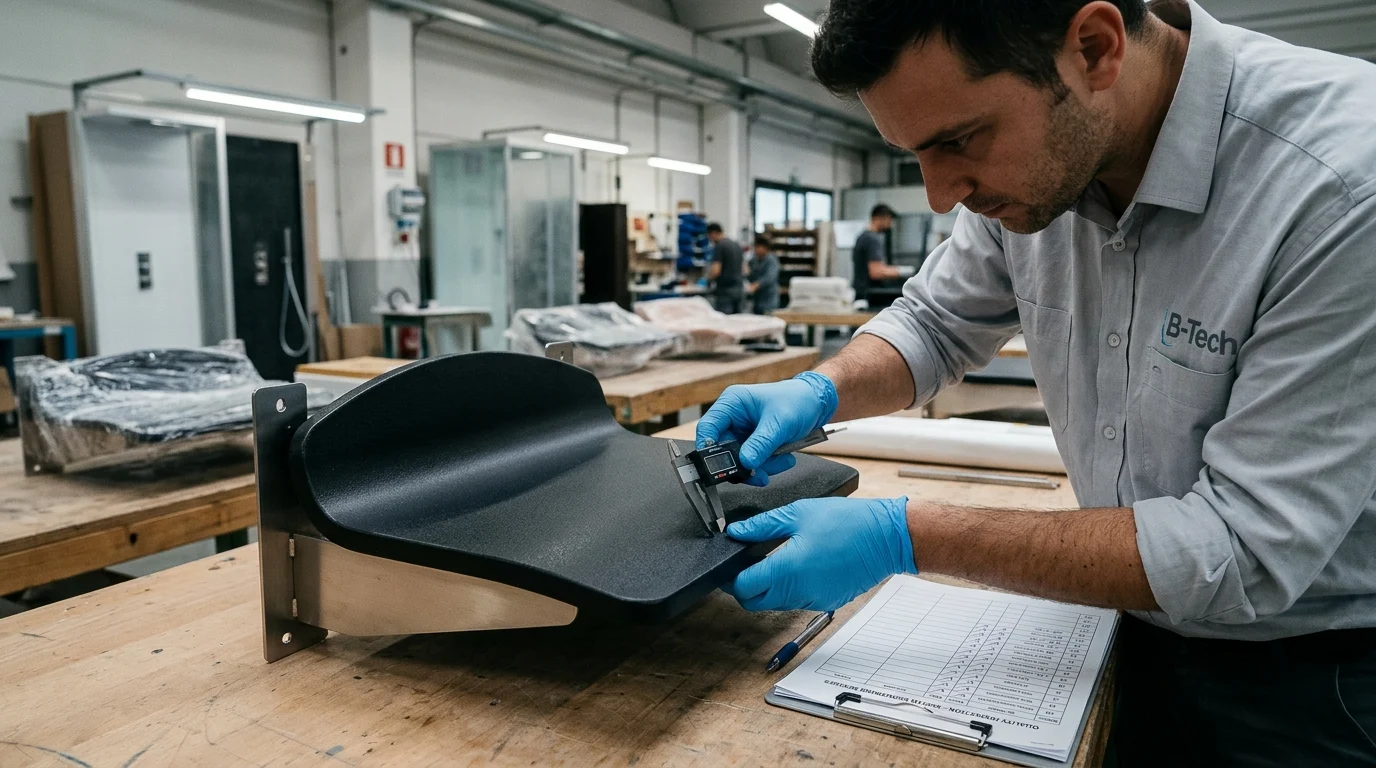
Furthermore, quality control metrics are paramount.
Key Takeaways
- The most important conclusions and rationale for Premium Seated Showering
- Specs, compliance, and risk checks worth validating before you commit
- Practical next steps and caveats readers can apply immediately
Frequently Asked Questions
What is premium seated showering?
It refers to high-end shower seats or benches designed for comfort, safety, and spa-like style. Common options include fold-down seats, built-in benches, and ergonomic stools with premium finishes.
Why is premium seated showering growing in demand?
It combines luxury, accessibility, and wellness. Aging-in-place needs, hotel upgrades, and modern bathroom design are pushing more homeowners and specifiers to add seating without sacrificing elegance.
How does demand differ in North America?
In the U.S. and Canada, it is driven by aging homeowners and large master bath renovations. Buyers usually want integrated seating that supports long-term use and a wellness-focused bathroom.
What matters most in European markets?
Space-saving design and durability. European buyers often prefer fold-away or compact seating that fits smaller bathrooms and lasts through long renovation cycles.
How is premium seated showering positioned in the Middle East?
It is often treated as part of ultra-luxury and hammam-inspired bathroom design. Permanent built-in seating, rich materials, and a polished finish are typically preferred.


