

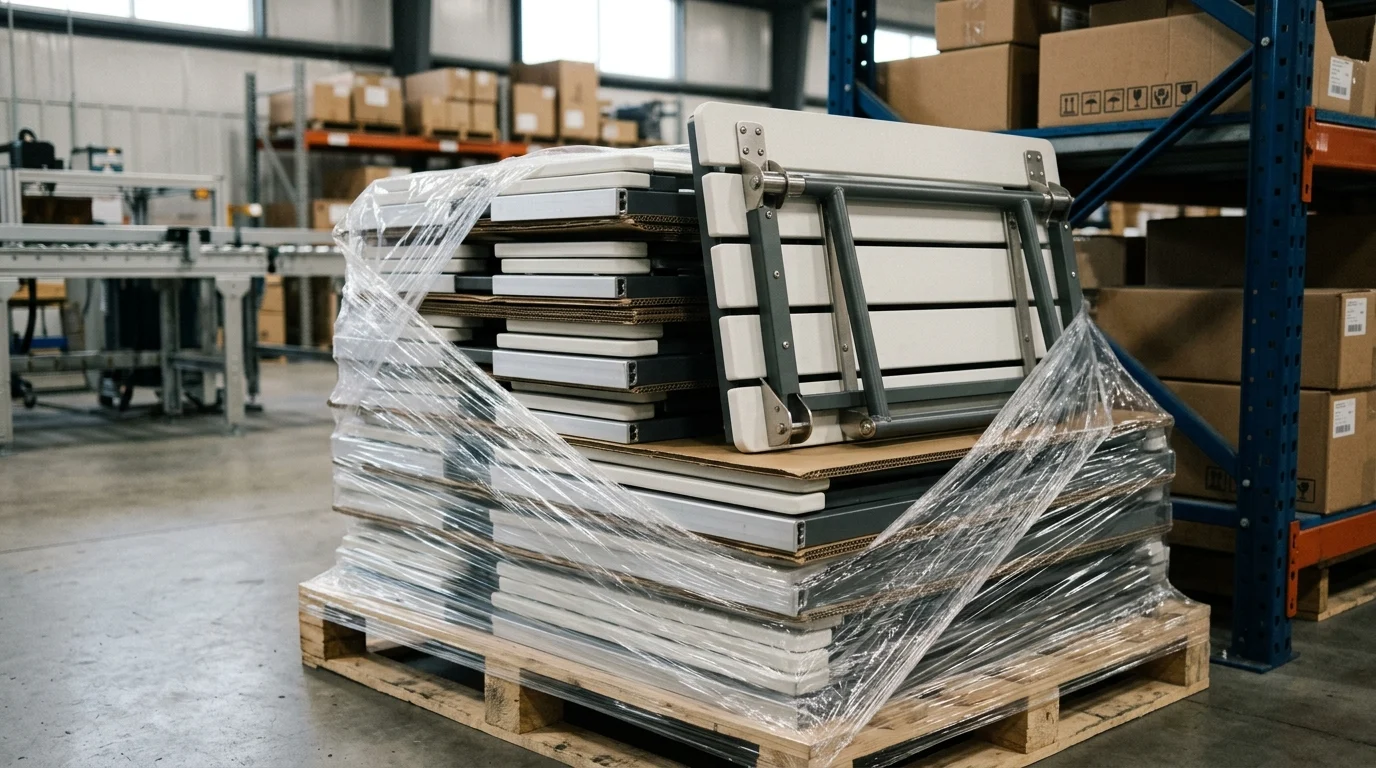
A shower seat may look like a small accessory, but in a wet bathroom environment it functions as a structural safety component. The wrong material can corrode, harbor bacteria, loosen at the hinge, or fail under repeated loading long before the space reaches its intended service life. This guide compares the practical strengths and limitations of stainless steel, aluminum, phenolic, teak, and plastic options for a folding wall mounted seat, with attention to moisture resistance, cleaning chemicals, usage frequency, and lifecycle cost. For design-conscious projects, the goal is not simply durability or elegance—it is selecting a material that supports both enduring performance and a refined bathroom experience.
Why Folding Wall Mounted Shower Seat Materials Matter
The specification of a folding wall mounted shower seat demands rigorous material evaluation due to the inherent hostility of wet commercial environments. Continuous exposure to moisture, fluctuating temperatures, and aggressive cleaning agents accelerates degradation in sub-standard materials, compromising both structural integrity and facility hygiene. For architects, specifiers, and facility managers, selecting the correct material composition is not merely an aesthetic decision but a critical determinant of liability and lifecycle performance.
Premium commercial installations typically target a 15-to-20-year service life, whereas improper material selection can lead to mechanical failure, bacterial harboring, or severe oxidation within 24 to 36 months. Understanding the metallurgical and chemical properties of these materials is the only way to ensure the seating apparatus performs safely under dynamic loads while remaining impervious to environmental stressors.
Key Seat Components to Evaluate
A folding wall mounted shower seat operates as a dynamic cantilevered load, meaning its individual components must function synchronously under extreme stress. Specifiers must independently evaluate the frame tubing, hinge mechanisms, mounting brackets, fasteners, and the seat panel itself, as the failure of a single component compromises the entire assembly.
The structural frame, typically responsible for transferring the load to the wall substrate, requires high tensile strength and corrosion resistance. Austenitic stainless steels, such as Type 304 or Type 316 (which contain a minimum of 16% chromium and 10% nickel), provide superior yield strength and passivity against oxidation compared to powder-coated mild steel. Fasteners and hinges are particularly vulnerable; utilizing disparate metals across these components can induce galvanic corrosion in wet environments, rapidly deteriorating the seat’s load-bearing capacity.
Project Factors That Affect Material Choice
The operational context of the facility dictates the baseline material requirements for any folding wall mounted shower seat. High-turnover environments, such as acute care hospitals or public aquatic centers, may subject the unit to over 50 deployment cycles per day, alongside daily saturation with hospital-grade quaternary ammonium disinfectants. In these scenarios, non-porous, chemically inert materials are strictly mandatory to prevent surface degradation.
Conversely, high-end residential or boutique hospitality projects may prioritize tactile warmth and biophilic design, favoring sealed hardwoods or advanced composites, provided the usage frequency remains below 5 to 10 cycles weekly. Budgetary constraints also heavily influence procurement, but initial capital expenditure must be aggressively weighed against the operational costs of premature mechanical replacement, potential liability claims from seat failure, and ongoing maintenance demands.
Material Comparison for Folding Wall Mounted Shower Seats
Comparing materials for a folding wall mounted shower seat requires analyzing the intersection of tensile strength, water resistance, and lifecycle cost. No single material excels across all commercial parameters; rather, specifiers must balance the mechanical properties of the structural metals with the tactile, hygienic, and economic properties of the seating surfaces.
Stainless Steel, Aluminum, Phenolic, Teak, and Plastic Options
The primary materials utilized in commercial shower seats fall into distinct categories based on their metallurgical or chemical properties. Stainless steel remains the industry standard for structural frames due to its high strength-to-weight ratio, while aluminum offers a lighter, naturally rust-proof alternative, albeit with lower maximum load thresholds unless utilizing heavy-wall extrusions. For the seating surfaces, phenolic (solid core resin) provides absolute water resistance and exceptional impact tolerance.
Teak offers natural antimicrobial properties and aesthetic warmth but requires periodic oiling to maintain its hydrophobic barrier. Blow-molded high-density polyethylene (HDPE) plastics provide an economical, easy-to-clean surface ideal for mass deployment in budget-conscious projects.
Material | Primary Application | Corrosion Resistance | Relative Cost Index | Typical Lifespan (Commercial) |
Type 316 Stainless Steel | Frames, Hinges | Excellent (Marine Grade) | High (2.0x) | 15+ Years |
Anodized Aluminum | Frames | Very Good | Moderate (1.2x) | 10-15 Years |
Phenolic Resin (Solid) | Seat Panels | Excellent | High (1.8x) | 15+ Years |
Burmese Teak Wood | Seat Panels | Good (Requires Maintenance) | Premium (2.5x) | 10-15 Years |
HDPE Plastic | Seat Panels | Excellent | Low (1.0x) | 5-10 Years |
Frames, Hinges, Brackets, Fasteners, and Seat Panels
The performance of a shower seat is often limited by its weakest structural component. While a seat panel may be constructed from indestructible phenolic resin, the hinges and brackets ultimately dictate the actual safety margin. Commercial-grade folding mechanisms typically utilize 3mm to 4mm gauge stainless steel brackets to prevent lateral deflection during user transfer.
Fasteners must strictly match the metallurgy of the brackets—using zinc-plated carbon steel screws on a stainless steel frame guarantees rapid oxidation and structural failure. Furthermore, the pivot pins within the hinge assembly must be engineered from self-lubricating polymers or marine-grade alloys to prevent binding, galling, and squeaking after repeated exposure to hard water scaling and soap scum accumulation.
Lifecycle Cost Beyond Initial Purchase Price
Analyzing the total cost of ownership (TCO) reveals that the initial purchase price of a folding wall mounted shower seat represents only a fraction of its true lifecycle cost. A standard residential-grade plastic and aluminum seat may cost $150 upfront, but in a high-traffic commercial setting, it will likely suffer mechanical failure or heavy surface staining, requiring replacement every 3 to 4 years.
Conversely, a phenolic and 304 stainless steel unit costing $450 to $600 will reliably perform for 15 years without mechanical degradation. When factoring in the commercial labor costs of $100 to $150 per hour for a contractor to remove, dispose of, and remount a failed seat, the premium material yields a positive return on investment within the very first replacement cycle, making cheaper materials a false economy in institutional settings.
Compliance, Safety, and Wet-Area Performance
In institutional and commercial environments, a folding wall mounted shower seat must navigate a complex web of regulatory codes and mechanical safety standards. Compliance is intrinsically linked to material strength, as the assembly must withstand sudden dynamic loads in a frictionless, wet environment without catastrophic failure or permanent deflection.
ADA and Accessibility Requirements
In the United States, the Americans with Disabilities Act (ADA) mandates strict dimensional and performance criteria for accessible shower seating. According to ADA standard 610.4, a folding wall mounted shower seat must withstand a minimum static load of 250 pounds applied at any point on the seat, fasteners, mounting device, or supporting structure. Furthermore, the seat must be installed at a height of 17 to 19 inches above the finished floor.
Materials must not only support this 250-pound threshold but must do so without permanent structural deflection. To account for dynamic impact forces during wheelchair transfers, risk-averse specifiers frequently mandate materials and assemblies independently tested to 1.5 or 2.0 times the ADA requirement, seeking certifications for 375 to 500 pounds of load capacity.
Load Capacity, Wall Substrate, and Anchoring
The most robust stainless steel frame is entirely useless if anchored to an inadequate wall substrate. The shear and pull-out forces generated by a 250-pound cantilevered load are immense. Commercial installations require structural backing within the wall cavity, typically consisting of 2-inch thick solid wood blocking or 16-gauge steel backing plates welded directly to the structural studs.
Anchoring systems must utilize a minimum of 3/8-inch diameter stainless steel lag shields, toggle bolts, or epoxy anchors, depending on the masonry or stud substrate. The choice of seat material directly affects this requirement: heavier phenolic and steel assemblies inherently add 20 to 30 pounds of dead load to the wall, necessitating tighter fastener spacing and thicker in-wall backing plates compared to lightweight aluminum models.
Corrosion, Moisture, and Cleaning Chemical Resistance
Wet-area performance is validated through rigorous environmental and chemical testing. Premium folding wall mounted shower seats are subjected to ASTM B117 salt spray testing, with top-tier 316 stainless steel and heavily anodized aluminum components demonstrating zero red rust after 500 to 1,000 hours of continuous saline exposure.
Moisture resistance also extends to the seat panel’s chemical porosity. In healthcare settings, materials must withstand daily exposure to sodium hypochlorite (bleach) solutions and accelerated hydrogen peroxide without embrittlement or color fading. Solid phenolic panels excel in this metric, as their thermosetting resins are virtually impervious to harsh alkalis, whereas unsealed woods or standard ABS plastics may crack, delaminate, or discolor over a 24-month period under similar sanitization regimens.
Sourcing, Inspection, and Maintenance
Securing a high-quality folding wall mounted shower seat requires rigorous procurement and maintenance protocols. Specifiers and facility buyers must look beyond marketing brochures and demand empirical proof of material composition, manufacturing quality, and long-term durability before authorizing large-scale installations.
Supplier Documentation to Request
Commercial buyers should mandate comprehensive documentation from suppliers to verify all material claims. For metal components, a Mill Test Certificate (MTC) according to EN 10204 Type 3.1 confirms the chemical composition of the steel, ensuring the chromium and nickel content meets the minimum thresholds for 304 or 316 grades.
Additionally, suppliers should provide independent laboratory reports demonstrating compliance with structural standards such as EN 12182 (technical aids for disabled persons) or ANSI/BIFMA load testing protocols. Validating ISO 9001 certification for the manufacturing facility further ensures that the welding, polishing, and assembly processes adhere to consistent quality management standards, drastically reducing the risk of batch-to-batch material variances.
Quality Checks Before Approval
Before approving a production run or accepting a major delivery, quality control inspectors must execute specific, measurable checks. Acceptable Quality Limit (AQL) standards for institutional sanitary ware are typically set at 1.5 for major defects (such as inadequate weld penetration, sharp burrs, or missing fasteners) and 4.0 for minor defects (such as superficial surface scratches).
Inspectors should utilize X-ray fluorescence (XRF) alloy analyzers to spot-check metal frames, instantly verifying the presence of anti-corrosive alloys. Mechanical checks must include deploying the folding mechanism a minimum of 100 times under load to verify that hinges operate smoothly without binding, and that any tension springs or hydraulic dampeners retain their calibrated resistance.
Maintenance Practices That Extend Service Life
Even the most advanced materials require systematic maintenance to achieve their projected lifespan. Facilities must implement standardized cleaning protocols, strictly utilizing pH-neutral cleaners (pH 6 to 8) to remove soap scum and body oils without degrading the metal’s passive oxide layer or dulling the seat panel.
Abrasive scouring pads must be strictly prohibited, as they create micro-fissures in plastic seat panels and strip the protective anodized coating from aluminum frames, inviting bacterial ingress and rapid oxidation. For hinge mechanisms, maintenance schedules should mandate bi-annual inspections to verify fastener torque and the application of food-grade silicone lubricants to pivot points, ensuring the folding action remains compliant with ADA operating force limits (which mandate a maximum of 5 pounds of force to operate).
Choosing the Best Material by Application
The final specification of a folding wall mounted shower seat is not a universal formula; it is a highly contextual decision driven by the specific demands of the end-user environment. Aligning the physical properties of the materials with the operational realities of the building sector ensures both user safety and long-term economic efficiency.
Recommendations for Healthcare, Hospitality, Residential, and Public Use
Different facility sectors mandate distinct material priorities. In healthcare and assisted living facilities, infection control and maximum load capacity are paramount. Here, bariatric-rated assemblies utilizing 316 stainless steel frames and solid phenolic slats are standard, often engineered to support dynamic loads up to 900 pounds. In the luxury hospitality sector, aesthetics and perceived value drive the selection, making brushed aluminum frames paired with sustainably sourced teak or faux-wood polyurethane popular choices for high-end wet rooms.
Public use facilities, such as municipal pools, locker rooms, or gymnasiums, require extreme vandalism resistance. Heavy-gauge stainless steel frames with thick, high-density polyethylene (HDPE) plastic seats offer the best defense against blunt impact and continuous, unmonitored moisture exposure.
Facility Type | Recommended Frame Material | Recommended Seat Material | Primary Specification Priority | Minimum Load Capacity |
Acute Healthcare | 316 Stainless Steel | Solid Phenolic | Infection Control, Chemical Resistance | 500 – 900 lbs |
Luxury Hospitality | Anodized Aluminum | Teak or Premium Composite | Aesthetics, Tactile Comfort | 250 – 400 lbs |
Public Aquatic/Gym | Heavy-Gauge 304 SS | HDPE Plastic | Vandal Resistance, Cost-Efficiency | 300 – 500 lbs |
Residential Aging-in-Place | Aluminum or 304 SS | Padded Polyurethane | Comfort, Ease of Deployment | 250 lbs |
A Practical Decision Process for Specifiers
Specifiers should adopt a systematic, quantitative decision matrix when selecting a folding wall mounted shower seat. Step one involves defining the structural baseline: calculating the required load capacity based on the heaviest anticipated user demographic and verifying the wall substrate’s ability to safely anchor that specific load.
Step two requires a rigorous environmental assessment: analyzing the water hardness, ambient ventilation rates, and cleaning chemical profiles of the facility to select the appropriate anti-corrosive metal and non-porous seat surface. Finally, step three involves conducting a 10-year return on investment (ROI) calculation, comparing the upfront capital cost of premium materials against the projected maintenance, liability, and replacement costs of economy alternatives. By adhering to this process, architects and procurement teams guarantee a safe, compliant, and highly durable installation.
Key Takeaways
- Specify Type 304 or 316 stainless steel for frames, hinges, brackets, and fasteners in high-moisture or high-use environments.
- Evaluate every load-bearing component separately because failure of the frame, hinge, bracket, fastener, or seat panel can compromise the full assembly.
- Use non-porous, chemically resistant materials in hospitals, aquatic centers, and other facilities exposed to daily disinfectants and frequent saturation.
- Reserve sealed hardwoods or design-forward composites for lower-frequency residential or boutique hospitality projects with roughly 5 to 10 uses per week.
- Compare lifecycle cost instead of purchase price alone, since poor material selection can cause oxidation, hygiene issues, or replacement within 24 to 36 months.
- Avoid mismatched metals in wet assemblies unless corrosion compatibility is confirmed, as galvanic corrosion can weaken hinges and fasteners.
Frequently Asked Questions
What is the best material for a folding wall mounted shower seat?
For demanding wet environments, Type 304 or 316 stainless steel is typically the strongest choice for frames, hinges, and brackets because it resists corrosion and maintains structural performance under frequent use.
Why does material selection matter in a shower seat?
Moisture, temperature shifts, cleaning chemicals, and repeated loading can degrade weak materials. Poor selection may cause corrosion, bacterial harboring, or mechanical failure within 24 to 36 months.
Is teak suitable for wall mounted shower seats?
Teak can work well in high-end residential or boutique hospitality spaces where warmth and natural style matter, but it must be properly sealed and is better for lower-use settings than high-turnover commercial facilities.
How often can commercial shower seats be used safely?
Usage depends on design, installation, and material quality. High-turnover facilities may exceed 50 deployment cycles per day, so they need durable non-porous materials, strong fasteners, and corrosion-resistant hardware.
What parts of a folding shower seat should be checked before purchase?
Evaluate the frame tubing, hinge mechanism, mounting brackets, fasteners, and seat panel. A single weak component can compromise the entire cantilevered load-bearing assembly.


