

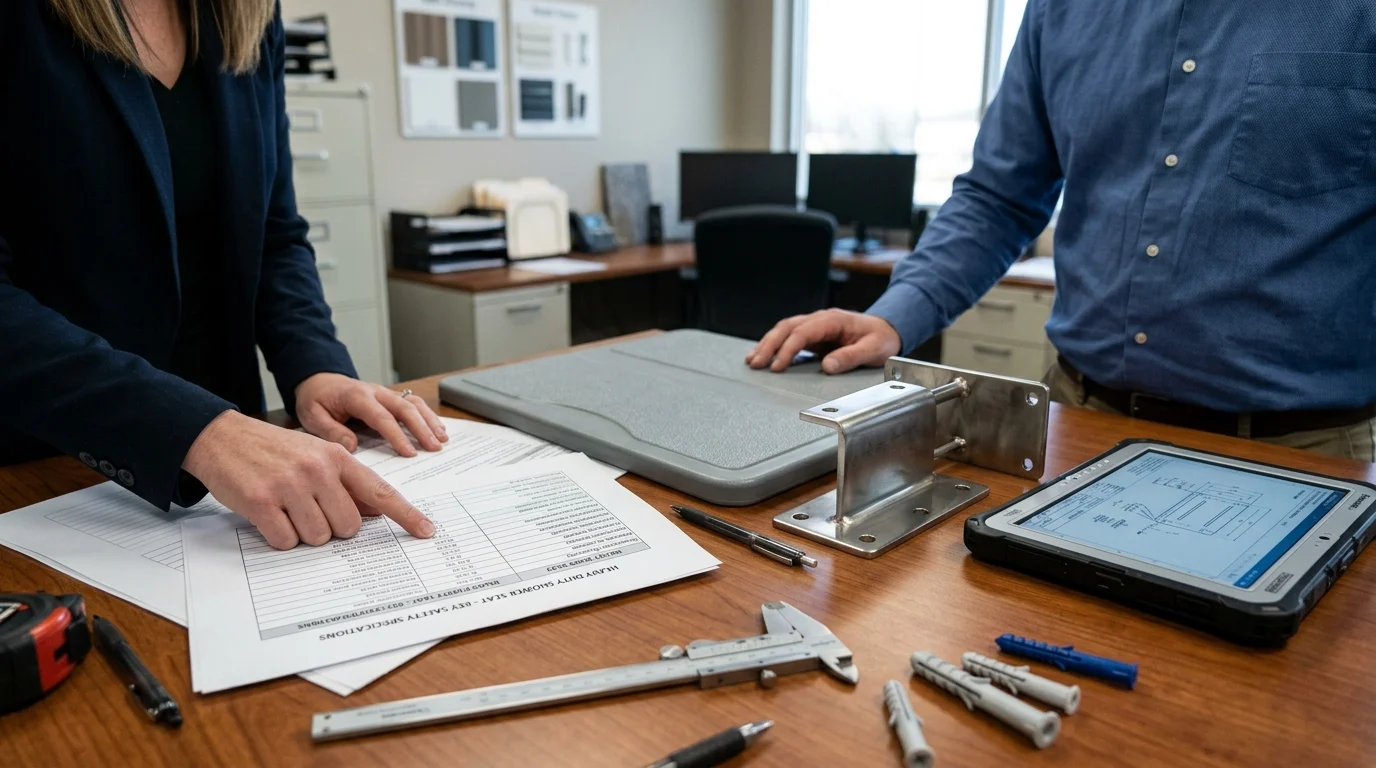
In a luxury spa, safety is part of the experience, not a compromise hidden behind the design. Wet rooms combine constant moisture, elevated temperatures, slick surfaces, and frequent guest turnover, making fixture performance a critical operational concern. A heavy duty shower seat helps reduce fall risk while supporting a wide range of users with the strength expected in commercial wellness environments. This article examines the specifications that matter most, from load capacity and anchoring to corrosion resistance and long-term durability. It also shows how thoughtful seating choices can protect guests, support accessibility, and preserve the refined visual standard that defines modern spa design.
Why Heavy Duty Shower Seats Matter in Luxury Spas
Luxury spas operate at the intersection of high-end aesthetics and rigorous commercial safety standards. In wet environments, where the risk of injury is inherently elevated due to constant moisture, architects and facility managers cannot rely on standard residential fixtures.
The heavy duty shower seat serves as a critical infrastructural element in these spaces. It is engineered to withstand continuous moisture exposure, heavy usage, and diverse user demographics, all while maintaining the sophisticated visual language expected in a premium hospitality setting.
Defining a heavy duty shower seat
A heavy duty shower seat is defined by its structural parameters and material longevity rather than mere visual bulk. While standard residential seats may be rated for a maximum of 250 pounds, a true heavy duty commercial fixture typically carries a dynamic load rating starting at 400 lbs (181 kg).
Many bariatric-grade models engineered for commercial spas are designed to support static loads exceeding 800 to 1,000 lbs (453 kg). These seats utilize reinforced mounting brackets, thick-gauge tubular framing, and commercial-grade hinges designed to endure thousands of deployment cycles without mechanical fatigue or structural deflection.
Risk factors in spa wet rooms
The spa wet room is an environment characterized by persistent environmental hazards. These include 100% relative humidity, ambient temperatures often exceeding 100°F (38°C) in steam applications, and flooring surfaces rendered slick by massage oils, exfoliating scrubs, and soapy runoff.
In these conditions, slip-and-fall incidents represent the leading cause of guest injury. Furthermore, commercial spas experience high turnover, with individual wet rooms potentially seeing 30 to 50 usage cycles per day. This frequency accelerates the wear on standard fixtures and exacerbates the risk of catastrophic mechanical failure if inferior seats are utilized.
Brand protection through safer design
Mitigating these risk factors is intrinsically linked to brand protection and financial risk management. A single catastrophic failure of a wall-mounted seat can result in severe injuries, leading to liability claims that frequently exceed $100,000 in settlements, alongside significant increases in commercial insurance premiums.
Beyond immediate financial penalties, the reputational damage sustained by a luxury brand following a high-profile safety incident can be irreversible. By over-engineering wet room safety protocols and specifying heavy duty fixtures, spa operators insulate their brand equity and demonstrate a tangible commitment to guest welfare.
Key Safety Specifications
Specifying a heavy duty shower seat requires moving beyond superficial design preferences to evaluate rigorous mechanical and material thresholds. Architects, engineers, and procurement specialists must scrutinize load capacities, metallurgical properties, and ergonomic dimensions to ensure the fixture performs safely over a projected 10- to 15-year commercial lifecycle.
Load capacity and anchoring strength
The foundational metric of any heavy duty shower seat is its load capacity, which must account for both static weight and the dynamic downward forces generated when a user transfers onto the seat. Commercial specifications mandate a minimum static load capacity of 500 lbs, though luxury and healthcare-adjacent spas often specify capacities up to 900 lbs.
Achieving this rating requires exceptional anchoring strength. The shear force exerted on wall fasteners is immense; therefore, mounting systems typically require stainless steel toggle bolts or heavy-duty lag screws capable of providing a minimum pull-out strength of 1,000 lbs per anchor when driven into appropriate structural backing.
Materials and corrosion resistance
Material selection dictates both structural integrity and resistance to the highly corrosive spa environment.
Material | Corrosion Resistance | Structural Strength | Common Spa Application |
304 Stainless Steel | High (Standard Wet Rooms) | Excellent | Frames, brackets, hinges |
316L Stainless Steel | Very High (Salt/Chlorine Exposure) | Excellent | Steam rooms, thalassotherapy |
Phenolic Resin (HPL) | Absolute (Non-metallic) | High (Rigid, no deflection) | Seat tops, slats |
Extruded Aluminum | Moderate (Requires anodization) | Good | Lightweight fold-down frames |
For environments utilizing salt therapies or high concentrations of chlorine, 316L marine-grade stainless steel is the non-negotiable standard, as it contains molybdenum to prevent pitting and crevice corrosion. Seat tops are frequently fabricated from phenolic resin, a dense, non-porous material that inhibits microbial growth and withstands institutional cleaning agents without degrading.
Seat size, drainage, edges, and grip
Ergonomic safety is governed by seat dimensions, drainage efficiency, and surface friction. To accommodate diverse body types safely, commercial heavy duty seats generally feature a minimum width of 24 inches and a depth of 15 to 16 inches.
Water pooling presents a severe slipping hazard. Therefore, solid seat tops must be machined with drainage slots, or slatted designs must be employed, typically requiring minimum 0.25-inch gaps to facilitate rapid water evacuation. Additionally, the seating surface must maintain a wet dynamic coefficient of friction (DCOF) of 0.42 or higher to prevent users from sliding off the edge during use.
Comparing Shower Seat Types
The architectural layout of a luxury spa wet room dictates the optimal form factor for seating. Designers must weigh the spatial footprint, user flow, and structural demands to select the most appropriate heavy duty shower seat configuration, ensuring seamless integration with the surrounding tile and waterproofing systems.
Wall-mounted fold-down seats
Wall-mounted fold-down seats are the preferred solution for maximizing floor space in multi-functional wet rooms or accessible transfer showers. When folded up, these units typically project less than 4 inches from the wall, allowing unimpeded wheelchair maneuverability and spacious foot traffic.
High-end heavy duty variants incorporate pneumatic cylinders or torsion spring mechanisms that provide a controlled, soft-close descent, preventing the heavy frame from dropping abruptly. These mechanisms are routinely cycle-tested to 50,000 deployments to guarantee longevity in high-traffic commercial spas.
Fixed and freestanding options
Where spatial constraints are less rigid, fixed built-in benches or heavy-duty freestanding seats offer alternative safety profiles. Built-in benches, framed with concrete block or high-density extruded polystyrene (XPS) foam rated at 80 psi compressive strength, provide absolute structural rigidity but permanently consume floor space.
Freestanding heavy-duty seats, constructed from solid teak or welded stainless steel, offer layout flexibility but must weigh a minimum of 30 to 40 lbs to prevent tipping or shifting during use. Furthermore, freestanding options must be equipped with non-marring, high-friction rubber feet, typically featuring a Shore A hardness of 60 to 70, to grip wet tile securely.
Backing, substrate, and waterproofing needs
The structural success of any wall-mounted heavy duty shower seat is entirely dependent on the concealed substrate and backing. Standard metal studs cannot support the cantilevered load of a heavy duty seat under commercial use.
Specifications mandate the installation of continuous solid wood blocking (nominal 2×8 or 2×10) or 0.25-inch thick structural steel plates welded between studs prior to closing the wall. Penetrating the waterproofing membrane to mount the seat introduces a critical vulnerability; all fastener penetrations must be thoroughly sealed with elastomeric polyurethane sealants conforming to ASTM C920 standards to prevent moisture intrusion and structural rot within the wall cavity.
Compliance and Procurement Requirements
Procurement of heavy duty shower seats for commercial luxury spas is heavily regulated by building codes and institutional safety standards. Navigating these requirements ensures legal compliance, guarantees product efficacy, and establishes clear protocols for long-term facility maintenance.
Accessibility codes and ADA-aligned principles
In the United States, commercial spa facilities must adhere to the Americans with Disabilities Act (ADA) guidelines, specifically ICC A117.1, which dictates the strict positioning and structural performance of shower seats.
To meet compliance, the top of the shower seat must be installed at a height of 17 to 19 inches above the finished floor. The seat must withstand a vertical or horizontal force of 250 lbs applied at any point, though heavy duty fixtures easily exceed this baseline. Furthermore, ADA principles dictate the exact placement of adjacent grab bars, requiring careful spatial coordination to ensure the seat does not obstruct the required 1.5-inch clearance behind the grab bar.
Supplier documentation and warranties
Procurement officers must demand comprehensive documentation from suppliers to validate heavy duty claims. This includes Material Test Reports (MTRs) verifying the exact grade of stainless steel utilized, and independent third-party testing certificates confirming static load capacities.
Commercial warranties serve as a critical indicator of build quality. Reputable manufacturers of heavy duty spa fixtures typically offer a minimum 5-year warranty on structural frames and welds, alongside a 1-year warranty on finishes and moving components like pneumatic hinges. Procuring units from ISO 9001-certified manufacturing facilities further ensures consistent quality control.
Cleaning, inspection, and maintenance protocols
Maintaining the safety and aesthetic integrity of a heavy duty shower seat requires stringent, documented maintenance protocols. Spa staff must use compatible cleaning agents; exposure to highly acidic cleaners or chlorine concentrations exceeding 500 ppm can degrade even 316L stainless steel over time.
Facility management must implement a monthly inspection protocol to check for hinge fatigue, verify that drainage slots are free of soap scum buildup, and re-torque mounting fasteners. Standard maintenance procedures often specify tightening wall anchors to 15-20 Nm of torque to ensure the seat remains rigidly affixed to the substrate despite constant thermal expansion and contraction in the wet room.
Choosing and Implementing the Right Seat
Successfully integrating a heavy duty shower seat into a luxury spa environment requires a holistic approach that bridges the gap between architectural design and practical facility management. The final implementation phase relies on meticulous site assessment, aesthetic coordination, and rigorous installation oversight.
Site assessment steps
The implementation process begins with a comprehensive site assessment of the designated wet rooms. Installers must verify that the shower enclosure provides adequate clear floor space, typically a minimum of 30 by 48 inches, to allow users safe approach and transfer to the seat.
The assessment must also map out concealed plumbing lines and electrical conduits to ensure mounting fasteners do not pierce critical infrastructure during installation. Utilizing ground-penetrating radar (GPR) or advanced stud finders to verify the exact location and depth of the pre-installed structural blocking is a mandatory step before any drilling commences.
Balancing safety, aesthetics, and durability
Luxury spas demand that safety fixtures do not compromise the overarching interior design narrative. Balancing heavy duty performance with high-end aesthetics is achieved through advanced finishing technologies.
Physical Vapor Deposition (PVD) coatings allow stainless steel frames to be finished in brushed gold, matte black, or polished nickel while providing a surface hardness that is up to four times greater than standard electroplating. These PVD finishes routinely pass 1,000-hour salt spray tests (ASTM B117), ensuring the seat maintains its luxury appearance without peeling or tarnishing in the harsh, humid spa environment.
Final specification and installation checklist
To ensure flawless execution, project managers should utilize a standardized installation checklist that aligns tradespeople, inspectors, and spa operators.
Installation Phase | Verification Task | Standard / Tolerance |
Pre-Wall Closure | Verify structural blocking installation | 2×8 wood or 0.25-inch steel plate, secured to studs |
Waterproofing | Inspect membrane continuity at blocking | ANSI A118.10 compliance, zero tears or voids |
Fixture Mounting | Apply elastomeric sealant to all penetrations | ASTM C920 compliant sealant, full annular coverage |
Final Commissioning | Perform static load test and level check | Minimum 500 lbs test weight; seat must be dead level (0 degree pitch) |
Adhering to this rigorous specification and installation checklist guarantees that the heavy duty shower seat delivers on its promise of uncompromising safety, seamlessly blending structural invulnerability with the refined elegance expected by luxury spa clientele.
Key Takeaways
- Specify a heavy duty shower seat with a minimum commercial load rating of 500 lbs, and consider 800 to 900 lbs for luxury spas serving broader guest needs.
- Use reinforced wall backing, proper fasteners, and professional installation because anchoring strength is as critical as the seat’s published weight rating.
- Choose corrosion-resistant materials such as stainless steel to withstand 100% humidity, high heat, soaps, oils, and repeated cleaning cycles.
- Plan for high-frequency use, as individual spa wet rooms may see 30 to 50 usage cycles per day, quickly wearing out residential-grade fixtures.
- Treat shower seat safety as brand protection, since a single fixture failure can lead to serious injury, liability claims, higher insurance costs, and reputational damage.
Frequently Asked Questions
What makes a shower seat heavy duty?
A heavy duty shower seat is defined by reinforced framing, commercial-grade hinges, corrosion-resistant materials, and a higher load rating, often starting around 400 lbs and reaching 800 to 1,000 lbs for bariatric-grade spa applications.
Why are heavy duty shower seats important in luxury spas?
They reduce slip-and-fall risk, support diverse guests safely, and withstand high-use wet rooms with humidity, heat, oils, and soapy runoff. They also protect the spa’s reputation by pairing safety with premium design.
What load capacity should a commercial spa shower seat have?
Commercial spa projects should generally specify at least 500 lbs of static load capacity, with luxury or wellness facilities often choosing 800 to 900 lbs for added safety and long-term durability.
How does installation affect shower seat safety?
Even a high-rated seat can fail if it is not anchored correctly. Wall-mounted models need reinforced backing, suitable fasteners, and professional installation to handle both static weight and dynamic transfer forces.
Which materials perform best in spa wet rooms?
Stainless steel, corrosion-resistant hardware, and moisture-tolerant seating surfaces are preferred because spa wet rooms face constant humidity, elevated temperatures, cleaning chemicals, and frequent daily use.


