

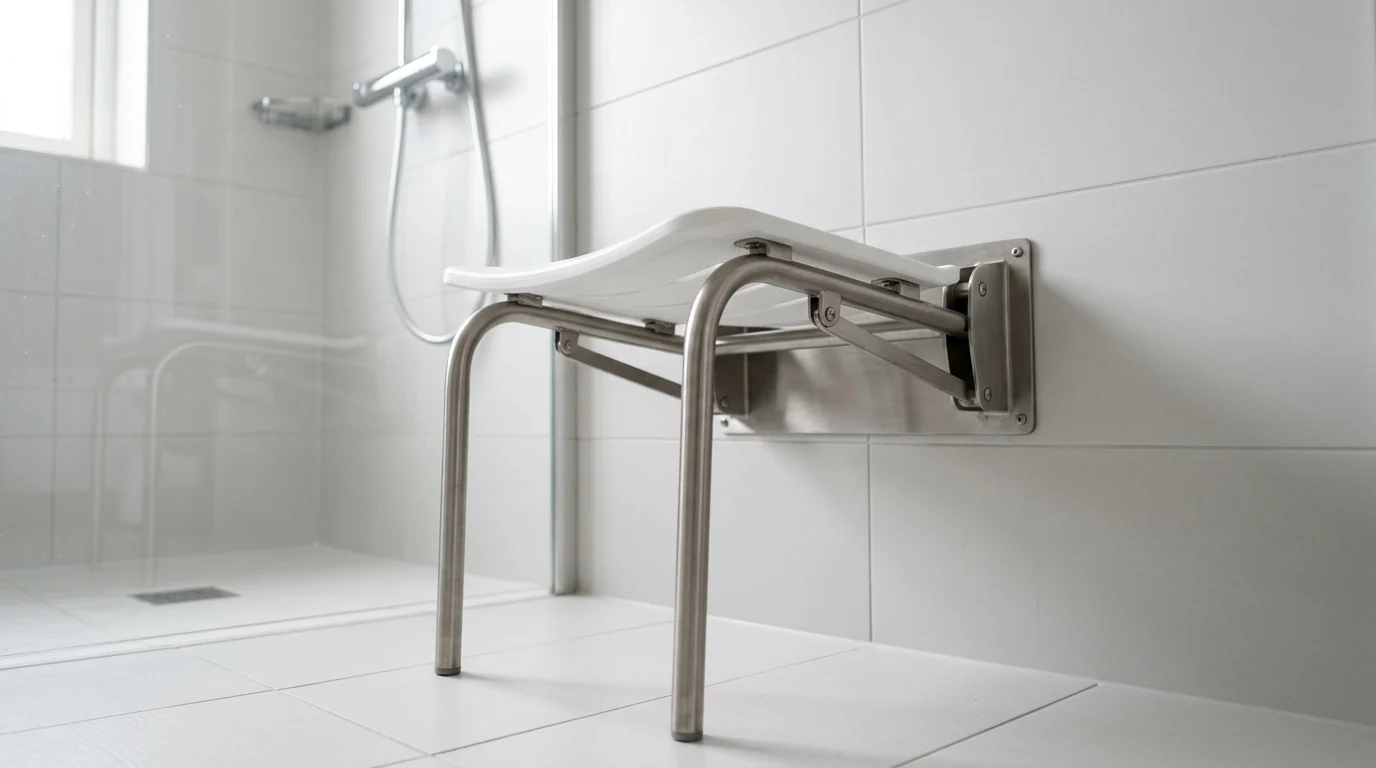
A folding wall-mounted shower seat may look like a small detail, but in a wet room it carries major implications for safety, accessibility, waterproofing, and spatial design. As more homes, hotels, and care environments adopt open-plan bathrooms and aging-in-place principles, the right seat must do more than fold neatly away. It should support real user loads, resist corrosion, protect the wall structure, and preserve the clean visual language of a modern bathroom. This guide explains the key factors to evaluate, from weight capacity and materials to installation, ergonomics, and compact profiles—helping you choose a solution that feels secure, elegant, and built for daily use.
Why Evaluate a Folding Wall Mounted Shower Seat
The specification of a folding wall mounted shower seat is a critical architectural and functional decision in modern wet room design. As demographic trends shift toward an aging population and universal design principles become standard in commercial and residential developments, the demand for integrated accessibility features has surged. A wet room, characterized by its open-plan layout and flush floor gradient, presents unique environmental challenges, including constant moisture exposure, fluctuating temperatures, and the need for unobstructed spatial flow.
Selecting the appropriate seating hardware goes beyond mere aesthetics; it requires a rigorous evaluation of structural engineering, material science, and spatial ergonomics. When properly specified, a folding shower seat provides essential postural support without compromising the minimalist footprint of a wet room. Conversely, an inadequate specification can lead to catastrophic structural failure, water ingress behind the waterproofing membrane, and significant liability for facility managers and developers.
Key Benefits for Safety and Accessibility
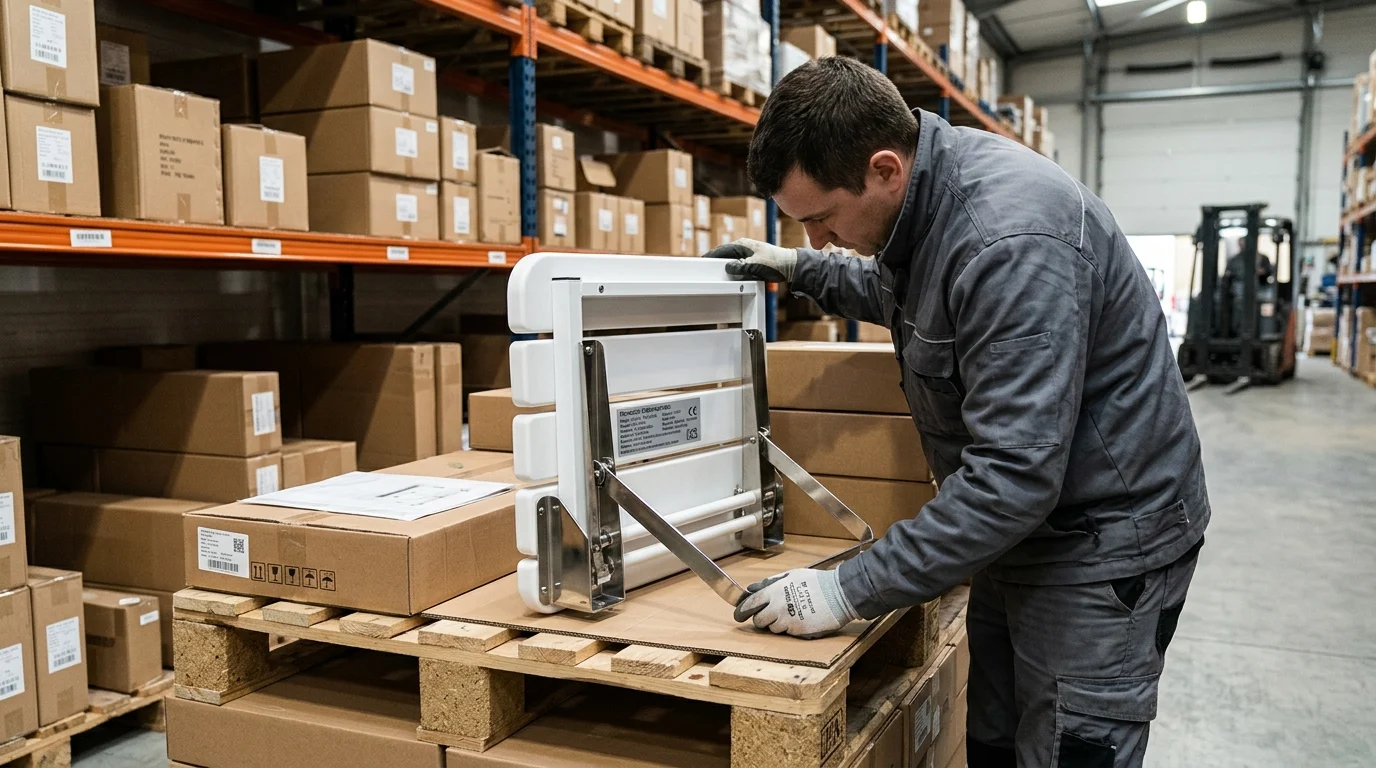
The primary objective of installing a folding wall mounted shower seat is to mitigate slip-and-fall risks while promoting user autonomy. In wet environments, the coefficient of friction on flooring surfaces is significantly reduced, making postural stability paramount for individuals with compromised mobility, balance disorders, or generalized fatigue. Clinical studies indicate that the integration of fixed, ergonomic seating in bathing areas can reduce the incidence of high-acuity falls by up to 30% in eldercare and rehabilitation settings.
Beyond fall prevention, these seats facilitate essential hygiene tasks by allowing users to adopt a stable, seated posture. This is particularly vital for wheelchair users performing lateral transfers. The folding mechanism ensures that when the seat is not required, it can be retracted flat against the wall, instantly converting the wet room back into a barrier-free environment for ambulatory users or caregivers who require maximum floor space to maneuver.
Suitable Project Types and Use Cases
The utility of a folding wall mounted shower seat spans multiple sectors, each dictating specific performance thresholds. In high-traffic healthcare and assisted living facilities, the hardware must withstand rigorous daily use, aggressive chemical disinfection, and heavy dynamic loads. In these environments, bariatric models capable of supporting up to 254 kg (560 lbs) are frequently specified to accommodate diverse patient populations safely.
Conversely, in the luxury hospitality sector and high-end residential aging-in-place projects, aesthetic integration is as critical as functional performance. Wet rooms in boutique hotels often feature constrained footprints—sometimes under 4 square meters—where a bulky, permanent bench is unfeasible. Here, ultra-slim profile seats that retract to less than 50mm from the wall surface offer an optimal solution, delivering ADA-compliant accessibility while maintaining the high-end architectural intent of the space.
Technical Specifications to Check
Evaluating the technical specifications of a folding wall mounted shower seat requires a comprehensive understanding of mechanical physics and material durability. The wet room environment subjects hardware to a punishing regimen of high humidity, direct water spray, and variable mechanical stress. Consequently, architects and specifiers must scrutinize the engineering data provided by manufacturers, looking past superficial design elements to validate the core structural integrity.
A critical failure in a wall-mounted seat is rarely due to the failure of the seating surface itself; rather, it is almost exclusively linked to hinge fatigue, inadequate wall blocking, or anchor pull-out. Therefore, assessing the interplay between load capacity, mounting substrates, and metallurgical properties is non-negotiable for long-term safety.
Load Capacity, Wall Structure, and Fixing Method
Load capacity is the most critical safety metric. Standard commercial shower seats are typically engineered to support a static load of 150 kg (330 lbs), which aligns with standard accessibility guidelines. However, dynamic loading—the force exerted when a user drops onto the seat rather than sitting gently—can multiply the effective force. For heavy-duty applications, specifiers should mandate a minimum static load rating of 227 kg (500 lbs) to 254 kg (560 lbs).
This load is transferred entirely to the wall substrate, generating significant shear and pull-out forces on the upper anchors due to the cantilevered design. Installation on hollow drywall without reinforcement is an immediate failure risk. Specifications must require structural wall blocking, typically nominal 2×6 or 2×8 solid timber, marine-grade plywood, or specialized steel backing plates integrated into the wall framing prior to the application of the cement board and waterproofing membrane.
Materials, Finishes, and Hinge Quality
The selection of materials dictates both the lifespan and maintenance requirements of the seat. For the structural chassis and hinges, marine-grade 316L stainless steel is the gold standard due to its superior resistance to pitting and crevice corrosion in chloride-rich environments. Standard 304 stainless steel is acceptable for residential use but may exhibit surface rust over time in commercial wet rooms. Extruded aluminum offers a lightweight, rust-proof alternative, provided it features a high-micron anodized finish.
Component Substrate | Typical Material Options | Load Capacity Range | Corrosion Resistance (Salt Spray) | Ideal Application |
Frame / Hinge | 316L Stainless Steel | 150 kg – 250 kg | > 1000 hours | Marine, Healthcare, Luxury |
Frame / Hinge | Anodized Aluminum | 120 kg – 150 kg | > 500 hours | Residential, Economy Hospitality |
Seating Surface | Phenolic Resin (HPL) | High (Rigid) | Impervious | Heavy Commercial, Vandal-Resistant |
Seating Surface | Polyurethane (PU) Foam | Medium (Flexible) | High (Requires intact skin) | Geriatric, Pain Management |
Hinge quality is the unseen variable that determines operational longevity. Premium hinges utilize self-lubricating polymer bushings or sealed stainless steel bearings, ensuring smooth articulation without metal-on-metal friction. Manufacturers should provide data demonstrating that the hinge mechanism has passed continuous cycle testing of at least 30,000 to 50,000 deployments without mechanical degradation.
Comfort, Hygiene, and Slip Resistance
Comfort and hygiene are intrinsically linked in wet room seating. Prolonged sitting on a rigid, unyielding surface can cause pressure ulcers in vulnerable users, making molded polyurethane (PU) foam a preferred choice for healthcare and eldercare settings. PU foam offers a high degree of tactile warmth and energy absorption, though its outer skin must remain unpunctured to prevent internal bacterial colonization.
To maintain hygiene and prevent the pooling of greywater, the seating surface must incorporate effective drainage. This is achieved either through a slatted design or strategically placed drainage holes (minimum 10mm diameter) that ensure rapid water evacuation. Furthermore, the surface texture must strike a delicate balance: it requires a sufficient slip resistance coefficient to prevent the user from sliding forward when lathered with soap, yet it must remain smooth enough to avoid skin abrasion during lateral wheelchair transfers.
How to Compare Shower Seat Designs
Comparing different models of folding wall mounted shower seats involves synthesizing aesthetic preferences with stringent operational demands. The market offers a vast spectrum of products, ranging from utilitarian clinical devices to highly engineered architectural fixtures. Selecting the right product requires a comparative analysis of spatial footprint, lifecycle costs, and installation complexity.
Facility managers and homeowners alike must weigh the initial capital expenditure against long-term maintenance liabilities. A seat that looks visually appealing but lacks rigorous waterproofing protocols at its mounting points can compromise the entire wet room envelope, leading to remediation costs that far exceed the price of the hardware itself.
Design and Space-Saving Criteria
In modern wet rooms, spatial efficiency is paramount. The folded profile—the distance the seat protrudes from the wall when stowed—is a key comparative metric. Standard clinical seats may project 100mm to 150mm when folded, which can snag mobility aids or impede caregivers in compact spaces. Conversely, premium architectural seats utilize sophisticated kinematic hinges to achieve an ultra-slim folded profile of 40mm to 50mm, virtually disappearing against the wall.
Seat depth and width must also be evaluated against user demographics. A standard ergonomic seat depth ranges from 380mm to 400mm, providing adequate thigh support without cutting into the popliteal space behind the knees. Widths typically span 400mm to 450mm, though bariatric models may extend beyond 600mm. Specifiers must ensure that the deployed dimensions do not violate the required clear turning radius for wheelchairs within the wet room.
Price, Warranty, and Compliance Factors
The pricing architecture of folding shower seats reflects their engineering complexity and material pedigree. Economy models, typically constructed from powder-coated steel and blow-molded plastics, occupy the $50 to $150 band. While cost-effective, they often carry limited 1-year warranties and are susceptible to premature hinge failure. The commercial band ($200 to $500) introduces stainless steel chassis, phenolic surfaces, and robust 5-to-10-year warranties, representing the best value for high-traffic environments.
Premium designer seats, exceeding $600, justify their cost through advanced materials (such as carbon fiber composites or teak wood), concealed mounting hardware, and lifetime warranties. Compliance factors also drive cost; products that carry independent certifications (such as TÜV Rheinland or UL) command a premium because the manufacturer has invested in rigorous third-party validation of their load-bearing and corrosion-resistance claims.
Installation and Waterproofing Considerations
The method of installation is a critical differentiator between product tiers. A folding wall mounted shower seat requires multiple penetrations through the wet room’s waterproofing membrane. Inferior designs feature exposed mounting flanges that rely entirely on the installer’s application of topical silicone to prevent water ingress. Over time, thermal expansion and mechanical vibration can break this seal, allowing moisture to rot the underlying wall structure.
Superior designs incorporate engineered waterproofing solutions directly into the mounting hardware. This includes integrated EPDM rubber gaskets, concealed wall plates with secondary flashing flanges, and specialized chemical anchor systems. When comparing models, specifiers should prioritize seats that utilize a dual-plate mounting system: a primary structural bracket that is permanently sealed to the wall, and a secondary cosmetic cover that houses the seat mechanism, isolating the critical membrane penetrations from direct water spray and mechanical stress.
Compliance and Quality Requirements
Procuring a folding wall mounted shower seat is not merely a purchasing decision; it is an exercise in risk management and regulatory compliance. In commercial, healthcare, and multi-family residential sectors, the installation of accessibility hardware is governed by strict statutory codes. Non-compliance exposes developers to litigation, failed building inspections, and costly retrofits.
Quality assurance in this product category is defined by adherence to internationally recognized standards that dictate dimensional tolerances, structural strength, and material safety. Understanding the regulatory landscape and the testing protocols utilized by reputable manufacturers is essential for distinguishing between a legally compliant medical device and a high-risk counterfeit.
Accessibility and Wet Room Standards
In the United States, the Americans with Disabilities Act (ADA) provides definitive guidelines for shower seating. ADA Chapter 4.21.3 mandates that the top of the shower seat must be positioned between 17 inches and 19 inches (430mm to 480mm) above the finished bathroom floor. Furthermore, ADA Chapter 4.26.3 dictates that the seat, its fasteners, and the mounting substrate must withstand a minimum stress of 250 lbs of force applied at any point.
Globally, standards such as ISO 21366 (Assistive products for showering) and the European norm EN 12182 (Assistive products for persons with disability) establish comprehensive performance baselines. These standards govern not only static load limits but also the maximum allowable deflection of the seat under load, the absence of sharp edges (minimum 2mm radius on all exposed corners), and the biocompatibility of the seating materials to prevent dermal irritation.
Manufacturer Quality and Testing
Reputable manufacturers validate their compliance through exhaustive laboratory testing. Cycle testing is the primary method for proving mechanical longevity. A high-quality folding seat will undergo automated pneumatic testing, being folded and unfolded up to 50,000 times under a simulated environmental chamber that replicates wet room humidity and temperature fluctuations (typically 20°C to 40°C).
Fatigue testing is equally critical. This involves applying repeated, pulsating loads to the cantilevered edge of the seat to simulate decades of dynamic user transfers. Manufacturers should readily provide technical data sheets (TDS) and declarations of conformity (DoC) that detail the exact Newton meters (Nm) of torque applied during testing, as well as the results of neutral salt spray (NSS) testing, which should exceed 500 hours without red rust formation for wet room applications.
Risks of Low-Cost Shower Seats
The specification of low-cost, uncertified shower seats carries severe operational and financial risks. The most common point of failure in budget models is galvanic corrosion, which occurs when dissimilar metals (e.g., cheap steel fasteners and aluminum brackets) are exposed to water. This hidden corrosion rapidly degrades the structural anchors, leading to abrupt, catastrophic detachment from the wall while occupied.
Additionally, low-cost plastic seating surfaces are prone to UV degradation and embrittlement from exposure to hot water and cleaning chemicals. A micro-fracture in a cheap blow-molded seat can pinch the user’s skin or harbor dangerous pathogens like Legionella or MRSA. In a commercial facility, the liability costs associated with a single user fall caused by hardware failure will exponentially eclipse the initial savings of value-engineering the specification down to a budget fixture.
Final Selection Process
The final selection of a folding wall mounted shower seat demands a structured, methodical approach that aligns architectural constraints with user physiology and budget parameters. Haphazard procurement based solely on aesthetic appeal or the lowest bid frequently results in hardware that is either clinically inadequate or structurally incompatible with the wet room envelope.
By implementing a formalized selection process, project managers, occupational therapists, and homeowners can objectively evaluate competing products. This ensures that the chosen hardware delivers the necessary safety thresholds, integrates seamlessly with the waterproofing system, and provides an appropriate return on investment over the lifecycle of the bathroom.
Step-by-Step Buying Checklist
The first step in the buying process is the site survey and substrate analysis. Verify the exact composition of the wet room wall (e.g., masonry, reinforced timber stud, or lightweight steel frame) to determine the required anchoring system. Next, establish the precise mounting location, ensuring the seat deployment does not clash with the swing of glass shower enclosures or the positioning of thermostatic mixer valves.
Following the spatial assessment, define the user parameters. Document the required weight capacity, factoring in a 20% safety margin above the heaviest anticipated user. Determine if specialized features, such as drop-down armrests for lateral stability or a seat with a perineal cutout for intimate hygiene, are clinically necessary. Finally, cross-reference these requirements with the project’s aesthetic guidelines to narrow the field to compliant, visually appropriate models.
Decision Matrix for User Needs and Budget
To facilitate objective decision-making, specifiers should utilize a weighted decision matrix. This tool helps balance competing priorities, preventing budget constraints from overriding critical safety features.
Evaluation Criteria | Weighting (%) | Minimum Acceptable Threshold | Premium / High-Score Indicator |
Load Capacity & Safety | 35% | 150 kg (330 lbs) static load | > 250 kg (550 lbs), independent certification |
Material & Corrosion Resistance | 25% | Anodized aluminum / 304 SS | 316L Marine-grade SS, concealed anchors |
Ergonomics & Comfort | 20% | Smooth surface, basic drainage | Contoured PU foam, integrated armrests |
Folded Profile & Aesthetics | 10% | < 120mm wall projection | < 50mm projection, custom color matches |
Warranty & Support | 10% | 1-year limited warranty | 10-year to lifetime commercial warranty |
By scoring shortlisted products against this matrix, stakeholders can quantify the value of upgrading to a higher-tier seat. For instance, a product that scores perfectly on safety and material longevity will yield a lower total cost of ownership, easily justifying a higher upfront purchase price in a commercial wet room scenario.
When to Choose a Premium Shower Seat
While commercial-grade models suffice for the majority of applications, specific scenarios mandate the procurement of premium, architecturally engineered shower seats. High-end residential developments and luxury hospitality suites are prime environments for premium selection. In these spaces, the visual disruption of a clinical, hospital-style seat can severely diminish the perceived value of a meticulously designed, multi-thousand-dollar wet room.
Premium seats are also essential when addressing bariatric requirements or specific progressive mobility disorders. In these cases, the seat must offer uncompromising rigidity, advanced kinematic hinges that require near-zero force to fold, and highly specialized, pressure-relieving surfaces. The investment in a premium fixture in these contexts is offset by the preservation of user dignity, the elimination of replacement cycles, and the seamless integration of accessibility into luxury architectural design.
Key Takeaways
- Choose a folding wall-mounted shower seat based on structural load rating, wet room conditions, and the mobility needs of the intended users.
- Specify corrosion-resistant materials and durable hardware because wet rooms expose seats to constant moisture, temperature shifts, and cleaning chemicals.
- For healthcare or assisted living projects, consider bariatric models rated up to 254 kg or 560 lbs to support a wider range of users safely.
- Use slim folding designs in compact wet rooms, especially where a retracted profile under 50 mm helps preserve open floor space.
- Protect the waterproofing system by ensuring the seat is installed into proper structural backing with professional sealing and fixing methods.
- Balance accessibility with aesthetics by selecting a seat that supports safe bathing while complementing the wet room’s modern design.
Frequently Asked Questions
What weight capacity should a folding shower seat have?
Choose a seat rated for the intended users and setting. Residential models often suit everyday support needs, while healthcare or assisted living projects may require bariatric-rated seats up to 254 kg or 560 lbs.
Why is a wall-mounted folding seat useful in a wet room?
It provides stable seated support during showering, then folds flat to preserve open floor space. This is especially valuable in compact wet rooms, accessible bathrooms, hotels, and aging-in-place homes.
Which materials are best for wet room shower seats?
Look for corrosion-resistant materials such as stainless steel, durable hinges, and water-safe seating surfaces. Premium materials help withstand constant moisture, temperature changes, and repeated cleaning.
Can a folding shower seat reduce fall risk?
Yes. A properly installed ergonomic seat can improve stability and support safer bathing. In eldercare and rehabilitation settings, fixed seating has been associated with reducing high-acuity falls by up to 30%.
How slim should a folding shower seat be when closed?
For compact or luxury wet rooms, ultra-slim designs that retract to less than 50 mm from the wall help maintain a clean look and maximize maneuvering space.


