

Luxury bathrooms are no longer designed as simple wash spaces; they are expected to deliver comfort, safety, wellness, and architectural clarity in the same footprint. A wall mounted shower seat meets that challenge by combining discreet accessibility with space-saving performance, especially in urban residences, hospitality suites, and spa-inspired interiors. Compared with fixed benches that can permanently occupy 3.5 to 5 square feet, foldable seating gives designers more flexibility while preserving a refined visual line. This article explores why these seats matter, how they support universal design, which product types define the premium market, and what architects should consider when specifying them for elegant, future-ready bathrooms.
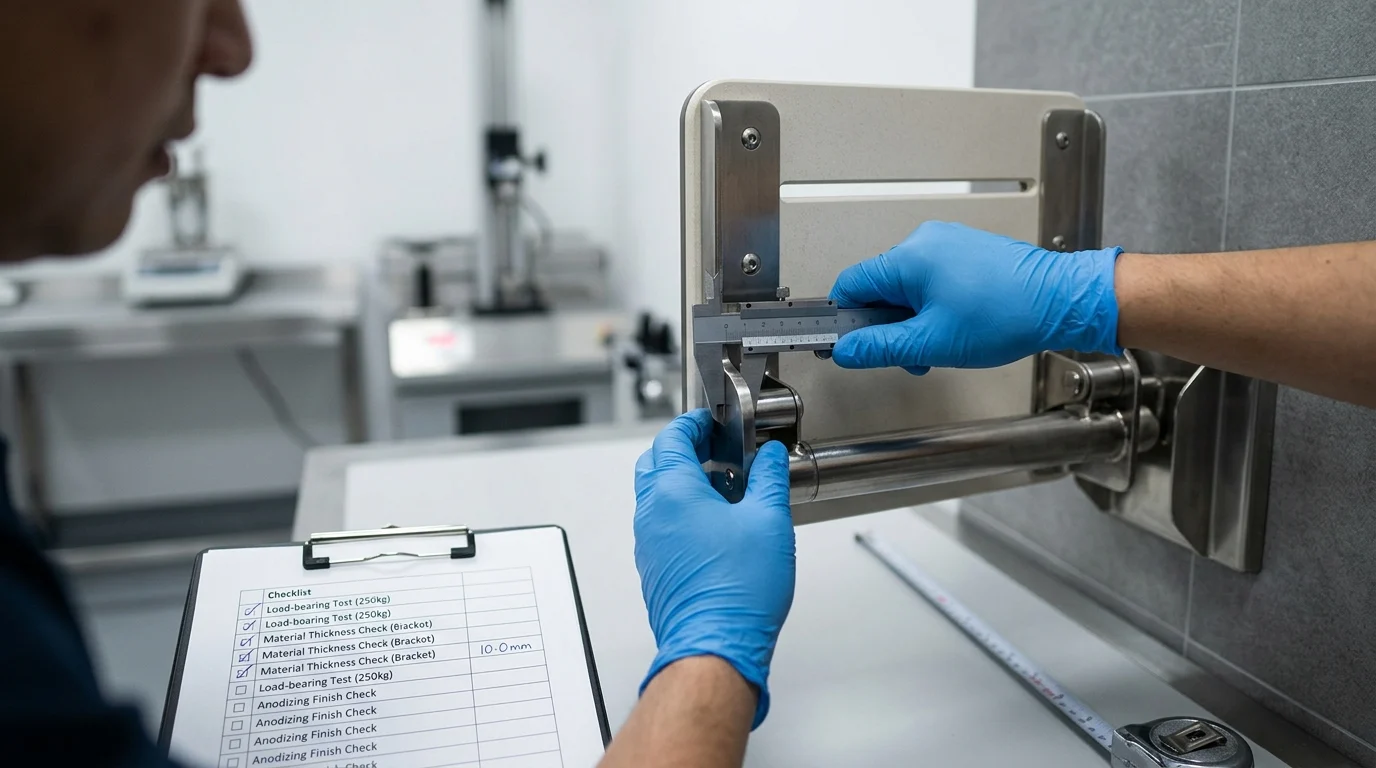
Why Wall Mounted Shower Seats Matter
In contemporary luxury architecture, the bathroom has transcended its traditional utilitarian boundaries to become an immersive, wellness-centric sanctuary. This paradigm shift requires architects and interior designers to specify fixtures that harmoniously balance sophisticated aesthetics with high-performance functionality. Among these critical fixtures, the wall mounted shower seat has emerged as a cornerstone of inclusive, high-end design. Unlike static, monolithic bathroom furniture, a wall mounted foldable shower seat offers a dynamic solution that addresses the complex spatial, aesthetic, and ergonomic demands of modern luxury enclosures.
The integration of foldable seating into premium shower spaces is driven by the broader architectural movement toward universal design—a philosophy that mandates environments be accessible to all users without compromising on visual elegance. In high-net-worth residential projects and five-star hospitality environments, the expectation is a seamless fusion of safety and luxury. By eliminating the necessity for bulky floor-standing stools or permanent masonry benches, architects can maintain the continuous, unbroken sightlines essential for minimalist and contemporary spatial narratives.
Benefits of Foldable Wall Mounted Shower Seats
The primary architectural advantage of a foldable wall mounted shower seat lies in its unparalleled spatial efficiency. In urban luxury developments where square footage commands a premium, optimizing the shower enclosure footprint is critical. A standard built-in bench permanently consumes approximately 3.5 to 5 square feet of floor space. In contrast, a foldable seat reclaims this area entirely when retracted, allowing a standard 15-square-foot shower stall to feel significantly more expansive and versatile. This adaptability is particularly valuable in multi-generational homes, where the spatial requirements of users vary drastically from day to day.
Beyond spatial metrics, these seats introduce a layer of sophisticated safety. High-end shower environments often feature large-format porcelain or natural stone tiles, which, despite anti-slip treatments, present inherent slip-and-fall risks when wet. Providing a secure, structurally sound seating option mitigates these risks, facilitating safe grooming, relaxation, or hydrotherapy. Furthermore, premium foldable seats are engineered with soft-close dampening mechanisms, preventing the seat from slamming against the wall or dropping abruptly, thereby preserving the acoustic tranquility of the wellness space.
Key Definitions and Product Types
The market for luxury shower seating is segmented by structural design and material composition, dictating both the aesthetic outcome and the installation parameters. The two dominant structural typologies are bracket-supported seats and cantilevered seats. Bracket-supported models utilize diagonal architectural struts that transfer load forces down the wall, often allowing for higher weight capacities. Cantilevered designs, conversely, rely entirely on a robust internal hinge and heavy-duty wall plate, offering a floating, minimalist aesthetic that is highly sought after in ultra-modern designs.
Material typologies further differentiate product classifications. Solid surface seats, cast from advanced acrylic or polyester resins, provide a seamless, non-porous finish that mimics natural stone while offering superior thermal retention. Phenolic resin seats, manufactured by compressing layers of kraft paper and resin under extreme heat, yield an ultra-slim profile (often just 0.5 inches thick) with exceptional structural rigidity and moisture resistance. Finally, marine-grade teak seats introduce organic warmth into sterile environments; however, luxury specifications mandate Grade A heartwood teak, which possesses the highest concentration of natural oils and silica to resist rot and fungal degradation in high-humidity microclimates.
Luxury-Grade Performance Specifications
Specifying a wall mounted shower seat for a luxury project requires a rigorous evaluation of the product’s engineering tolerances and material science. In commercial hospitality and high-end residential applications, fixture failure is not merely an inconvenience; it represents a significant liability and a breach of the expected user experience. Consequently, luxury-grade seats are defined by their adherence to stringent performance specifications, encompassing metallurgical integrity, precise ergonomic calculations, and documented lifecycle resilience.
Materials, Load Ratings, and Hinge Systems
The structural backbone of any premium wall mounted shower seat is its metallic framework and hinge mechanism. Industry standards dictate the use of austenitic stainless steel, specifically Type 304 or 316L. In coastal environments or steam showers where salinity and humidity are elevated, 316L stainless steel is non-negotiable due to its added molybdenum content, which drastically increases resistance to pitting and crevice corrosion. The hinge systems in these luxury units frequently employ self-lubricating bronze or polymer bushings to ensure silent, friction-free operation over thousands of cycles.
Load rating is a critical quantitative metric for architectural specification. While standard residential seats may be rated for 250 pounds, luxury-grade and commercial-grade foldable seats must be engineered for a dynamic load capacity ranging from 400 to 500 pounds. Achieving this threshold requires precision-machined pivot pins, often exceeding 0.375 inches in diameter, and heavy-gauge mounting flanges that distribute sheer and pull-out forces across a wider surface area of the wall substrate. Furthermore, elite manufacturers subject their hinge mechanisms to rigorous cycle testing, demanding a minimum of 50,000 fold-and-deploy cycles without mechanical degradation or loss of tension.
Ergonomics, Seat Dimensions, and Comfort
Ergonomic precision is paramount to the subjective comfort of the user. A luxury shower seat must accommodate a diverse range of body types while facilitating proper posture and pressure distribution. Architectural specifications generally require a seat depth between 15 and 18 inches. Depths shallower than 15 inches fail to provide adequate thigh support, causing user fatigue, while depths exceeding 18 inches can impede the user’s ability to comfortably reach the floor or bend their knees at a natural 90-degree angle. Seat widths typically range from 18 inches for compact urban enclosures to generous 36-inch spans in palatial master suites.
Surface contouring and drainage mechanics further elevate the ergonomic experience. Flat, untextured surfaces allow water to pool, creating a hydroplaning effect that compromises user stability. High-end phenolic and solid surface seats incorporate subtle concavities and precision-milled drainage slots. These slots, usually engineered to a width of 0.25 to 0.375 inches, facilitate rapid water evacuation—typically clearing standing water at a rate of 2 gallons per minute—without posing a pinching hazard to the user. Additionally, the leading edge of the seat must feature a gentle radius (commonly a 0.125-inch chamfer or bullnose) to prevent restricted blood flow to the lower extremities during prolonged use.
Maintenance, Cleaning, and Lifecycle Expectations
The lifecycle of a luxury architectural fixture is heavily dependent on its resistance to environmental stressors and the simplicity of its maintenance protocol. In the context of a high-use shower, a wall mounted seat is perpetually exposed to hard water deposits, alkaline soap scum, and potentially harsh chemical cleaners. Solid surface and phenolic materials excel in these environments, boasting a porosity rate of near 0.01%, which fundamentally prevents the ingress of moisture and the proliferation of mold or mildew. Maintenance for these materials generally requires only neutral pH cleaners and non-abrasive cloths.
For projects specifying natural wood, the lifecycle expectations necessitate a more proactive maintenance schedule. Even Grade A teak will undergo photochemical degradation, weathering to a silvery-gray patina within 12 to 18 months if exposed to UV light from bathroom skylights or large windows. To maintain the original honey-brown aesthetic, periodic application of specialized teak sealers or oils is required. Irrespective of the material, a luxury wall mounted shower seat is expected to deliver a functional lifecycle of 10 to 15 years in a high-turnover hospitality environment, and upward of 20 years in a private residential setting, provided the initial installation and anchoring protocols were strictly followed.
Comparing Shower Seating Options
The architectural decision to incorporate seating into a shower enclosure generally distills down to a choice between permanent built-in structures and articulating hardware solutions. This decision fundamentally impacts the spatial dynamics, construction timeline, and long-term flexibility of the bathroom. By systematically comparing wall mounted foldable shower seats against traditional masonry or floating stone benches, architects can align their specifications with the specific lifestyle requirements and spatial constraints of their clients.
Wall Mounted Seats vs Built-In Benches
Built-in benches, whether constructed from cinder block and mortar or framed with structural foam panels, represent a permanent architectural commitment. They require extensive waterproofing integration, extending the continuous waterproof membrane over complex geometric planes, which inherently increases the risk of moisture failure points. Furthermore, a built-in bench creates cold zones; the mass of tile and masonry acts as a thermal sink, drawing heat away from the user unless supplemental electric radiant heating mats are installed within the bench structure.
Conversely, wall mounted seats decouple the seating surface from the primary waterproofing envelope. Because the seat is affixed over the finished tile (with appropriate sealants at the penetration points), the floor pan and wall membranes remain simple, planar surfaces. This drastically reduces the labor hours required by tile setters and waterproofing specialists. Thermally, materials like phenolic resin or teak acclimate to the ambient temperature of the shower much faster than a mass of stone, providing a more immediate sense of thermal comfort for the user.
When to Choose a Foldable Shower Seat
The specification of a foldable shower seat is particularly critical in scenarios demanding maximum spatial versatility. In curbless, zero-threshold shower designs—which are highly favored in luxury universal design—the floor plane must remain unobstructed to allow for potential wheelchair turning radii. A foldable seat deployed only when necessary preserves the required 60-inch circular turning space mandated by accessibility guidelines, without forcing the architect to expand the overall footprint of the bathroom.
High-end hospitality environments also heavily favor foldable solutions. Hotel room footprints are rigidly optimized; a bathroom may only allocate 35 to 40 square feet for the shower and vanity combined. A static bench in a 3×4 foot shower stall creates a claustrophobic user experience. By specifying a foldable wall mounted seat, hoteliers can offer the luxury amenity of seated hydrotherapy without compromising the perceived volume of the shower enclosure. Additionally, retrofitting a foldable seat into an existing luxury bathroom is a relatively straightforward procedure, provided structural blocking can be accessed or retrofitted, whereas adding a built-in bench requires a complete demolition of the shower pan.
Design Trade-Offs for Luxury Bathrooms
Design trade-offs must be objectively evaluated across several quantitative and qualitative vectors. Cost, spatial footprint, and structural requirements vary drastically between seating typologies. The following table delineates the comparative metrics between a high-end foldable wall mounted seat and a traditional built-in tiled bench, providing a clear framework for architectural decision-making.
Evaluation Metric | Foldable Wall Mounted Seat | Built-In Tiled Bench |
Permanent Floor Footprint | 0.0 sq ft (when folded) | 3.5 – 5.0 sq ft |
Dynamic Load Capacity | 400 – 500 lbs (hardware dependent) | 1,000+ lbs (structural mass) |
Installation Labor Time | 2 – 3 hours (post-tile) | 12 – 16 hours (framing, waterproofing, tile) |
Waterproofing Complexity | Low (point penetrations only) | High (complex planar transitions) |
Thermal Acclimation | Fast (material dependent) | Slow (acts as thermal sink) |
While the foldable seat excels in spatial efficiency and installation simplicity, it does demand absolute precision in the framing stage to ensure the anchoring points align perfectly with the structural blocking. The built-in bench, while consuming valuable square footage and requiring intensive labor, offers an undeniable sense of permanence and allows for the seamless continuation of large-format veined marble or intricate mosaic patterns. Ultimately, the choice hinges on the overarching design narrative: whether the space prioritizes dynamic adaptability or monolithic permanence.
Compliance and Installation Requirements
The successful integration of a wall mounted foldable shower seat relies entirely on the invisible structural engineering hidden behind the finished wall. A premium fixture cannot compensate for an inadequate substrate or a compromised waterproofing envelope. Architects and contractors must adhere to strict installation protocols and accessibility standards to ensure the seat functions safely under maximum dynamic loads while preserving the hermetic seal of the shower environment.
Accessibility Standards and Local Codes
Compliance with accessibility standards is a foundational requirement in commercial projects and an increasingly common request in private luxury residences planning for aging-in-place. In the United States, the Americans with Disabilities Act (ADA) provides strict dimensional and structural guidelines. ADA compliance mandates that the top of the shower seat be positioned between 17 and 19 inches above the finished floor. This specific height range ensures safe lateral transfers from a standard wheelchair.
Structurally, ADA guidelines require the seat and its wall attachments to withstand a minimum point load of 250 pounds applied at any point on the seat, seat fastener, mounting device, or supporting structure. However, luxury architectural specifications typically exceed this baseline, demanding engineering that supports 400 to 500 pounds to accommodate bariatric requirements and provide an unshakeable sense of solidity. Furthermore, accessibility codes dictate that the seat must extend from the back wall to a point within 3 inches of the compartment entry, ensuring the user can easily reach the shower controls without leaning dangerously.
Substrate, Blocking, Waterproofing, and Anchoring
The integrity of a wall mounted seat is wholly dependent on the substrate and anchoring strategy. Standard drywall or cement board over hollow stud cavities will catastrophically fail under the shear and pull-out forces generated by a seated user. Therefore, continuous structural blocking must be installed during the rough framing phase. Best practices dictate the use of 2×6 solid wood blocking, installed flush with the face of the studs, or heavy-gauge steel backing plates welded between steel studs. This blocking must span the entire anticipated mounting zone to accommodate slight lateral adjustments during final installation.
Anchoring hardware must match the caliber of the fixture. High-grade installations specify 3/8-inch diameter, 300-series stainless steel lag bolts that penetrate a minimum of 2.5 inches into the solid structural blocking. Equally critical is the waterproofing protocol at the penetration points. Every fastener penetrating the waterproof membrane (such as an ANSI A118.10 compliant liquid-applied or sheet membrane) must be heavily bedded in a premium, mold-resistant structural silicone or polyurethane sealant. The mounting escutcheons should also be sealed along their top and side perimeters, leaving the bottom unsealed to allow any incidental moisture to weep out.
Mockups, Shop Drawings, and Installation Checks
In luxury commercial developments, the gap between architectural drawings and site execution is bridged through rigorous mockup and shop drawing reviews. Shop drawings provided by the seat manufacturer must be cross-referenced against the plumbing and framing plans to perform clash detection. A common error in shower design is routing thermostatic valve supply lines or vertical diverter pipes through the exact wall cavity required for the seat’s structural blocking or mounting bolts.
Pre-construction mockups serve as a physical validation of the installation methodology. A mockup allows the general contractor to verify the exact height of the structural blocking relative to the finalized floor slope (which can vary by 0.25 to 0.5 inches per foot for drainage). Installation checks during the final punch list phase should include a calibrated torque test on the mounting bolts and a physical load test to ensure zero deflection in the mounting plate. Only through this meticulous, multi-tiered approach can the architect guarantee that the wall mounted shower seat will deliver decades of flawless performance.
Selection and Procurement Guidance
Procuring wall mounted shower seats for luxury projects—whether a boutique 50-key hotel or a sprawling private estate—requires a strategic approach to vendor selection and product specification. The market is saturated with entry-level mobility aids that lack the aesthetic refinement and structural longevity demanded by high-end architecture. Therefore, specifiers must utilize a rigorous procurement framework to evaluate manufacturers based on material provenance, warranty backing, and custom fabrication capabilities.
Manufacturer Documentation and Quality Criteria
The first filter in the procurement process is evaluating the manufacturer’s technical documentation and quality assurance certifications. Premium manufacturers will readily provide comprehensive cut sheets, BIM/Revit models for spatial clash detection, and independent laboratory testing reports verifying dynamic load capacities and salt-spray corrosion resistance (e.g., ASTM B117 testing for finishes). The absence of transparent engineering data is an immediate red flag, indicating a product designed for residential light-duty use rather than architectural integration.
Warranty criteria further separate luxury fixtures from commodity products. A standard one-year warranty is insufficient for fixtures embedded into a waterproof architectural envelope. Specifiers should demand a minimum 5-year commercial warranty or a 10-year residential warranty covering both mechanical hinge failure and finish degradation. Additionally, the provenance of the materials—such as FSC-certified (Forest Stewardship Council) teak or GREENGUARD-certified solid surfaces—ensures the product aligns with the sustainability targets often required in LEED-certified luxury developments.
Use Cases for Hospitality and Residential Projects
Procurement strategies must pivot based on the specific use case of the project. In high-end hospitality, durability and standardization are paramount. Hospitality procurement directors frequently deal with Minimum Order Quantities (MOQs). For customized seat dimensions or bespoke finishes, manufacturers may require an MOQ of 50 to 100 units. Lead times in commercial procurement typically span 8 to 12 weeks, necessitating early specification during the design development phase to prevent construction delays.
Conversely, residential projects prioritize bespoke aesthetics and hyper-customization over volume. In a custom home, the shower seat’s hardware must flawlessly match the surrounding plumbing fixtures, which often feature specialized Physical Vapor Deposition (PVD) coatings like brushed bronze, matte black, or polished nickel. PVD finishes are non-negotiable in luxury residential specifications due to their extreme resistance to scratching and chemical tarnishing. While residential orders rarely face MOQ barriers, custom PVD runs can extend lead times to 10-14 weeks and command a price premium of 30% to 50% over standard polished stainless steel.
Final Decision Framework
To streamline the specification process, architects and procurement managers should employ a standardized decision matrix. This framework ensures all functional, aesthetic, and logistical variables are evaluated before a purchase order is issued. The following table provides a comprehensive final decision framework for selecting a luxury wall mounted foldable shower seat.
Evaluation Criteria | Ideal Architectural Specification | High-Risk Red Flags |
Hinge Material | 316L Stainless Steel / PVD Coated | 304 Stainless in coastal areas; Chrome-plated brass |
Load Capacity | 400+ lbs with independent lab certification | Under 300 lbs; uncertified internal testing |
Fastening System | Concealed mounting plates; 3/8″ lag bolts | Exposed screw heads; reliance on wall anchors |
Key Takeaways
- Specify a foldable wall mounted shower seat when you need accessibility and comfort without sacrificing the clean sightlines of a luxury shower enclosure.
- Use foldable seating to reclaim approximately 3.5 to 5 square feet compared with a permanent built-in bench in space-conscious bathroom layouts.
- Match the seat type to the design intent: bracket-supported models prioritize visible structural strength, while cantilevered models create a floating minimalist profile.
- Choose moisture-resistant materials such as solid surface, phenolic resin, or stainless steel to support durability, hygiene, and premium aesthetics.
- Plan the seat location early with wall reinforcement, shower controls, drainage, and user movement in mind to ensure safe and elegant installation.
Frequently Asked Questions
Why choose a wall mounted shower seat for a luxury bathroom?
It adds comfort, safety, and accessibility without disrupting a refined design scheme. A foldable model preserves open shower space while supporting wellness-focused routines in high-end homes, hotels, and spa-inspired bathrooms.
How does a foldable shower seat save space?
Unlike a fixed bench, a foldable wall mounted seat retracts when not in use. This can help reclaim about 3.5 to 5 square feet of floor area, making compact luxury showers feel more open and adaptable.
Is a wall mounted shower seat suitable for universal design?
Yes. It supports users with different mobility needs while maintaining a clean, premium look. This makes it useful for multi-generational homes, hospitality suites, and bathrooms designed for long-term comfort.
What materials are common in premium shower seats?
Luxury shower seats often use solid surface, phenolic resin, stainless steel, or other moisture-resistant materials. These finishes are selected for durability, easy cleaning, refined appearance, and performance in wet environments.
What is the difference between bracket-supported and cantilevered seats?
Bracket-supported seats use visible diagonal supports for strength and load transfer. Cantilevered seats rely on a reinforced hinge and wall plate, creating a floating, minimalist appearance often preferred in contemporary luxury bathrooms.


