

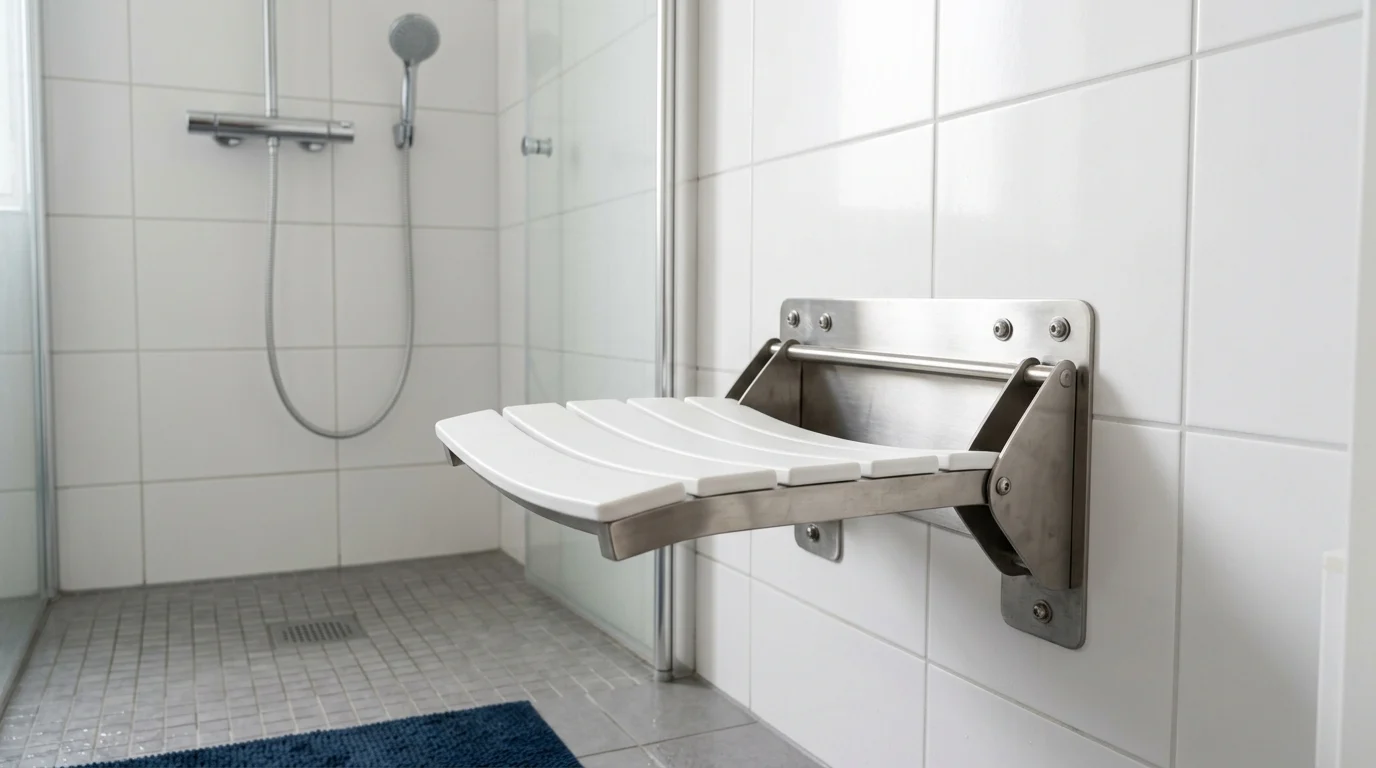
Luxury bathrooms in 2026 are being judged by more than marble slabs and statement fixtures; they are expected to deliver comfort, flexibility, and long-term usability. The wall mounted foldable shower seat has become a defining detail in this shift, offering a refined answer to safety, wellness, and space planning. With integrated shower seating seeing reported year-over-year growth of 15% to 20% in high-end projects, designers are treating it as an architectural feature rather than an afterthought. This article explores how modern shower seats support aging in place, reduce fall risk, preserve visual openness, and align with the polished, practical elegance that brands like Cassbern champion.
Why Wall Mounted Shower Seats Matter
The landscape of luxury bathroom renovations in 2026 is defined by a rigorous convergence of high-end aesthetics and universal design principles. As architectural priorities shift toward holistic wellness and multi-generational living, the integration of functional, space-saving hardware has become a primary objective for specifiers and contractors. The wall mounted shower seat, once viewed strictly as an institutional or clinical necessity, has evolved into a hallmark of premium residential and commercial hospitality design.
Industry data indicates a 15% to 20% year-over-year increase in the inclusion of integrated seating in luxury shower enclosures. This surge is driven by a broader understanding of ergonomics, spatial efficiency, and the long-term lifecycle value of adaptable environments. By eliminating the bulky footprint of traditional built-in benches, modern foldable seating provides architects with the flexibility to design expansive, minimalist wet rooms that cater to a diverse demographic of end-users.
Support for Aging in Place
The concept of aging in place has fundamentally reshaped residential architecture, transitioning from reactive retrofits to proactive, integrated design. A wall mounted shower seat is a critical component of this strategy, allowing homeowners to navigate physical transitions without requiring disruptive and costly future renovations. In 2026, luxury renovations seamlessly embed these accessibility features, ensuring that safety hardware does not compromise the visual integrity of a high-end space.
Demographic shifts heavily influence this trend, with a significant portion of the luxury market comprising individuals looking to secure their forever homes. By specifying foldable seating during the initial renovation phase, designers provide a permanent structural solution that accommodates varying levels of mobility. This proactive approach supports independence and dignity, proving that universal design and luxury are mutually complementary.
Safety and Comfort Benefits
The shower enclosure presents one of the highest risk zones in residential and hospitality environments, with slip-and-fall incidents accounting for over 80% of severe bathroom injuries. A securely anchored wall mounted shower seat directly mitigates this risk by offering a stable, ergonomic resting point. This is particularly vital in large walk-in showers equipped with multiple showerheads or steam functionalities, where users may spend extended periods engaged in hydrotherapy.
Beyond injury prevention, the comfort benefits are substantial. High-end foldable seats are engineered to support the natural curvature of the spine and facilitate proper circulation during use. The ability to sit comfortably transforms a standard daily routine into a spa-like therapeutic experience, allowing users to safely enjoy steam applications, leg shaving, or simply relaxing under a rainfall showerhead without the fatigue associated with prolonged standing.
Value in Premium Bathroom Design
In the context of premium bathroom design, spatial optimization directly correlates with perceived property value. Wall-mounted seats offer a distinct architectural advantage by preserving the continuity of the shower floor tile and maintaining an unobstructed visual plane. Unlike heavy, static built-in benches that consume valuable square footage, a foldable seat can be retracted to a nearly flush profile, maximizing the usable volume of the shower enclosure.
Real estate appraisers and prospective buyers increasingly recognize the intrinsic value of these dual-purpose features. A luxury bathroom equipped with structural, aesthetically refined seating signals a high level of craftsmanship and foresight. Furthermore, the availability of bespoke finishes—ranging from matte black stainless steel to sustainably sourced Burmese teak—allows these fixtures to serve as architectural accents that elevate the overall material palette of the renovation.
Key Specifications for Foldable Shower Seats
Specifying a wall mounted shower seat for a luxury renovation requires a stringent evaluation of mechanical engineering, material science, and ergonomic performance. In 2026, the baseline expectations for these fixtures have advanced significantly, demanding robust structural integrity paired with sophisticated, low-profile designs that endure harsh, high-moisture environments.
Load Capacity and Anchoring
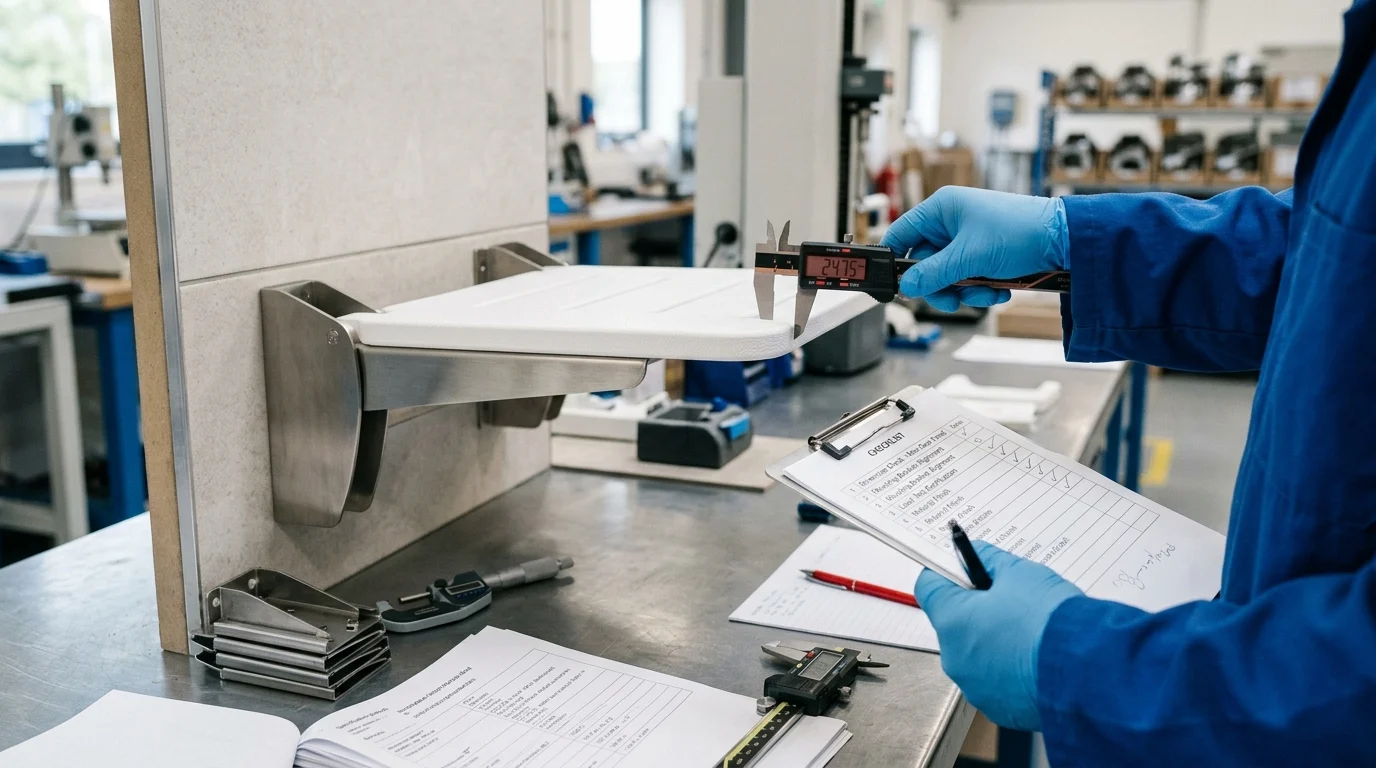
The fundamental metric of a wall mounted shower seat is its dynamic and static load capacity. While basic ADA compliance mandates a minimum weight capacity of 250 lbs, premium models specified in 2026 luxury renovations consistently target load ratings between 400 lbs and 500 lbs. This elevated capacity ensures structural redundancy and accommodates a wider spectrum of users, providing absolute confidence in the fixture’s stability.
Achieving these load ratings relies entirely on the engineering of the mounting brackets and the anchoring mechanism. High-end seats utilize heavy-gauge, precision-machined pivot hinges that distribute shear and tensile forces evenly across the mounting plate. The anchoring system must be capable of transferring these extreme loads directly into the structural blocking of the wall, rather than relying on the sheer strength of the finished tile or backer board.
Materials, Finishes, and Drainage
The material composition of a shower seat dictates its longevity, maintenance requirements, and aesthetic appeal. Hardware components must be manufactured from marine-grade 316L stainless steel or anodized aluminum to resist oxidation and galvanic corrosion in highly humid, chlorine- or salt-exposed environments.
Material Type | Durability | Maintenance Level | Thermal Comfort | Typical Cost Premium |
Phenolic Resin | Extremely High | Low (Non-porous) | Moderate | $$ |
Burmese Teak | High | Moderate (Requires oiling) | High (Warm to touch) | $$$$ |
Polyurethane | High | Low (Wipe clean) | High (Soft, warm) | $$$ |
HDPE Plastic | Moderate | Low | Low (Cold) | $ |
Drainage is another critical specification. Seat surfaces must be engineered with integrated drainage slots or perforations, maintaining a minimum gap of 0.25 inches to prevent standing water. Efficient water shedding mitigates the accumulation of soap scum, hard water scale, and biofilm, which are primary contributors to material degradation and unhygienic conditions in wet rooms.
Comfort, Footprint, and Foldability
Ergonomic comfort must be balanced against the spatial footprint of the fixture. The industry standard for seat depth ranges from 15 to 16 inches, providing adequate thigh support without encroaching excessively into the shower pan when deployed. The leading edge of the seat is typically radiused or chamfered to prevent pressure points on the user’s legs during extended seating sessions.
Foldability mechanics have seen significant refinement. Premium models now feature soft-close friction dampers and torsion springs that allow the seat to be raised or lowered with minimal effort—often requiring less than 5 lbs of operational force. When retracted, the most advanced architectural seats boast an ultra-slim profile, protruding less than 3 inches from the finished wall, thereby maximizing the navigational clearance within the shower enclosure.
Wall Mounted Seats vs Other Shower Seating
When designing a luxury shower, architects and homeowners must evaluate the trade-offs between various seating form factors. The decision between a wall mounted shower seat, a built-in tiled bench, and a freestanding stool impacts not only the aesthetic outcome but also the structural requirements, total cost of ownership, and functional versatility of the space.
Built-In Bench Comparison
Built-in tiled benches have long been a staple of custom showers, but they present several inherent disadvantages compared to foldable wall-mounted seats. A standard built-in bench consumes approximately 3 to 4 square feet of permanent floor space, restricting movement and limiting the effective standing area. Furthermore, built-in benches introduce complex waterproofing challenges, requiring precise pitching (typically a 0.25-inch per foot slope) to prevent water pooling.
Thermally, tiled benches act as large heat sinks; unless equipped with an internal electric heating mat, the cold ceramic or stone surface can be highly uncomfortable. Conversely, a wall mounted shower seat manufactured from phenolic or teak provides immediate thermal comfort, requires zero floor footprint when folded, and eliminates the risk of compromised waterproofing membranes at the bench-to-wall transitions.
Freestanding Stool Comparison
Freestanding shower stools offer the ultimate flexibility and require zero installation, but they fall short in luxury and safety applications. Standard shower floors are graded toward the drain, usually featuring a 2% slope. Placing a four-legged rigid stool on a sloped, wet, soapy surface creates an immediate tipping and slipping hazard, which is unacceptable in environments prioritizing user safety and aging-in-place principles.
Additionally, freestanding stools contribute to visual clutter, detracting from the streamlined, minimalist aesthetic desired in 2026 luxury renovations. They must be manually moved for cleaning and often feature rubber feet that can harbor mold or stain porous stone tiles over time. A wall-mounted seat resolves these issues by remaining permanently fixed, structurally secure, and elevated off the floor to facilitate effortless cleaning of the shower pan.
Best Use Cases by Bathroom Type
The optimal seating solution is heavily dictated by the specific dimensions and layout of the bathroom.
Seating Solution | Best For | Space Requirement | Weight Capacity Range | Installation Complexity |
Wall Mounted Seat | Universal design, aging in place | Minimal (Folds flat) | 250 – 500 lbs | High (Requires blocking) |
Built-In Bench | Massive wet rooms, steam showers | 3 to 4 sq ft minimum | 500+ lbs | Very High (Waterproofing) |
Freestanding Stool | Temporary use, budget updates | Variable | 150 – 300 lbs | Zero |
For compact luxury en-suites where the shower footprint is under 36×36 inches, a foldable wall-mounted seat is the only viable option to provide seating without violating building code clearance requirements. In expansive, multi-zone wet rooms, wall-mounted seats are often paired with built-in ledges, serving as the primary ergonomic resting place while the ledges are reserved for toiletries or secondary support.
Compliance, Installation, and Supplier Risk
The integration of structural hardware within a high-moisture environment introduces significant compliance, installation, and supply chain variables. For contractors and procurement teams, mitigating these risks is paramount to ensuring the longevity of the renovation and protecting against liability associated with fixture failure.
Codes, Standards, and Weight Ratings
Navigating the regulatory landscape is critical when specifying shower seating. While residential renovations are not strictly bound by the Americans with Disabilities Act (ADA) in the same manner as commercial facilities, luxury designs in 2026 heavily borrow from ADA guidelines (such as ICC A117.1) to ensure baseline safety. These standards dictate that seats must withstand a vertical or horizontal force of 250 lbs applied at any point.
However, high-end manufacturers subject their products to far more rigorous structural testing standards, such as ISO 17966 for assistive products. Specifiers must differentiate between static load capacity (weight applied gently and uniformly) and dynamic load capacity (force exerted when a user drops heavily onto the seat). Procuring a seat with a verified dynamic rating of at least 400 lbs is standard practice to safeguard against extreme use cases and material fatigue over decades of use.
Blocking and Installation Requirements
The most common point of failure for a wall mounted shower seat is not the hardware itself, but inadequate in-wall structural support. Installation strictly requires heavy-duty blocking—typically 2×6 or 2×8 solid wood, or quarter-inch steel plates—installed between the wall studs during the rough-in phase, prior to the application of backer board and waterproofing membranes.
Fastener pull-out strength is a critical metric; the anchoring system must be capable of resisting a minimum of 1,000 lbs of shear force per anchor to ensure absolute rigidity. Installers must also utilize appropriate sealants, such as mold-resistant polyurethane or silicone, injected directly into the pilot holes before driving the stainless steel lag bolts. Failure to execute this step perfectly can lead to moisture intrusion, causing the structural blocking to rot and ultimately resulting in catastrophic seat detachment.
Supplier Qualification Criteria
Sourcing reliable hardware requires strict supplier qualification criteria, particularly when navigating global supply chains. Procurement managers should evaluate manufacturers based on their documented defect rates, targeting suppliers that maintain a defect rate of less than 0.5%. Certifications such as ISO 9001 provide assurance of consistent quality control and manufacturing tolerances.
Lead times and warranty conditions are equally important risk factors. Custom finishes, such as brushed brass or matte bronze, can extend procurement lead times to 4 to 6 weeks, which must be factored into the critical path of the renovation schedule. Furthermore, specifiers should mandate a minimum 5-year to 10-year comprehensive warranty covering both mechanical hinge failure and material delamination or corrosion, ensuring the supplier stands behind the lifecycle performance of their product.
How to Choose the Right Shower Seat
Finalizing the specification for a wall mounted shower seat requires a synthesis of ergonomic requirements, spatial geometry, and budget parameters. By systematically evaluating these factors, designers and homeowners can select a fixture that delivers maximum functional utility while harmonizing with the overarching architectural vision of the bathroom.
User Needs and Shower Dimensions
The selection process begins with a thorough analysis of user anthropometrics and shower dimensions. To maintain a comfortable and accessible environment, the shower enclosure should ideally offer a minimum clearance of 36×36 inches, though 60×30 inches is preferred for optimal maneuverability when the seat is deployed. The seat height is a critical ergonomic variable; industry best practices dictate an installation height of 17 to 19 inches Above Finished Floor (AFF), which accommodates the natural biomechanics of most adults.
Designers must also consider the specific needs of the primary users. For individuals requiring lateral transfer from a wheelchair, an L-shaped seat configuration may be necessary, whereas a standard rectangular or contoured seat suffices for general ambulatory users. The placement of the seat relative to the shower controls and hand-held shower wands must be plotted meticulously, ensuring all fixtures are within a comfortable 24-inch reach radius from the seated position.
Installed Cost and Lifecycle Value
Understanding the total cost of ownership is essential for accurate budget forecasting. The upfront material cost for a premium wall mounted shower seat in 2026 ranges broadly from $300 for high-density polyethylene models to over $1,500 for bespoke architectural hardware featuring exotic woods and custom PVD finishes. However, the hardware cost is only one component of the financial equation.
Installation costs, encompassing the requisite structural blocking, specialized drilling through dense porcelain or natural stone tiles, and meticulous waterproofing, typically add $200 to $500 to the total expense. Despite this initial outlay, the lifecycle value is exceptionally high. By preventing costly future retrofits required for aging in place and avoiding the complex maintenance associated with built-in tiled benches, a high-quality wall-mounted seat delivers a strong return on investment over a 15- to 20-year lifespan.
Final Selection Checklist
Before issuing the final purchase order, specifiers should execute a comprehensive verification checklist. First, confirm that the structural blocking has been engineered and installed at the precise height and location required by the seat’s mounting template. Second, verify that the selected hardware finish exactly matches or intentionally complements the surrounding shower fixtures (e.g., valves, showerheads, and drain covers) to maintain visual cohesion.
Finally, ensure that the chosen seat material is compatible with the shower’s drainage dynamics and the household’s maintenance routine. Confirm the weight capacity exceeds the heaviest anticipated user by a margin of at least 20%, and secure formal architectural or engineering sign-off on the fastening methodology. By adhering to this rigorous selection protocol, the resulting installation will yield a flawless integration of luxury, safety, and enduring performance.
Key Takeaways
- Specify a wall mounted foldable shower seat during the renovation phase to support aging in place without requiring costly future retrofits.
- Choose foldable seating instead of a fixed bench when preserving shower floor space and maintaining a clean visual plane are design priorities.
- Use a properly anchored shower seat to reduce slip-and-fall risk and create a safer environment for extended showering, steam, or hydrotherapy routines.
- Select premium materials and refined finishes so the seat complements luxury fixtures, shower systems, niches, and other curated bathroom elements.
- Position the seat near shower controls and spray zones to improve comfort, usability, and accessibility for a wider range of users.
Frequently Asked Questions
Why are wall mounted shower seats popular in 2026 luxury renovations?
They combine spa-level comfort, space efficiency, and universal design. In luxury bathrooms, a foldable wall mounted shower seat adds safety without disrupting a minimalist wet-room aesthetic.
Is a foldable shower seat better than a built-in bench?
For many renovations, yes. A foldable seat preserves floor space, keeps tile lines open, and can be tucked away when not in use, while a built-in bench permanently reduces shower area.
Can a wall mounted shower seat support aging in place?
Yes. When properly anchored, it provides stable seating for users with changing mobility needs, helping homeowners plan ahead without making the bathroom feel clinical.
Does a shower seat improve bathroom safety?
Yes. Since slips and falls are a major bathroom risk, a secure shower seat gives users a stable place to sit during bathing, shaving, steam sessions, or recovery.
Will a wall mounted shower seat fit a luxury bathroom style?
Modern designs use refined profiles, premium finishes, and compact folding mechanisms, making them suitable for elegant bathrooms focused on both beauty and practicality.


