

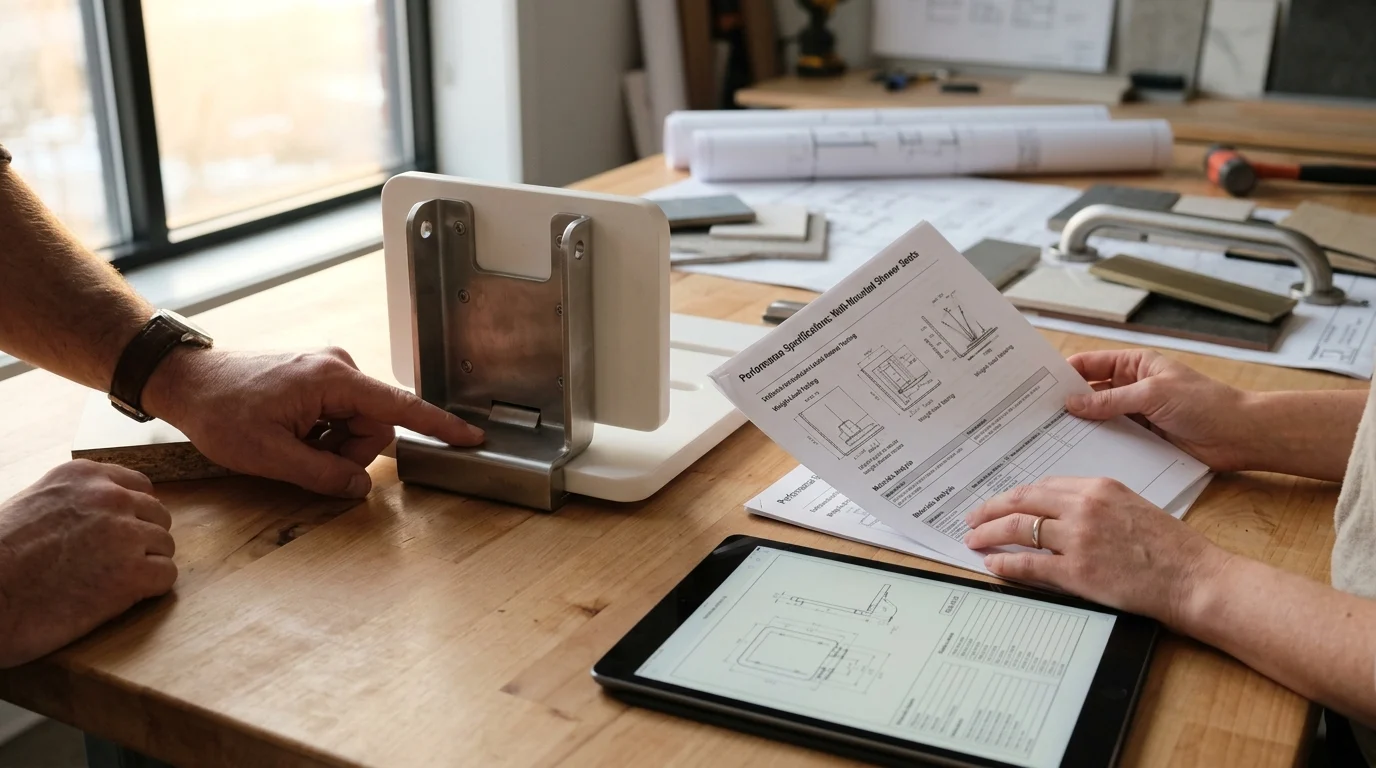
Introduction
As bathrooms in 2026 become smaller, more accessible, and more design-driven, the foldable shower seat is moving from niche fixture to mainstream specification. Homeowners, designers, and commercial buyers are choosing wall-mounted models because they support aging in place, save floor space, and fit cleaner wet-room layouts than built-in benches. This article examines the trends shaping that shift, from universal design demand and hospitality adoption to the materials, load performance, and installation details that now separate basic products from high-value solutions. It also helps readers understand what to look for when evaluating options for residential or commercial projects.
Why Foldable Shower Seats Are a Strategic Category
The trajectory of bathroom design heading into 2026 positions the wall-mounted foldable shower seat as a critical architectural fixture rather than merely a specialized medical accessory. This evolution is driven by changing demographic needs, stringent commercial building requirements, and a growing emphasis on space optimization in modern wet rooms.
Accessibility and aging-in-place demand
Demographic projections indicate a surging aging population, inherently expanding the aging-in-place market. Consequently, demand for universal design bathroom fixtures has demonstrated consistent 15% to 20% year-over-year growth. A foldable shower seat provides essential accessibility without permanently compromising the shower’s footprint, aligning perfectly with multi-generational housing trends where bathrooms must safely serve diverse mobility levels.
Specifier and commercial market signals
Within the commercial and hospitality sectors, specifiers are rapidly pivoting away from traditional built-in tiled benches. Constructing a built-in bench requires extensive framing, waterproofing, and tile work, often adding $500 to $800 in labor and material costs per shower. Conversely, high-quality wall-mounted foldable shower seats typically range from $150 to $400 fully installed. This pivot not only yields substantial cost savings across a typical 200-room hotel project but also reclaims valuable square footage in increasingly compact bathroom layouts.
What Defines a High-Performance Wall-Mounted Foldable Shower Seat
Specifying a high-performance foldable shower seat requires evaluating mechanical reliability, material resilience, and user experience. The wet, humid environment of a shower enclosure is unforgiving, demanding uncompromising structural and material standards.
Materials, load rating, hinges, and anchoring
Structural integrity begins with the frame and hinge mechanisms. Premium seats utilize grade 304 or 316 stainless steel or extruded aluminum to prevent oxidation. Load ratings are a critical metric; while residential standards often accept a 250-pound capacity, commercial specifications routinely demand dynamic load capacities between 400 and 500 pounds. Achieving these metrics relies on heavy-duty, friction-damped hinges that prevent the seat from slamming down, alongside robust wall-anchoring flanges designed to evenly distribute shear forces.
Ergonomics, hygiene, drainage, and compact design
Ergonomics and hygiene dictate the surface design. An optimal seat depth of 15 to 16 inches supports proper posture, while a folded profile protruding less than 3 inches from the wall ensures unobstructed movement when not in use. Hygiene is maintained through non-porous materials and engineered drainage slots. These slots must maintain a minimum 5mm gap to prevent water pooling and mitigate the risk of bacterial or fungal proliferation.
Key trade-offs across common seat types
Selecting the appropriate seat surface involves balancing durability, cost, and aesthetics. The following table outlines the primary trade-offs among common seat materials:
Material Type | Typical Load Capacity | Moisture Resistance | Est. Unit Cost Band | Primary Application |
Phenolic Resin | 400-500 lbs | Excellent (Non-porous) | $180 – $350 | Healthcare, Heavy Commercial |
Teak Wood | 300-400 lbs | High (Requires oiling) | $200 – $450 | Luxury Residential, Hospitality |
HDPE / Plastic | 250-300 lbs | Excellent | $80 – $150 | Economy Residential, Care Homes |
How Compliance and Installation Conditions Affect Lifecycle Risk
The operational lifespan of a foldable shower seat is inextricably linked to the quality of its installation and adherence to building codes. Even the most over-engineered seat will fail catastrophically if the mounting substrate is inadequate.
Codes, slip resistance, backing, and reach requirements
Compliance with the Americans with Disabilities Act (ADA) and similar international standards dictates precise placement. ADA guidelines require the seat height to be fixed between 17 and 19 inches from the finished floor. Furthermore, the seat surface must meet specific slip-resistance coefficients. To support the mandated load ratings, building codes necessitate substantial in-wall blocking, typically utilizing 2×6 or 2×8 solid wood bridging, or structurally equivalent 16-gauge steel backing plates welded to the studs.
How to assess mounting surfaces and site conditions
Site assessment is paramount, particularly in retrofit scenarios. Fastening a folding seat directly into hollow tile or drywall using toggle bolts is a severe liability, as the localized shear force can easily exceed 1,000 pounds per bracket during dynamic loading—such as a user dropping heavily onto the seat. Installers must utilize stud finders, structural blueprints, and sometimes exploratory drilling to confirm the presence of adequate backing before penetrating the waterproofing membrane.
A specification process that reduces callbacks
Implementing a rigorous specification and installation protocol drastically reduces lifecycle risks. By standardizing the requirement for pre-installed blocking in all new builds and utilizing specialized epoxy-anchored fasteners for solid masonry walls, contractors can reduce post-installation callback rates from an industry average of 4% down to less than 0.5%. This proactive approach prevents water ingress at the mounting points and ensures long-term structural integrity.
What Sourcing, Cost, and Supply Chain Trends Matter Most
Navigating the supply chain for bathroom fixtures requires an understanding of global manufacturing capabilities, raw material fluctuations, and sector-specific demand curves.
Lead times, OEM vs. branded sourcing, and certification
Global sourcing strategies dictate lead times and certification reliability. Currently, OEM (Original Equipment Manufacturer) lead times for custom or bulk foldable shower seat orders average 45 to 60 days. Buyers must choose between white-label OEM products and branded solutions. Regardless of the sourcing model, verifying facility ISO 9001 certifications and requesting verifiable CE or ADA testing documentation from independent laboratories is essential to mitigate corporate liability.
Main cost drivers in quality, packaging, and logistics
Production and landed costs are highly sensitive to stainless steel commodity pricing and logistics. Because a high-quality seat weighs between 15 and 20 pounds, packaging requires high-density corrugated materials to prevent transit damage, particularly to the hinges. Freight costs are optimized when manufacturers design seats with ultra-slim folded profiles, allowing for higher unit density per shipping pallet and reducing the overall logistics cost per unit by up to 15%.
Demand by healthcare, senior living, and hospitality
Demand profiles vary significantly across different commercial sectors, influencing purchasing behaviors and minimum order quantities (MOQs).
Industry Sector | Primary Purchasing Driver | Typical OEM MOQ | Key Compliance Focus |
Healthcare / Hospitals | Infection control, extreme durability | 200 – 500 units | Bariatric load rating, anti-microbial |
Senior Living Facilities | Accessibility, residential aesthetics | 100 – 300 units | ADA compliance, ease of folding |
Luxury Hospitality | Space optimization, premium finish | 50 – 200 units | Aesthetic integration, hidden hardware |
How Buyers, Specifiers, and Brands Should Act
To capitalize on the evolving standards of bathroom design, industry stakeholders must adopt forward-looking strategies that prioritize safety, longevity, and user dignity.
A decision framework for product selection
Buyers and specifiers should utilize a Total Cost of Ownership (TCO) framework rather than solely evaluating the initial purchase price. A seat priced at $100 with plastic hinges may require replacement within two years, incurring additional labor costs and potential waterproofing damage during re-installation. Conversely, specifying a $300 unit with a fully welded stainless steel frame and friction hinges guarantees decades of service, ultimately yielding a significantly lower TCO.
Priorities for manufacturers and distributors
Manufacturers must prioritize continuous engineering improvements, specifically focusing on low-profile, corrosion-resistant hinge mechanisms tested to withstand upwards of 10,000 fold cycles. Distributors, meanwhile, should streamline the procurement process by stocking comprehensive installation kits alongside the seats. By providing universal mounting hardware, structural backing guidelines, and clear compliance documentation in a single package, distributors add measurable value for contractors and facility managers.
Key Takeaways
- The most important conclusions and rationale for Foldable Shower Seat
- Specs, compliance, and risk checks worth validating before you commit
- Practical next steps and caveats readers can apply immediately
Frequently Asked Questions
Why are wall-mounted foldable shower seats trending in 2026?
They support aging-in-place, save shower space, and fit modern wet-room layouts. Designers also prefer them over built-in benches for cleaner lines and lower installation costs.
What material is best for a foldable shower seat?
For most bathrooms, 304 or 316 stainless steel frames with a non-porous seat surface offer strong corrosion resistance, easy cleaning, and long-term durability.
What load capacity should I look for in a foldable shower seat?
Residential projects often start around 250 lbs, while commercial or accessibility-focused spaces should target 400–500 lbs with proper wall backing.
How should a foldable shower seat be installed safely?
Mount it into solid in-wall blocking or approved steel backing, not just tile or drywall. Correct anchoring matters more than the seat itself for safety and lifespan.
How does a Cassbern foldable shower seat fit a modern bathroom design?
It complements Cassbern’s style-first approach by adding accessibility and comfort without sacrificing a sleek, space-saving look that suits premium contemporary bathrooms.


