

Quick Answer
A premium shower seat in 2026 bathroom automation will function as a hybrid infrastructure component combining accessibility support, spatial optimization, and sensor-ready structural integration. Rather than remaining a passive bathroom accessory, it will increasingly operate as part of an intelligent bathroom ecosystem that includes fall detection systems, water usage monitoring, and adaptive environmental controls. According to the World Health Organization, over 1.3 billion people globally experience significant disability, driving rapid adoption of universal design infrastructure in residential environments. Within automated bathrooms, premium shower seats will evolve into structurally reinforced, optionally sensor-enabled platforms that support safety analytics and user-centered adaptive bathing environments.
Key Takeaways
- Bathroom automation in 2026 is shifting from isolated smart devices to fully integrated spatial systems.
- Premium shower seats are evolving into structural + digital hybrid components.
- Accessibility compliance is becoming a core driver of smart bathroom adoption.
- Sensor integration (pressure, motion, humidity) will redefine shower seat functionality.
- Material engineering now prioritizes corrosion resistance + IoT compatibility.
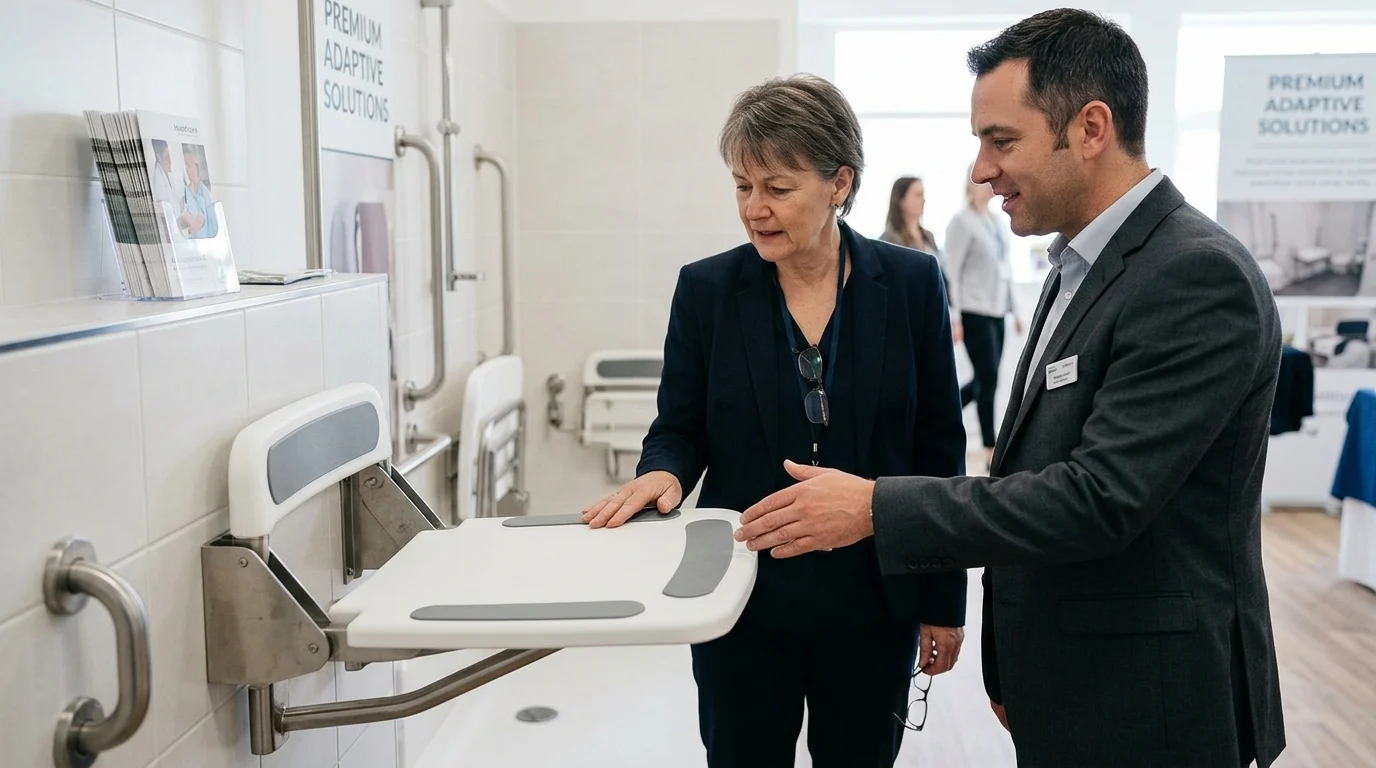
- Foldable wall-mounted systems remain dominant in space-efficient smart bathrooms.
Introduction: Bathroom Automation and the Reinvention of Fixed Fixtures
Bathroom automation is undergoing a structural shift similar to early smart home evolution in lighting and climate systems. Instead of focusing only on connected showers or digital faucets, the industry is expanding toward spatial intelligence—where every fixture contributes to data collection, safety optimization, and adaptive user experience. In this environment, the premium shower seat becomes a critical interface between human physical needs and machine-responsive environments.
Unlike traditional bathroom accessories, a premium shower seat is inherently tied to posture, safety, and duration of use. This makes it uniquely suitable for integration into sensor-driven systems that analyze motion stability, user fatigue, and fall-risk conditions in real time.
2026 Bathroom Automation Ecosystem Overview
By 2026, bathroom automation is expected to consolidate into three primary system layers: environmental control, safety intelligence, and usage analytics. These layers work together to create responsive bathing environments that adjust water temperature, lighting, humidity extraction, and safety monitoring dynamically.
- Environmental layer: Smart showers, adaptive lighting, humidity control systems
- Safety layer: Slip detection, posture monitoring, emergency alert systems
- Data layer: Water usage tracking, behavioral pattern recognition
Within this structure, seating systems transition from passive support objects to structural nodes that enable safety sensing and posture stabilization analytics.
External reference frameworks supporting this trend include:
- ISO 21542 Accessibility and usability of the built environment
- Americans with Disabilities Act (ADA) Standards
- World Health Organization disability inclusion framework
Functional Evolution of Shower Seats in Smart Bathrooms
The evolution of shower seats can be understood in three phases: static support systems, ergonomic optimized systems, and intelligent adaptive systems.
1. Static Support Phase
Traditional shower seats provide fixed load-bearing support without interaction or adaptability. Their function is purely mechanical, focusing on weight distribution and fall prevention.
2. Ergonomic Optimization Phase
Modern premium shower seats introduce foldability, wall integration, and ergonomic contouring. This phase prioritizes spatial efficiency and universal design compliance.
3. Intelligent Adaptive Phase (2026+)
Emerging systems incorporate pressure sensors, micro-motion detection, and structural load feedback loops. These features allow the seat to function as a safety data node within smart bathroom ecosystems.
Material Science and Engineering Requirements
Premium shower seats in automated environments require advanced material performance beyond aesthetic considerations. Structural integrity, corrosion resistance, and sensor compatibility define material selection criteria.
| Material Type | Performance Role | Automation Compatibility |
|---|---|---|
| 304 Stainless Steel | High corrosion resistance, structural load stability | Excellent for sensor integration housing |
| Aluminum Alloy (anodized) | Lightweight structural support | Moderate compatibility |
| Treated hardwood | Thermal comfort and aesthetic warmth | Low compatibility for embedded sensors |
| Composite polymer | Moisture resistance and flexibility | High potential for smart integration |
Smart Bathroom Integration Systems
In 2026, premium shower seats are increasingly positioned as sensor-adjacent infrastructure within smart bathrooms. This means they do not necessarily contain full computing systems but act as physical anchors for data collection.
- Pressure sensors embedded in mounting brackets detect weight shifts
- Micro-vibration sensors identify instability or slip risk
- Bluetooth Low Energy modules transmit usage data to home systems
- Humidity-adaptive materials respond to environmental changes
These integrations align with broader smart home frameworks such as Apple HomeKit, Google Home ecosystems, and open IoT standards used in residential automation platforms.
Comparative Analysis: Shower Seat Technologies in 2026
| Type | Functionality Level | Automation Capability | Spatial Efficiency | Future Readiness |
|---|---|---|---|---|
| Basic wall-mounted seat | Structural support | Low | High | Medium |
| Premium foldable seat | Ergonomic + structural | Medium | Very high | High |
| Sensor-integrated seat | Safety + data collection | High | High | Very high |
| AI-assisted adaptive seat | Predictive safety + posture optimization | Very high | Medium | Emerging |
Installation Logic in Automated Bathroom Systems
Installation of premium shower seats in smart bathrooms requires coordination between structural engineering and electrical planning. Unlike traditional installations, automation-ready systems require pre-planned conduit routing and load-bearing reinforcement zones.
- Identify structural wall type (concrete or stud framing)
- Define load-bearing reinforcement zones for seat anchoring
- Pre-install conduit paths for potential sensor wiring
- Apply waterproof sealing layers compatible with embedded systems
- Perform dynamic load and vibration testing after installation
Future Outlook: 2026–2035 Bathroom Intelligence Evolution
The next decade of bathroom design will shift toward predictive environments. Rather than responding to user actions, systems will anticipate needs based on behavioral patterns. Shower seats will likely evolve into modular nodes capable of interacting with fall prediction systems, hydration monitoring tools, and health tracking platforms.
This evolution positions the premium shower seat not as a passive fixture but as a core interface in health-oriented residential architecture.
Conclusion
In 2026 bathroom automation, the premium shower seat plays a foundational role as a hybrid structural and data-enabled component. It bridges physical safety, spatial design efficiency, and emerging smart home intelligence systems. As bathroom environments become increasingly automated, the shower seat transitions from a static support object into an integrated node within adaptive, sensor-driven ecosystems.
Frequently Asked Questions
Will shower seats become smart devices in the future?
Yes, future systems are expected to integrate sensors for posture and safety monitoring rather than functioning as passive fixtures.
What role does a shower seat play in smart bathrooms?
It serves as a structural and potential data-collection point within safety and environmental monitoring systems.
Are foldable shower seats suitable for automation systems?
Yes, foldable designs are preferred due to their spatial efficiency and compatibility with embedded sensor modules.
What materials are best for smart bathroom integration?
Stainless steel and advanced composites are most suitable due to durability and sensor compatibility.
Do smart shower seats require electrical installation?
Some advanced systems require low-voltage wiring or wireless modules integrated into bathroom infrastructure.
How does automation improve bathroom safety?
It enables real-time detection of instability, falls, and abnormal usage patterns.
Will traditional shower seats disappear?
No, but they will gradually evolve into hybrid mechanical-digital systems in high-end applications.


