

Introduction
China has become a pivotal source for premium shower seats, not just because of scale, but because leading suppliers now combine advanced materials, precision manufacturing, and compliance with demanding hospitality, residential, and healthcare standards. For buyers, specifiers, and sourcing teams, the challenge is no longer finding a factory—it is identifying brands that consistently deliver quality, design integration, safety performance, and dependable export capability. This overview highlights the top 10 leading supplier brands in China’s premium shower seat industry and explains why they stand out, giving you a practical starting point for evaluating partners, comparing capabilities, and narrowing a reliable shortlist.
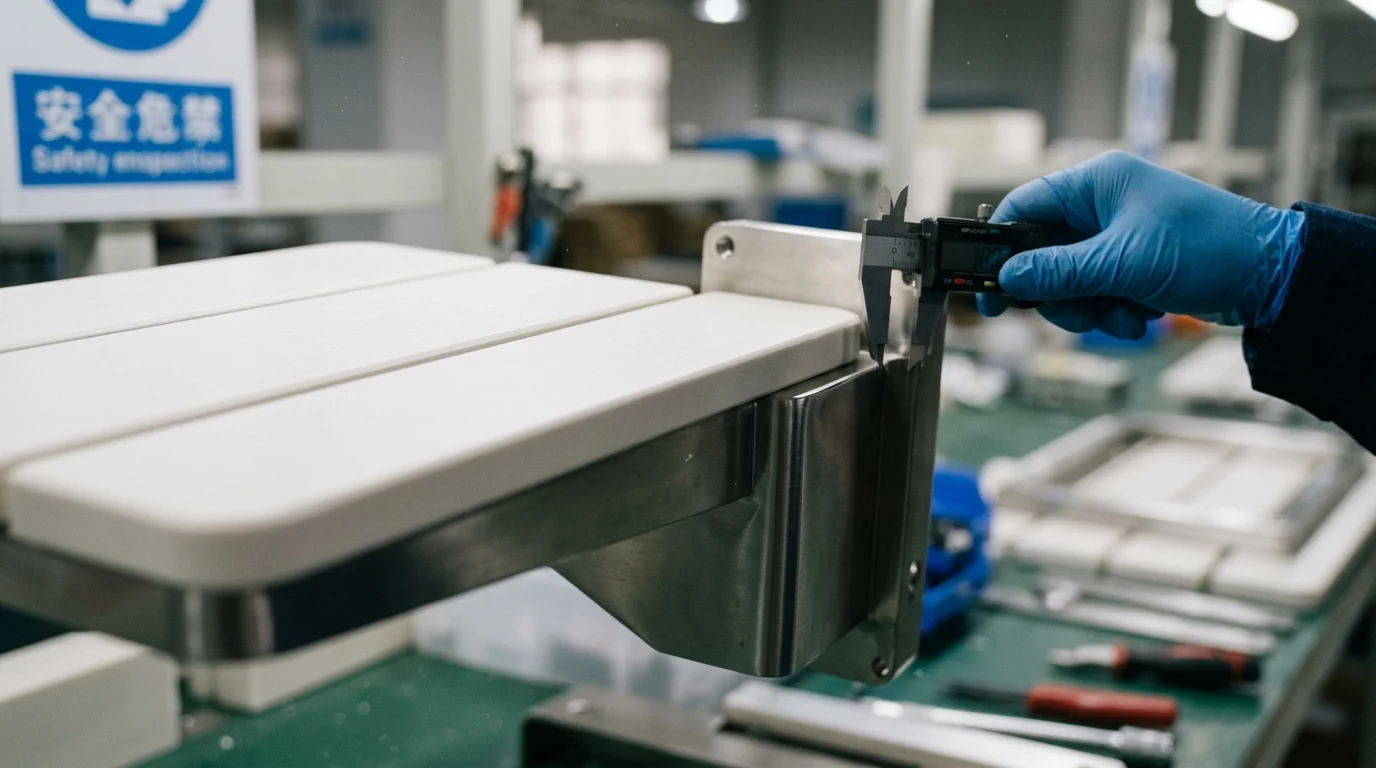
China Premium Shower Seat Market Overview
China’s manufacturing ecosystem has transitioned from producing basic bathroom aids to engineering premium shower seats tailored for luxury hospitality, high-end residential, and advanced healthcare facilities. The premium segment of the bathroom safety market in China is experiencing a compound annual growth rate (CAGR) of approximately 7.8%, driven by enhanced material engineering and automated production capabilities.
Why China matters in premium shower seat sourcing
The centralization of raw materials—specifically extruded aluminum, marine-grade stainless steel, and specialized polymers—allows Chinese manufacturers to maintain unmatched supply chain efficiency. Currently, China accounts for an estimated 65% of the global manufacturing output for bathroom safety and mobility products. This high density of specialized component suppliers provides international buyers with highly scalable production lines and rapid prototyping capabilities.
How the supplier base is evolving
Historically dominated by low-cost tubular aluminum and high-density polyethylene (HDPE) assemblies, the supplier base is aggressively moving upmarket. Today’s top-tier manufacturers are investing heavily in precision CNC machining, automated powder coating, and advanced injection molding. This technological shift enables the production of concealed-mount, slow-folding seats that meet rigorous architectural standards and blend seamlessly into modern wet-room designs.
Key market forces shaping supplier selection
Global demographic shifts, particularly the rapidly expanding silver economy, are forcing buyers to seek products that combine strict safety compliance with modern aesthetics. Consequently, supplier selection is increasingly dictated by a factory’s ability to seamlessly integrate heavy-duty performance—such as dynamic load capacities exceeding 400 lbs—with refined, minimalist industrial design. The demand for multi-generational living solutions has effectively erased the line between medical hardware and luxury bathroom fixtures.
Top Premium Shower Seat Suppliers in China
Identifying the top 10 leading supplier brands requires filtering thousands of generic sanitary ware producers down to a specialized subset of premium manufacturers. These elite suppliers are predominantly clustered in coastal manufacturing hubs such as Guangdong, Zhejiang, and Fujian provinces, where advanced tooling and export logistics are highly developed.
Leading brands to evaluate
The leading tier of manufacturers includes established OEM/ODM giants and specialized bathroom safety brands. While specific brand prominence fluctuates based on B2B contract volume, top players typically include enterprise-level manufacturers located in key industrial clusters. Below is a representative categorization of the top supplier profiles driving the premium sector:
Supplier Tier / Region | Core Specialization | Typical Certifications | Target Market |
Tier 1 (Xiamen/Fujian) | High-end OEM for global sanitary brands, precision engineering | ISO 9001, ISO 13485, CE, ADA compliant | Luxury Hospitality, Tier-1 Retail |
Tier 1 (Foshan/Guangdong) | Architectural hardware, heavy-duty stainless steel framing | ISO 9001, SGS Load Tested, RoHS | Healthcare, Commercial Projects |
Tier 2 (Wenzhou/Zhejiang) | Agile manufacturing, custom finishes (matte black, brushed brass) | ISO 9001, CE | E-commerce, Boutique Residential |
How to compare suppliers
Comparing these suppliers requires a rigorous evaluation of their in-house capabilities rather than just their product catalogs. Premium suppliers typically reinvest 3% to 5% of their annual revenue into research and development. Buyers should assess a supplier’s proprietary tooling capacity, their in-house testing laboratories (specifically for dynamic load and salt-spray testing), and their history of enforcing strict intellectual property protections for custom ODM designs.
Established manufacturers vs emerging brands
Established manufacturers offer unparalleled economies of scale and robust quality management systems, making them ideal for high-volume hospital or hotel contracts. However, they often enforce strict Minimum Order Quantities (MOQs) of 500 units or more. Conversely, emerging boutique brands offer greater agility, frequently accepting MOQs as low as 100 to 200 units while pioneering niche design trends like authentic teak wood inserts and proprietary soft-close damping hinges.
Product Specifications and Quality Standards
The distinction between a standard and a premium shower seat lies entirely in the stringency of its technical specifications and the quality of its raw materials. Procurement professionals must establish rigid baseline standards to ensure both user safety and long-term liability protection.
Core technical specifications
Premium shower seats must adhere to strict dimensional and structural engineering tolerances. A critical specification is the weight capacity; while standard consumer seats are rated for 250 lbs (113 kg), premium models must guarantee a minimum static load capacity of 400 to 500 lbs (181 to 227 kg). Wall-mounted folding profiles typically require a seating width of 18 to 24 inches to accommodate various body types, while maintaining a slim folded profile of less than 3 inches from the wall to maximize shower enclosure space.
Material options and durability
Material selection dictates both the aesthetic appeal and the lifespan of the fixture in high-moisture environments. Premium frames are exclusively constructed from 304 or 316 marine-grade stainless steel, or 6063-T5 extruded aluminum with a minimum wall thickness of 2.0mm. For the seating surfaces, high-end manufacturers utilize phenolic resin panels, high-density polyurethane (PU) foam for tactile comfort, or authentic Burma teak, deliberately avoiding the rapid degradation and discoloration associated with standard ABS plastics.
Compliance and testing requirements
Navigating international compliance is non-negotiable in the premium tier. Products must meet ADA guidelines (specifically Section 4.21.3 regarding structural strength) for the US market, or EN 12182 standards for the European assistive products sector. Furthermore, premium suppliers must provide verifiable third-party testing reports demonstrating a minimum of 240 hours of salt spray resistance (ASTM B117) to certify anti-corrosion claims for metal components.
Supplier Assessment and Sourcing Risks
Sourcing premium bathroom safety fixtures introduces distinct liability risks. A structural failure in a wall-mounted shower seat can result in severe user injury, making proactive supplier assessment and risk mitigation fundamental to the procurement lifecycle.
Due diligence for supplier qualification
Comprehensive due diligence extends beyond basic factory audits. Buyers must implement a rigorous qualification process that includes verifying Material Test Certificates (MTCs) to ensure stainless steel purity and reviewing the supplier’s ISO 9001 and ISO 13485 (medical device) quality management systems. On-site or third-party engineering audits should specifically evaluate the calibration of the factory’s load-testing equipment and the consistency of their automated welding stations.
MOQ, customization, packaging, and logistics
Logistical parameters heavily influence unit economics. Premium shower seat manufacturers typically require lead times of 35 to 45 days for standard production, extending to 60 days for custom finishes like Physical Vapor Deposition (PVD) coating. Because these products are heavy and feature sensitive surface finishes, packaging must utilize ECT-44 or ECT-48 corrugated cardboard with custom-molded EPE foam inserts to survive international transit and pass standard ISTA 1A drop tests.
Common sourcing risks and how to reduce them
The most prevalent sourcing risk in this category is unauthorized material substitution, such as a factory secretly swapping SS304 for the cheaper, rust-prone SS201. Another critical risk involves inadequate wall-mounting hardware, which can fail under shear stress. To reduce these risks, buyers must mandate strict Acceptable Quality Limit (AQL) inspections—typically AQL 1.5 for major defects and 4.0 for minor defects—conducted prior to container loading, paired with a legally binding penalty clause for material deviations.
Supplier Selection Framework
Finalizing a supplier partnership requires moving from broad market assessments to a highly structured selection framework. By aligning specific procurement priorities with factory capabilities, buyers can secure a resilient and profitable supply chain.
Criteria by buyer type
Selection criteria must be tailored to the specific buyer archetype. E-commerce retailers typically prioritize suppliers offering drop-ship ready packaging, low MOQs, and rapid inventory replenishment cycles. Hospitality specifiers and architectural firms prioritize custom finish capabilities, long-term warranty provisions (often 5 to 10 years), and comprehensive installation documentation. Meanwhile, healthcare and institutional distributors base their selection almost entirely on strict regulatory compliance, full component traceability, and ISO 13485 certification.
Final shortlist and selection criteria
The final shortlist should be evaluated using a quantified weighted matrix to remove subjective bias from the decision-making process. Buyers should assign specific weightings to key performance indicators based on their strategic goals.
Evaluation Criterion | Weighting (%) | Key Metrics Assessed |
Quality & Compliance | 40% | Material certifications, load test reports, ISO audits |
Total Landed Cost | 25% | Unit price, tooling amortization, packaging density |
Manufacturing Capacity | 20% | Monthly output, lead time consistency, scalability |
Communication & R&D | 15% | English proficiency, CAD/3D modeling support, responsiveness |
By applying this analytical framework, procurement teams can confidently evaluate and partner with the leading premium shower seat manufacturers in China, ensuring a balance of innovative design, uncompromising safety, and long-term commercial viability.
Key Takeaways
- The most important conclusions and rationale for Premium Shower Seat
- Specs, compliance, and risk checks worth validating before you commit
- Practical next steps and caveats readers can apply immediately
Frequently Asked Questions
What defines a premium shower seat supplier in China?
Look for marine-grade stainless steel or quality aluminum, 400+ lb load testing, salt-spray resistance, and certifications like ISO 9001 or CE. Strong OEM/ODM capability is also a key sign.
How can I verify a Chinese shower seat supplier’s quality?
Request test reports for dynamic load and corrosion resistance, ask for factory audit records, and review sample build quality. Reliable suppliers can show consistent QC and export experience.
Which Chinese regions are strongest for premium shower seat sourcing?
Foshan, Xiamen, and Wenzhou are leading hubs. They offer mature supply chains, better tooling, and faster export logistics for premium bathroom hardware.
Are low-MOQ options available for premium shower seats?
Yes. Large factories may require 500+ units, but smaller premium-focused suppliers often accept 100–200 units, especially for custom finishes or boutique projects.
How does Cassbern’s design approach help when choosing a shower seat supplier?
Cassbern prioritizes modern, elegant, practical bathroom solutions. Use that lens to shortlist suppliers offering minimalist styling, durable stainless construction, easy installation, and finishes that match upscale bathroom projects.


