

Compact bathrooms are no longer being designed as compromises; they are becoming proving grounds for smarter, safer, more elegant fixtures. In 2026, the compact wall mounted shower seat sits at the intersection of universal design, urban space constraints, and premium bathroom styling. With the bath safety equipment market projected to grow at more than 6.5% CAGR through 2028, demand is being shaped by aging-in-place renovations, hospitality accessibility standards, and smaller wet room footprints. This article explains what is driving the trend, which users benefit most, and what specifications buyers should evaluate before choosing a fold-away shower seat.
Why Compact Wall Mounted Shower Seats Are Gaining Demand
Bathroom architecture in 2026 reveals a pronounced shift toward spatial efficiency without compromising accessibility or luxury. At the center of this movement is the compact wall mounted shower seat, a fixture that bridges the gap between stringent inclusive design mandates and the shrinking footprints of modern wet rooms. As urban real estate costs escalate, architects and developers are increasingly tasked with maximizing utility within constrained parameters.
Industry analyses project the global bath safety equipment market to expand at a compound annual growth rate (CAGR) exceeding 6.5% through 2028. This growth is driven significantly by the integration of fold-away seating solutions in both the residential and commercial sectors, underscoring a broader transition from bulky, freestanding shower aids to integrated, structural solutions that offer permanent stability.
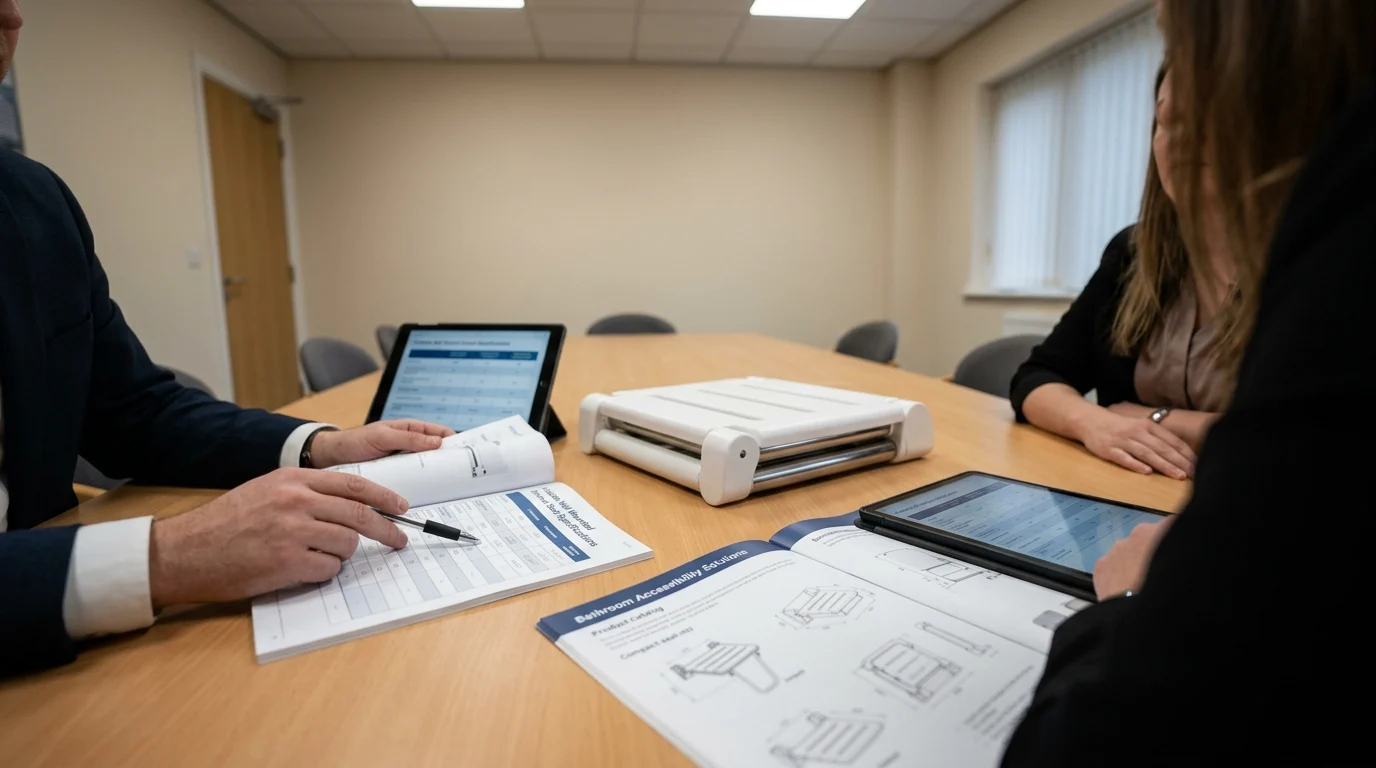
Market Drivers Across Residential and Commercial Settings
In high-density urban developments, standard shower enclosures frequently measure a mere 36 by 36 inches. Within these parameters, traditional freestanding bath benches consume an unacceptable percentage of usable floor space, creating tripping hazards and impeding mobility. The compact wall mounted shower seat resolves this by providing robust support on demand while retracting flush against the wall when not in use.
Commercially, the drive toward universal design has prompted facilities to integrate seating that accommodates varying mobility levels without requiring staff intervention to place or remove equipment. This operational efficiency is a primary catalyst for the widespread adoption of folding shower seats in multi-residential and institutional builds.
Key User Groups in Hospitality, Healthcare, and Aging-in-Place
The hospitality sector represents a major demand vector, as modern boutique hotels require ADA-compliant rooms that do not exhibit a clinical or institutional aesthetic. Hoteliers are specifying slim-profile seats featuring premium finishes to maintain a luxury environment while meeting statutory accessibility requirements.
Simultaneously, the aging-in-place demographic is fundamentally altering residential remodeling. With demographic data indicating that over 77% of adults aged 50 and older prefer to remain in their current homes indefinitely, proactive bathroom modifications have surged. In healthcare and assisted living environments, heavy-duty compact seats are essential for patient safety, particularly bariatric models engineered to support elevated weight capacities while maintaining a minimal spatial footprint.
What Defines a Compact Wall Mounted Shower Seat
A compact wall mounted shower seat is technically distinguished by its fold-up mechanism, structural wall brackets, and minimal stowed profile. Unlike standard folding seats, compact variants are engineered to optimize the ratio between the deployed seating surface and the retracted volume.
Premium models in the 2026 market feature a closed depth of strictly under 3 inches from the wall substrate. These units utilize advanced cantilevered designs or concealed drop-down legs to achieve structural rigidity. The defining characteristic is the seamless integration of a high-load-bearing platform into a visually unobtrusive, space-saving silhouette.
Core Specifications Buyers Should Compare
Specifying the appropriate shower seating requires a rigorous evaluation of structural and material parameters. Procurement professionals must look beyond surface aesthetics to understand the engineering tolerances that dictate long-term performance and safety.
Comparing core specifications ensures that the selected fixture aligns with the anticipated usage frequency, environmental conditions, and regulatory requirements of the installation site.
Dimensions, Load Ratings, and Folded Depth
The dimensional footprint of a shower seat directly impacts both user comfort and spatial compliance. The seating surface typically measures between 15 and 18 inches in width, ensuring adequate support while remaining proportionate to smaller shower stalls. The deployed depth generally extends 14 to 16 inches from the wall, providing sufficient surface area for safe transfer and seating.
Load ratings are a critical differentiator in the specification process. While baseline consumer models may be rated for 250 pounds, commercial-grade compact seats are engineered to withstand dynamic loads ranging from 400 to over 500 pounds. Additionally, the folded depth—the distance the seat protrudes when stowed—is a vital metric for tight spaces, with industry-leading compact models achieving profiles as slim as 1.5 to 2.5 inches.
Material Options Including Phenolic, Teak, and Stainless Steel
Material selection dictates the fixture’s durability, maintenance schedule, and resistance to the harsh, high-moisture environment of a shower enclosure. Phenolic resin is highly favored in commercial applications due to its non-porous nature, inherent antimicrobial properties, and absolute resistance to delamination under continuous moisture exposure.
Teak wood offers superior aesthetics and natural slip resistance, possessing a Janka hardness rating of 1,000 lbf, though it demands periodic oiling to prevent degradation. High-density polyethylene (HDPE) provides a cost-effective, easily cleanable alternative for institutional settings. The structural brackets and hinges are almost exclusively fabricated from stainless steel, with marine-grade 316 stainless steel preferred over standard 304 due to its superior resistance to chloride-induced corrosion.
Specification Comparison Table
To facilitate rapid evaluation of the primary material configurations available in the market, the following table outlines the comparative advantages and typical specifications of compact shower seats.
Material Configuration | Typical Load Rating (lbs) | Stowed Depth | Maintenance Requirement | Ideal Application |
Phenolic Top / 316 SS Frame | 400 – 500 | 1.5″ – 2.5″ | Low (Wipe clean) | Hospitals, High-traffic Commercial |
Solid Teak / 304 SS Frame | 250 – 400 | 2.0″ – 3.0″ | Medium (Periodic oiling) | Luxury Hospitality, Residential |
HDPE Slats / Aluminum Frame | 250 – 300 | 2.5″ – 3.5″ | Low (Wipe clean) | Budget Multi-family, Institutional |
Molded Polyurethane / SS Frame | 300 – 400 | 2.0″ – 3.0″ | Low (Wipe clean) | Assisted Living, Rehabilitation |
Compliance, Safety, and Installation Requirements
The integration of a wall mounted seat into a shower enclosure introduces significant structural and liability considerations. Unlike freestanding alternatives, these fixtures transfer the entirety of the user’s weight directly to the wall assembly, creating substantial shear and pull-out forces on the mounting hardware.
Ensuring compliance with accessibility standards and executing a flawless installation are non-negotiable prerequisites for mitigating risk and ensuring user safety over the product’s lifecycle.
Accessibility Standards and Code Considerations
In the United States, the Americans with Disabilities Act (ADA) establishes strict criteria for shower seating under Section 610 of the 2010 ADA Standards for Accessible Design. A compliant seat must be positioned so the top of the seating surface is strictly 17 to 19 inches above the finished bathroom floor.
Furthermore, the installation must be capable of withstanding a minimum vertical or horizontal force of 250 pounds applied at any point on the seat, fastener, or mounting device. To account for dynamic loading—where a user drops their weight onto the seat abruptly—most commercial specifiers require testing certifications that verify structural integrity up to 500 static pounds.
Wall Substrate, Blocking, Anchoring, and Waterproofing
Proper installation fundamentally relies on the integrity of the wall substrate. Standard drywall or cement board is entirely insufficient to support the cantilevered forces generated by an occupied shower seat. Installation mandates the inclusion of substantial structural blocking within the wall cavity prior to the application of backer boards and waterproofing. Standard practice dictates a minimum of 2×6 or 2×8 solid wood blocking, securely fastened between the studs.
For masonry or concrete walls, heavy-duty wedge anchors or epoxy-set anchors are required. Equally critical is the waterproofing strategy; all penetrations through the shower envelope must be meticulously sealed. Installers must utilize a generous application of 100% silicone sealant injected directly into the pilot holes and behind the mounting flanges to prevent moisture intrusion, which could lead to concealed rot and eventual structural failure.
Installation Inspection Steps That Reduce Failures
Post-installation inspections are critical for mitigating failure risks. Quality assurance protocols should verify that all fasteners are torqued to the manufacturer’s specifications, typically falling between 15 and 20 foot-pounds, depending on the anchor type. Over-tightening can strip the substrate, while under-tightening leaves the bracket vulnerable to cyclic fatigue.
Field data indicates that over 80% of wall mounted seat failures stem from inadequate anchoring or absent blocking rather than hardware defects. Consequently, a formal load test—applying a controlled weight to the deployed seat while monitoring the wall flanges for any deflection or separation from the tile—should be standard procedure before a facility is cleared for occupancy.
Sourcing, Cost, and Logistics Considerations
The procurement of compact wall mounted shower seats involves navigating a complex matrix of manufacturing costs, geographic sourcing advantages, and evolving distribution models. For large-scale developments, optimizing the supply chain yields significant budgetary advantages.
Buyers must balance the immediate capital expenditure against the long-term total cost of ownership, factoring in lead times, freight costs, and the operational impact of potential defects.
Manufacturing Variables That Affect Price and Quality
The wholesale cost of a compact shower seat is heavily influenced by raw material pricing and fabrication complexity. The precision CNC machining required for phenolic tops and the intricate TIG welding necessary for heavy-duty stainless steel hinge mechanisms establish a rigid baseline production cost.
Consequently, unit prices vary significantly across quality tiers. Entry-level residential models may retail between $150 and $250, whereas commercial-grade units featuring 316 stainless steel and custom phenolic profiles typically range from $400 to over $800 per unit. Variables such as automated soft-close dampeners and specialized PVD (Physical Vapor Deposition) finishes for the metal hardware can increase unit costs by an additional 15% to 30%.
Domestic vs. Overseas Sourcing
Sourcing from overseas manufacturers, primarily located in Southeast Asia, offers significant cost reductions—often 20% to 35% below domestic alternatives. However, this route typically requires Minimum Order Quantities (MOQs) ranging from 100 to 500 units and introduces maritime shipping lead times of 6 to 8 weeks, which can complicate aggressive construction schedules.
Conversely, domestic sourcing provides agility. North American manufacturers offer drastically reduced lead times, often fulfilling orders within 1 to 2 weeks, and permit low or zero MOQs. While the per-unit cost is higher, domestic procurement reduces inventory holding requirements and mitigates the risk of costly project delays caused by global supply chain disruptions.
Distribution and Procurement Channel Trends
The distribution landscape in 2026 emphasizes direct-to-builder channels and Just-In-Time (JIT) delivery mechanisms. Traditional multi-tiered distribution is being bypassed by digital procurement platforms that connect commercial buyers directly with original equipment manufacturers (OEMs).
This shift allows project managers to coordinate the delivery of shower seats to align precisely with the bathroom finishing phase, minimizing the risk of on-site damage or theft. Furthermore, centralized procurement portals now frequently integrate compliance documentation, warranty registration, and installation schematics directly into the digital handover package for the facility management team.
How to Choose the Right Compact Wall Mounted Shower Seat
Selecting the optimal compact wall mounted shower seat requires a systematic approach that aligns technical specifications with project-specific variables. A mismatch between the product’s engineering and the user’s requirements can result in rapid degradation, safety hazards, or aesthetic dissonance.
By utilizing structured decision frameworks and comprehensive procurement checklists, buyers can standardize their sourcing process and ensure reliable outcomes across diverse installation environments.
Decision Matrix by Project Type and User Need
To streamline the selection process, buyers should categorize their requirements based on the primary application of the facility. The following decision matrix correlates project types with their optimal shower seat specifications.
Project Category | Primary User Need | Key Specification Priority | Recommended Material | Target Load Rating |
Boutique Hospitality | High aesthetics, space-saving | Stowed depth < 2.5″, Design | Teak / PVD Coated SS | 300 – 400 lbs |
Bariatric Healthcare | Maximum stability, hygiene | Structural rigidity, Non-porous | Phenolic / 316 SS | 500+ lbs |
Micro-Apartments | Durability, cost-efficiency | Small footprint, Low maintenance | HDPE / Aluminum | 250 – 300 lbs |
Aging-in-Place | Comfort, ease of deployment | Soft-close mechanism, Warm feel | Molded Polyurethane | 300 – 400 lbs |
Procurement Steps From Site Assessment to Purchase
The procurement lifecycle begins with a comprehensive site assessment. Project managers must verify the exact dimensions of the shower enclosures and confirm that the existing stud bays can accommodate the necessary structural blocking. Without this verification, retrofitting blocks into sealed walls can incur labor costs exceeding $500 per bathroom.
Following site verification, specifiers must select models that align with the facility’s maintenance capabilities. For instance, specifying teak in a high-turnover hotel without a dedicated woodwork maintenance protocol will lead to rapid aesthetic deterioration. The final purchasing step involves aligning the manufacturer’s lead times with the critical path of the construction schedule, ensuring units arrive precisely prior to the final plumbing trim-out phase.
Final Buyer Checklist
Before issuing a final purchase order, buyers must execute a rigorous verification checklist. First, confirm that the selected model possesses the requisite ADA certification documentation and third-party load testing reports. Second, verify that the mounting hardware provided by the manufacturer is compatible with the intended wall substrate, specifying alternative concrete anchors or wood lags if necessary.
Finally, review the manufacturer’s warranty terms. A standard warranty should offer a minimum 1-year guarantee against defects for residential use, while commercial installations should secure extended warranties covering 3 to 5 years. Ensuring the availability of replacement parts, such as hinge dampeners or replacement seat slats, will further protect the capital investment over the fixture’s operational lifespan.
Key Takeaways
- Choose a compact wall mounted shower seat when floor space is limited, especially in 36-by-36-inch shower enclosures where freestanding benches can create mobility hazards.
- Prioritize models with a folded depth under 3 inches if you want the seat to remain visually discreet and preserve usable shower space.
- Compare structural specifications such as weight capacity, wall anchoring requirements, bracket design, and corrosion-resistant materials before purchasing.
- Use fold-away seating to support aging-in-place plans, since more than 77% of adults aged 50 and older prefer to remain in their current homes.
- For hospitality and commercial projects, specify slim-profile seats that support accessibility compliance without compromising a luxury bathroom aesthetic.
Frequently Asked Questions
Why are compact wall mounted shower seats becoming popular in 2026?
They meet three priorities at once: space efficiency, safer showering, and refined design. As wet rooms get smaller and accessibility expectations rise, fold-away seating provides support only when needed while keeping the shower open and elegant.
How much space does a compact wall mounted shower seat save?
Many compact models fold to under 3 inches from the wall, making them far less intrusive than freestanding benches. This is especially valuable in common 36-by-36-inch shower enclosures where every inch of floor space matters.
Who benefits most from a folding shower seat?
Aging-in-place homeowners, people with limited mobility, hotel guests, healthcare patients, and anyone who wants added comfort can benefit. The seat supports safer showering without giving the bathroom a clinical appearance.
Are wall mounted shower seats suitable for luxury bathrooms?
Yes. Modern wall mounted shower seats are designed with slim profiles, premium finishes, and discreet hardware. Brands such as Cassbern focus on combining practicality with elevated bathroom style, so accessibility can feel integrated rather than institutional.
What should buyers compare before choosing a shower seat?
Key factors include weight capacity, folded depth, seat size, wall compatibility, bracket strength, corrosion-resistant materials, and ease of installation. For wet environments, durable stainless or premium water-resistant materials are especially important.


