

Introduction
In a compact apartment, the shower has to do more with less space, serving daily comfort, long-term accessibility, and a clean visual layout at once. A premium folding shower seat meets those demands by adding support only when needed and disappearing when it is not. More than a convenience feature, it can improve usability for older residents, guests, and anyone who values safer bathing without sacrificing room to move. This article explains how a well-designed folding shower seat enhances space efficiency, supports aging-in-place goals, and strengthens the overall appeal and function of a small bathroom.
Why a Folding Shower Seat Is a Strategic Upgrade
As urban densification accelerates, developers and architects are increasingly tasked with maximizing utility in micro-apartments and compact multi-family units. In floor plans where every square inch is monetized, bathrooms are frequently compressed to sub-45 square foot footprints. Within these tight constraints, the shower enclosure must deliver both luxury and accessibility without compromising spatial efficiency. The integration of a premium folding shower seat has emerged as a strategic architectural upgrade, bridging the gap between high-end residential design and inclusive, multi-generational functionality.
Unlike bulky permanent fixtures or temporary medical-grade seating, a wall-mounted, fold-away seat operates as dynamic architectural hardware. It allows a standard 36-by-36-inch shower stall to function as an expansive wet room when folded up, while instantly converting into a universally accessible bathing space when deployed. This adaptability directly influences property valuation, tenant retention, and regulatory compliance in modern residential developments.
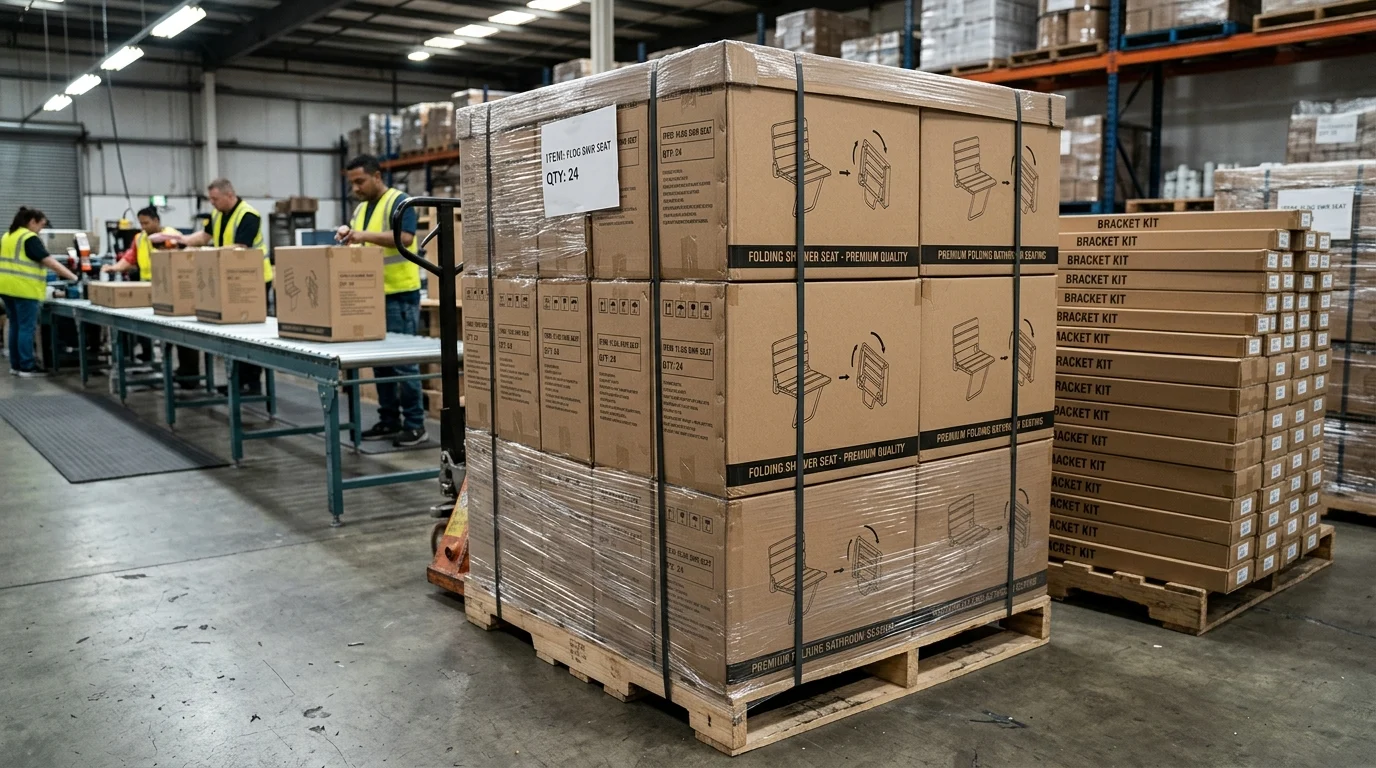
Space efficiency and aging-in-place demand
The demographic shift toward aging-in-place is fundamentally altering residential building codes and tenant expectations. With a significant portion of the population seeking accessible living arrangements, compact apartments must accommodate mobility needs without looking institutional. A folding shower seat requires zero floor space when stowed, preserving the turning radius required for maneuverability. When lowered, it provides a stable resting platform that meets or exceeds the minimum 18-inch depth clearance required by many accessibility standards.
By eliminating the permanent footprint of a built-in bench, designers reclaim valuable interior volume. This spatial efficiency is particularly critical in zero-threshold showers, where an unobstructed floor plane is necessary for wheelchair access or simply to create the visual illusion of a larger bathroom.
Premium positioning and tenant appeal
Beyond mere utility, premium folding seats serve as a visual indicator of build quality. High-end hardware specification signals to prospective tenants that the property prioritizes ergonomic comfort and long-term durability. In competitive urban real estate markets, units equipped with spa-like, accessible bathroom features frequently command a 3% to 5% rent premium over standard configurations.
Furthermore, the aesthetic evolution of these fixtures means they no longer resemble hospital equipment. Contemporary designs utilize concealed hinges, slim profiles, and architectural finishes that integrate seamlessly with luxury plumbing fixtures, elevating the overall perceived value of the compact apartment.
What Defines a Premium Folding Shower Seat
Specifying a folding shower seat for a multi-tenant commercial or residential environment requires a strict departure from consumer-grade plastics. A premium designation is defined by structural integrity, material resilience, and ergonomic sophistication. These fixtures must withstand daily exposure to high humidity, thermal cycling, and heavy dynamic loads while maintaining a flawless aesthetic over a multi-year lifecycle.
Key performance specifications
The defining metric of a premium folding seat is its load-bearing capacity and structural rigidity. Commercial-grade units must support a minimum static load of 400 to 500 pounds, far exceeding the baseline requirements of residential building codes. This necessitates the use of heavy-gauge structural components and engineered hinge mechanisms that prevent sagging or lateral deflection over time.
Additionally, moisture resistance is non-negotiable. Premium mechanisms are typically subjected to 500-hour continuous salt spray testing to ensure absolute corrosion resistance in aggressive wet environments. The kinematic action of the folding mechanism itself must be damped or tensioned, ensuring the seat glides smoothly rather than dropping abruptly, which mitigates impact damage and noise.
Specification | Consumer-Grade Seat | Premium Architectural Seat |
Static Load Capacity | 250 lbs | 400 – 500+ lbs |
Frame Material | Aluminum / Plastic | 304 or 316L Stainless Steel |
Corrosion Testing | N/A | 500-hour salt spray certified |
Hinge Mechanism | Friction fit | Damped, heavy-duty torsion |
Warranty | 1 Year | 10 – 15 Years Commercial |
Materials, finishes, and ergonomics
Material selection directly impacts both hygiene and haptics. Premium seats eschew porous materials in favor of solid phenolic resins, extruded aluminum, or naturally rot-resistant woods like Burmese Teak. Phenolic panels, typically specified at a 12mm thickness, offer extreme durability, are impervious to water ingress, and inhibit microbial growth.
Finishes are equally critical for design cohesion. Leading manufacturers utilize Physical Vapor Deposition (PVD) to apply matte black, brushed nickel, or polished brass finishes to the stainless steel hardware. This ensures the seat’s brackets and hinges perfectly match the shower valves and drain covers, while the PVD process provides a surface hardness that resists scratching and chemical degradation from harsh bathroom cleaning agents.
How a Folding Shower Seat Compares With Other Compact Solutions
When designing a compact shower enclosure, architects generally evaluate three seating solutions: permanent built-in tiled benches, freestanding removable stools, and wall-mounted folding seats. Each approach carries distinct implications for spatial planning, user safety, and facility maintenance.
Comparison criteria
The primary criteria for evaluating these solutions revolve around volumetric footprint, long-term hygiene, and user safety. In a compact apartment, floor space is the most valuable commodity. Built-in benches consume permanent square footage, effectively shrinking the usable standing area of the shower. Freestanding stools offer modularity but introduce trip hazards and require external storage when not in use.
Wall-mounted folding seats provide a hybrid advantage: they deliver the structural stability of a built-in bench while matching the modular footprint of a removable stool. When folded against the wall, a premium seat typically protrudes less than 3 inches, virtually eliminating its impact on the shower’s spatial envelope.
Trade-offs in footprint, safety, and maintenance
The trade-offs become starkly apparent when analyzing maintenance and risk profiles. Built-in tiled benches are notorious for moisture retention; the 90-degree grout joints act as traps for soap scum and mold, requiring frequent, labor-intensive cleaning. Removable plastic or aluminum stools pose a significant tipping hazard, especially for users with limited mobility, and their rubber feet can degrade and stain shower pans.
Feature / Trade-off | Built-In Tiled Bench | Freestanding Stool | Premium Folding Seat |
Footprint (Deployed) | ~2.5 to 3.0 sq ft | ~1.5 sq ft | ~2.0 sq ft |
Footprint (Stowed) | Permanent (No change) | Must be removed/stored | < 0.5 sq ft (Folded flat) |
Hygiene / Cleaning | High maintenance (Grout lines) | Moderate (Mold traps in joints) | Low maintenance (Non-porous) |
Safety / Stability | High (Structural) | Low (Tipping/sliding hazard) | High (Wall-anchored) |
Installation Cost | High (Framing, waterproofing, tile) | Low (Off-the-shelf) | Moderate (Blocking + hardware) |
By specifying a folding seat, designers eliminate horizontal grout lines, drastically reducing routine cleaning times. Furthermore, the wall-anchored design eliminates the tipping risks associated with freestanding stools, providing a rigid, secure platform that supports independent bathing.
How to Specify and Install the Right Folding Shower Seat
The successful integration of a folding shower seat relies entirely on rigorous specification and precise installation. Because these fixtures must support dynamic human weight, they cannot be treated as standard bathroom accessories like towel bars or soap dishes. Coordination between the architect, structural engineer, and installation contractor is essential during the early phases of framing and waterproofing.
Assess wall structure and user needs
The most critical point of failure for any wall-mounted seat is the substrate. Premium folding seats require heavy-duty structural blocking behind the shower wall. Standard 16-inch on-center wood or metal studs alone are insufficient. Specifiers must mandate continuous 2×6 or 2×8 solid wood blocking, or equivalent heavy-gauge steel backing plates, spanning the stud bay where the seat will be mounted.
This blocking must be positioned precisely to align with the seat’s mounting brackets. Fasteners must be driven deep into the structural backing to withstand shear and pull-out forces that can easily exceed 1,000 lbs of peak dynamic load when a user sits down abruptly. Failure to assess and prepare the wall structure prior to waterproofing and tiling will render the installation unsafe and void manufacturer warranties.
Installation, compliance, and maintenance
Installation must adhere to stringent accessibility standards. In the United States, ADA guidelines dictate that the top of the shower seat must be mounted between 17 and 19 inches from the finished bathroom floor. The seat must also extend from the back wall to within 3 inches of the compartment entry, ensuring seamless lateral transfer for users with mobility devices.
Waterproofing the penetrations is another critical phase. Drill holes for the heavy-duty lag bolts must be thoroughly injected with high-grade, mold-resistant silicone sealant prior to driving the fasteners. This prevents moisture ingress into the structural blocking, which could lead to concealed rot, structural failure, and catastrophic leaks in multi-story apartment buildings.
Decision factors for project teams
For large-scale multi-family developments, procurement logistics play a major role in specification. Project teams must account for Minimum Order Quantities (MOQs) and lead times when selecting custom finishes. While standard brushed stainless steel seats might be stocked locally, PVD-coated finishes like matte black or brushed gold often require MOQs of 50 to 100 units and entail manufacturing lead times of 6 to 8 weeks.
Contractors must also verify that the selected hardware is shipped with the appropriate masonry or wood anchors specific to the project’s wall assembly. Early coordination ensures that the framing phase incorporates the necessary blocking without causing delays to the critical path of construction.
Why Specifiers Should Treat It as a Long-Term Investment
For developers and architectural specifiers, a premium folding shower seat should be evaluated through the lens of Total Cost of Ownership (TCO) rather than isolated upfront capital expenditure. While a high-end architectural seat may cost three to four times as much as a consumer-grade alternative, its longevity and risk-mitigation properties yield a superior return on investment over the lifespan of a multi-family asset.
Lifecycle cost, user experience, and risk reduction
The commercial lifecycle of a premium folding seat typically spans 10 to 15 years, backed by robust manufacturer warranties. In contrast, cheaper alternatives frequently suffer from hinge corrosion, plastic degradation, or aesthetic failure within the first two years of tenant use, necessitating costly replacements, fresh wall penetrations, and potential waterproofing repairs.
More importantly, the specification of structurally sound, high-capacity seating dramatically reduces liability. In commercial and multi-family real estate, slip-and-fall incidents in wet environments represent a massive legal and financial risk, with average liability claims often exceeding $50,000 per incident. By providing a secure, wall-anchored seating solution, property owners proactively mitigate this risk, ensuring tenant safety while potentially lowering property casualty insurance premiums. Ultimately, the integration of a premium folding shower seat transforms a spatial constraint into a durable, luxurious, and highly functional asset.
Key Takeaways
- The most important conclusions and rationale for Folding shower seat
- Specs, compliance, and risk checks worth validating before you commit
- Practical next steps and caveats readers can apply immediately
Frequently Asked Questions
Why is a folding shower seat ideal for a compact apartment?
It adds seating and accessibility without taking up floor space when folded. In small showers, that means better comfort, easier movement, and a cleaner, more open look.
What makes a folding shower seat “premium”?
Look for 304 or 316 stainless steel, a 400-500 lb load rating, corrosion resistance, and a smooth damped hinge. These features improve durability, safety, and daily usability.
Can a folding shower seat still look stylish in a modern bathroom?
Yes. Premium wall-mounted designs use slim profiles, concealed hardware, and refined finishes that pair well with Cassbern’s modern shower systems and curated bathroom aesthetic.
How much space can a wall-mounted folding shower seat save?
When stowed, it frees the shower floor completely. That helps compact bathrooms feel larger and keeps zero-threshold or 36-by-36-inch shower layouts more functional.
What should I check before installing a folding shower seat?
Confirm wall reinforcement, stud placement, seat height, and weight capacity. For best results, match the finish with your Cassbern shower fixtures and choose rust-resistant materials for wet areas.


