

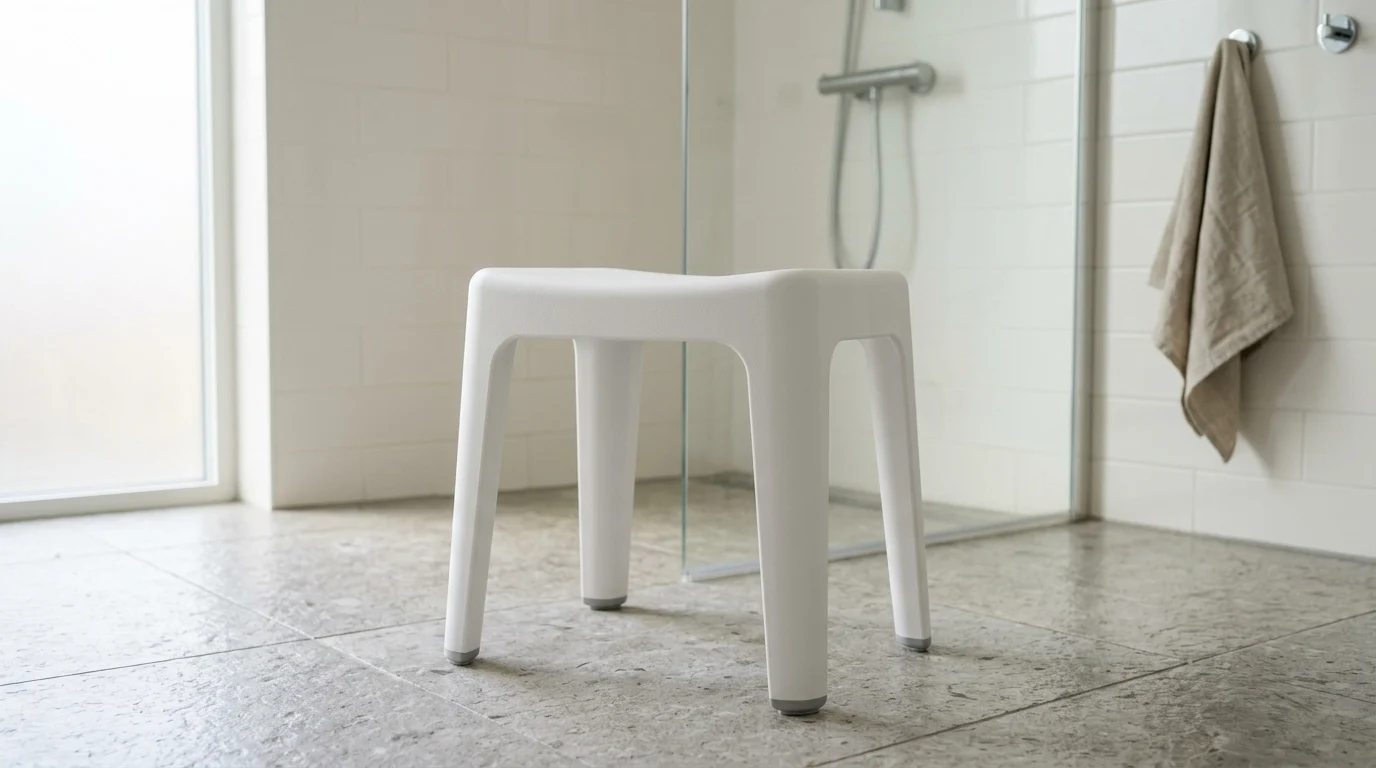
Modern bathrooms are expected to do more than look beautiful—they must also use space intelligently, support changing mobility needs, and deliver a premium daily experience. A minimalist folding shower seat answers all three priorities by adding seated comfort without the bulk of a fixed bench or the visual weight of institutional fixtures. In compact 36-by-36-inch showers, every inch matters, and a wall-mounted seat that folds nearly flat can preserve movement while enhancing usability. This article explores why these discreet fixtures have become a smart specification for residential upgrades, hospitality projects, and elegant bathroom renovations focused on accessibility, resale value, and enduring design.
Why Minimalist Shower Seats Are a Strategic Upgrade
The integration of accessibility features in modern bathroom design has transitioned from institutional afterthoughts to core architectural elements. Minimalist shower seats represent this paradigm shift, offering high-performance utility without compromising spatial aesthetics. Whether for a homeowner upgrading a master bath or a developer outfitting a luxury hotel, specifying these fixtures is a calculated enhancement of the user experience.
As the global bathroom fixtures market increasingly prioritizes streamlined, multi-functional spaces, the demand for concealed or low-profile seating solutions has surged. Evaluating these fixtures requires an understanding of their commercial and residential value, structural requirements, and long-term lifecycle benefits.
Commercial Value for Modern Bathrooms
Commercial facilities and residential properties alike face continuous pressure to deliver premium amenities while maximizing available square footage. A minimalist folding shower seat provides essential functionality on demand, elevating the space’s perceived value without disrupting the visual continuity of high-end tilework.
Market data indicates that bathrooms equipped with integrated, high-design accessibility features can justify premium room rates and increase home resale appeal. Facility managers and homeowners often find that offsetting the upfront cost of a high-end folding seat—which might carry an illustrative premium of $150 to $400 over standard options—yields a measurable return on investment through increased desirability and broadened demographic appeal. The unobtrusive nature of these seats ensures that rooms cater equally to young professionals seeking a spa-like environment and elderly individuals requiring physical support.

Space-Saving Benefits of Wall-Mounted Folding Seats
Space optimization is a critical metric in modern urban developments and compact residential layouts, where standard shower enclosures frequently measure a tight 36 by 36 inches (914 by 914 mm). In such restricted footprints, a fixed bench occupying 15 inches of depth severely limits user mobility and creates an uncomfortable showering environment.
Wall-mounted folding seats resolve this spatial conflict entirely. Advanced minimalist designs boast an ultra-slim profile, protruding as little as 1.5 to 3 inches (38 to 76 mm) from the wall when stowed. This efficient use of space allows for unimpeded movement when the seat is not required, effectively expanding the usable volume of the shower enclosure without altering the architectural footprint. When deployed, the seat leverages precision engineering to hold substantial weight without requiring the bulky, floor-mounted legs characteristic of legacy designs.
What Defines a Minimalist Shower Seat
Defining a minimalist shower seat requires looking beyond mere visual simplicity. True minimalism in this context is an engineering discipline that conceals complex mechanical functions behind clean lines and unobtrusive surfaces.
The objective is to achieve a seamless integration with the surrounding architecture while maintaining rigorous performance standards. This balance of form and function dictates the manufacturing tolerances, material selections, and ergonomic profiles of premium fixtures.
Minimalist Design Beyond a Slim Profile
A slim profile is only the most visible characteristic of minimalist design. The structural integrity of these seats relies on sophisticated mounting systems that eliminate exposed fasteners, bulky brackets, and visible welds. Precision engineering allows for exceptionally tight manufacturing tolerances, often demanding gap clearances of less than 2 millimeters between moving parts.
While this level of precision helps minimize the accumulation of soap scum, specifiers and homeowners should note that concealed hinges and tight clearances can be susceptible to hard-water mineral buildup, requiring periodic maintenance to ensure smooth operation. Furthermore, the use of continuous, monolithic materials—such as solid phenolic panels or extruded aluminum—creates a visually unified fixture that complements contemporary large-format tiles and frameless glass enclosures, ensuring the seat acts as an architectural accent rather than a clinical intrusion.
Key Features of Folding Shower Seats
The functionality of a premium folding shower seat is defined by its kinematic mechanisms—the engineered components that control movement. High-end models feature integrated torsion springs or hydraulic dampeners that provide a smooth, controlled soft-close and soft-open experience. This dampening technology prevents the seat from dropping abruptly, eliminating noise and mitigating the risk of injury or damage to the fixture.
Additionally, effective water management is a critical feature integrated into the design. Minimalist seats incorporate subtle, CNC-machined drainage slots—often featuring typical dimensions such as 5 to 8 millimeters in width—that ensure rapid water shedding. This prevents pooling and slip hazards without compromising the structural integrity or the sleek visual profile of the seating surface.
Balancing Aesthetics, Comfort, and Function
Achieving equilibrium between aesthetic restraint and user comfort is the primary challenge in minimalist fixture design. A seat must remain visually unobtrusive when folded while offering adequate, secure support during use. Industry standards dictate a minimum seating area of approximately 18 inches in width by 15 inches in depth (457 by 381 mm) to accommodate a diverse range of body types comfortably.
To soften the rigid geometry typical of minimalist design, manufacturers employ subtle contouring and chamfered edges. These ergonomic refinements distribute pressure evenly across the seating surface, ensuring that the strict adherence to minimalist architectural principles does not result in an uncomfortable user experience.
Technical Specifications That Matter
The visual elegance of a minimalist shower seat is entirely dependent on its hidden mechanical and structural specifications. Specifiers must rigorously evaluate load capacities, material properties, and compliance standards to ensure long-term durability in high-moisture environments.
A failure to properly assess these technical parameters can lead to premature mechanical failure, degraded aesthetics, or severe liability issues resulting from structural collapse.
Load Capacity, Wall Reinforcement, and Bracket Design
The structural foundation of any wall-mounted seat is its load-bearing capacity, which is dictated jointly by the bracket design and the wall reinforcement. While standard residential guidelines may suggest a 250-pound (113 kg) capacity, commercial-grade minimalist seats are routinely engineered to withstand static loads of 400 to 500 pounds (181 to 226 kg).
Achieving this specification requires robust in-wall blocking, typically consisting of 2×6 solid wood or heavy-gauge steel plates installed prior to the finished wall surface. This structural requirement introduces significant retrofit challenges. Installing a folding seat in an existing bathroom is often impractical without wall demolition to add the necessary blocking, making these seats best suited for new builds or full remodels. The bracket mechanisms themselves utilize high-tensile alloys and heavy-duty pivot pins to transfer downward forces (shear) and twisting forces (moment) safely into the structural backing, preventing tile cracking or anchor failure under dynamic loads.
Material Options: Stainless Steel, Aluminum, Teak, and Phenolic
Material selection determines both the aesthetic longevity and the lifecycle cost of the fixture. The environment dictates the necessity for specific material profiles, weighing factors like corrosion resistance against procurement budgets. The following table provides illustrative estimates for material costs and expected lifespans to guide selection:
Material Type | Core Characteristics | Relative Cost Multiplier | Expected Lifespan (Years) |
304 Stainless Steel | Good corrosion resistance; standard commercial choice. | 1.0x | 10 – 15 |
316 Marine-Grade SS | Superior pitting resistance; ideal for coastal/chlorine exposure. | 1.4x | 20+ |
Solid Phenolic | Non-porous, highly customizable colors; warm to the touch. | 1.2x | 15 – 20 |
Teak Wood | Natural aesthetic; requires periodic oiling to prevent degradation. | 1.6x | 10 – 15 |
Extruded Aluminum | Lightweight, highly resistant to oxidation when anodized. | 0.9x | 10 – 12 |
Selecting between these materials requires balancing the initial budget against anticipated maintenance schedules. For instance, while teak offers distinctive natural warmth, its maintenance requirements make solid phenolic or marine-grade 316 stainless steel superior choices for high-traffic hospitality environments or low-maintenance residential bathrooms.
Safety, Accessibility, and Compliance Considerations
Adherence to accessibility standards is non-negotiable in commercial and public facility specifications, and highly recommended for residential aging-in-place remodels. In the United States, the Americans with Disabilities Act (ADA) Section 610 specifies that shower seats must be mounted at a height of 17 to 19 inches (432 to 483 mm) above the finished floor to facilitate safe transfer from a wheelchair.
Furthermore, the seating surface must be slip-resistant. While the ADA does not mandate a specific dynamic coefficient of friction (DCOF) threshold for seating, manufacturers often reference the >0.42 DCOF standard used for floor tiles as an illustrative benchmark for wet-area grip. Minimalist designs achieve this necessary slip resistance through micro-textured finishes, precision-milled grooves, or integrated elastomeric friction pads that provide grip without disrupting the clean visual lines of the seat.
How to Compare Shower Seat Options for Procurement
Procuring minimalist folding shower seats for large-scale developments or custom residential projects necessitates a comprehensive evaluation of supplier capabilities, quality assurance protocols, and logistical efficiency.
Buyers must look beyond unit pricing to assess the total cost of ownership, technical support, and project execution risks associated with specialized architectural hardware.
Comparison Criteria for Folding Shower Seat Types
Comparing folding shower seat options requires a standardized matrix of procurement criteria. Beyond aesthetic alignment, buyers must evaluate the operational reliability of the supply chain and the technical guarantees provided by the manufacturer. The following table provides a hypothetical comparison to illustrate how standard and premium grades might differ; actual lead times, MOQs, and warranties will vary significantly by supplier, region, and project scale.
Evaluation Criterion | Standard Commercial Grade | Premium Minimalist Grade | Procurement Impact |
Minimum Order Quantity (MOQ) | 50 – 100 units | 10 – 25 units | Flexibility for phased project rollouts. |
Standard Lead Time | 4 – 6 weeks | 8 – 12 weeks | Requires earlier specification and ordering. |
Defect Rate Tolerance | < 2.0% | < 0.5% | Reduces delays during the installation phase. |
Warranty Coverage | 1 – 3 years | 5 – 10 years | Lowers total cost of ownership and maintenance. |
This comparative framework enables buyers to justify the higher initial capital expenditure of premium fixtures by quantifying the mitigation of downstream replacement, maintenance costs, and potential installation bottlenecks.
Sourcing and Quality-Control Factors
Quality control during the manufacturing process is critical for fixtures exposed to constant moisture and cyclical loading. Procurement teams should look for ISO 9001 certification from prospective suppliers to ensure consistent manufacturing tolerances.
Furthermore, rigorous environmental testing documentation must be reviewed. High-quality minimalist shower seats undergo extensive salt spray testing—often benchmarked at industry targets like 480 hours—to certify the corrosion resistance of concealed hinges, springs, and fasteners. Suppliers should also provide documentation of cyclic load testing, demonstrating that the folding mechanism can endure tens of thousands of deployment cycles (e.g., a 50,000-cycle benchmark) without a loss of tension or structural degradation.
Logistics, Installation, and Project Coordination
Logistical coordination directly impacts the efficiency of the installation phase. Premium minimalist seats are often precision-engineered and shipped as pre-assembled units to guarantee factory-level tolerances. While this ensures quality, it reduces packaging density compared to flat-pack alternatives, marginally increasing freight costs.
Project managers and homeowners must coordinate delivery schedules meticulously, ensuring that rough-in specifications and structural blocking templates are delivered to framing contractors weeks before the physical fixtures arrive. Misalignment between the seat’s mounting bracket requirements and the installed wall blocking is a primary cause of installation delays, emphasizing the need for comprehensive technical submittals early in the project.
When to Choose a Minimalist Shower Seat
The decision to specify a minimalist folding shower seat is ultimately a strategic architectural choice. It requires a synthesis of spatial analysis, demographic targeting, and long-term facility management considerations.
By aligning the technical capabilities of the fixture with the specific demands of the built environment, specifiers can ensure the selected shower seat fulfills both its aesthetic promise and its functional mandate.
Specification Steps for Project Teams
Project teams must follow a rigorous specification sequence to avoid costly integration errors. The first step involves coordinating with structural engineers or framing contractors to detail the necessary in-wall blocking, ensuring it can accommodate the specific shear loads of the chosen seat model.
Next, the architectural team must select materials and finishes that not only meet the project’s visual vision but also comply with the required friction and corrosion resistance thresholds. Finally, precise mounting heights and spatial clearances must be drafted into the architectural plans, ensuring that the deployed seat does not obstruct shower door swings or violate minimum clear floor space requirements.
Best-Fit Use Cases for Minimalist Folding Seats
Minimalist folding seats are uniquely suited for specific architectural applications where space and luxury intersect. In urban micro-apartments and compact residential bathrooms, optimizing space is critical; a folding seat provides high-end functionality without consuming the limited shower enclosure area.
Similarly, in boutique hotels and luxury wellness resorts, these fixtures elevate the perceived value of the room, offering spa-like amenities while maintaining a sleek, uncluttered aesthetic. They are also highly appropriate for premium aging-in-place residential remodels, providing necessary support without stigmatizing the home environment with institutional-looking medical equipment.
Decision Logic for Final Selection
The final selection logic hinges on balancing capital expenditure against spatial efficiency and lifecycle durability. Decision-makers should use the following concise checklist when finalizing a specification:
- Assess Structural Readiness: Confirm that the wall can accommodate necessary blocking; recognize that retrofitting existing residential showers may require significant demolition.
- Evaluate Spatial Constraints: Ensure the folding mechanism maximizes usable space in compact enclosures without obstructing door swings.
- Determine Material Suitability: Select finishes (e.g., marine-grade stainless steel or phenolic) based on the environment’s moisture levels and maintenance capacity.
- Verify User Demographics: Balance the need for ADA-compliant accessibility with the desire for a modern, spa-like aesthetic.
- Review Total Cost of Ownership: Weigh the higher initial capital expenditure of premium fixtures against long-term durability and reduced replacement costs.
By prioritizing robust technical specifications—such as heavy-duty load capacities, marine-grade materials, and precision dampening mechanisms—architects, specifiers, and homeowners can confidently integrate these fixtures, knowing they will deliver sustained performance and enduring architectural elegance.
Key Takeaways
- Choose a wall-mounted folding shower seat for compact 36-by-36-inch showers because it preserves floor space when not in use.
- Look for slim-profile designs that project only 1.5 to 3 inches from the wall when folded to maintain a clean modern bathroom layout.
- Avoid fixed benches in tight showers if mobility matters, since a built-in bench can occupy about 15 inches of usable depth.
- Treat a premium folding shower seat as both a comfort feature and an accessibility upgrade that can increase appeal for homeowners, guests, and older users.
- Prioritize concealed mounting, durable materials, and proper structural support to ensure the seat looks refined while performing safely over time.
Frequently Asked Questions
What makes a shower seat minimalist?
A minimalist shower seat combines a slim, low-profile form with concealed mounting, clean lines, and durable engineering. The goal is to provide safe seating support without disrupting modern tilework, glass enclosures, or a spa-inspired bathroom aesthetic.
Are folding shower seats good for small bathrooms?
Yes. In compact showers, especially 36-by-36-inch enclosures, a folding wall-mounted seat preserves floor space when not in use. Many slim designs project only 1.5 to 3 inches from the wall when stowed.
Can a minimalist shower seat improve bathroom accessibility?
Yes. A folding shower seat supports users who need added stability, rest, or seated bathing, while still maintaining a refined look. It helps make the bathroom more comfortable for older adults, guests, and multigenerational households.
Is a wall-mounted shower seat better than a built-in bench?
A wall-mounted folding seat is often better for space efficiency because it can be folded away. A built-in bench may take up around 15 inches of shower depth, which can restrict movement in smaller enclosures.
Do minimalist shower seats fit luxury bathroom designs?
Yes. Minimalist seats are designed to blend into modern bathrooms with clean surfaces, premium finishes, and discreet profiles. They align well with Cassbern’s focus on elegant, functional, and curated bathroom solutions.

Michele De Lucchi
We focus on simplicity with every design. Our bathroom solutions blend modern elegance with functionality, ensuring that every piece serves a purpose while maintaining a clean, timeless look. You deserve a space that’s both beautiful and practical.


