

Introduction
As bathroom design moves toward seamless accessibility, premium shower seats have become a key category for hotels, residential developers, and sanitary ware brands that need both safety performance and refined aesthetics. China now plays a central role in this segment, not just for scale, but for higher-end engineering, finishing quality, and integrated supply chains. This article highlights seven leading Chinese premium shower seat manufacturers to watch in 2026, with a practical focus on what sets them apart in materials, production capability, certification, and export readiness. The goal is to help buyers quickly understand the market landscape and identify suppliers that align with premium positioning and long-term sourcing needs.
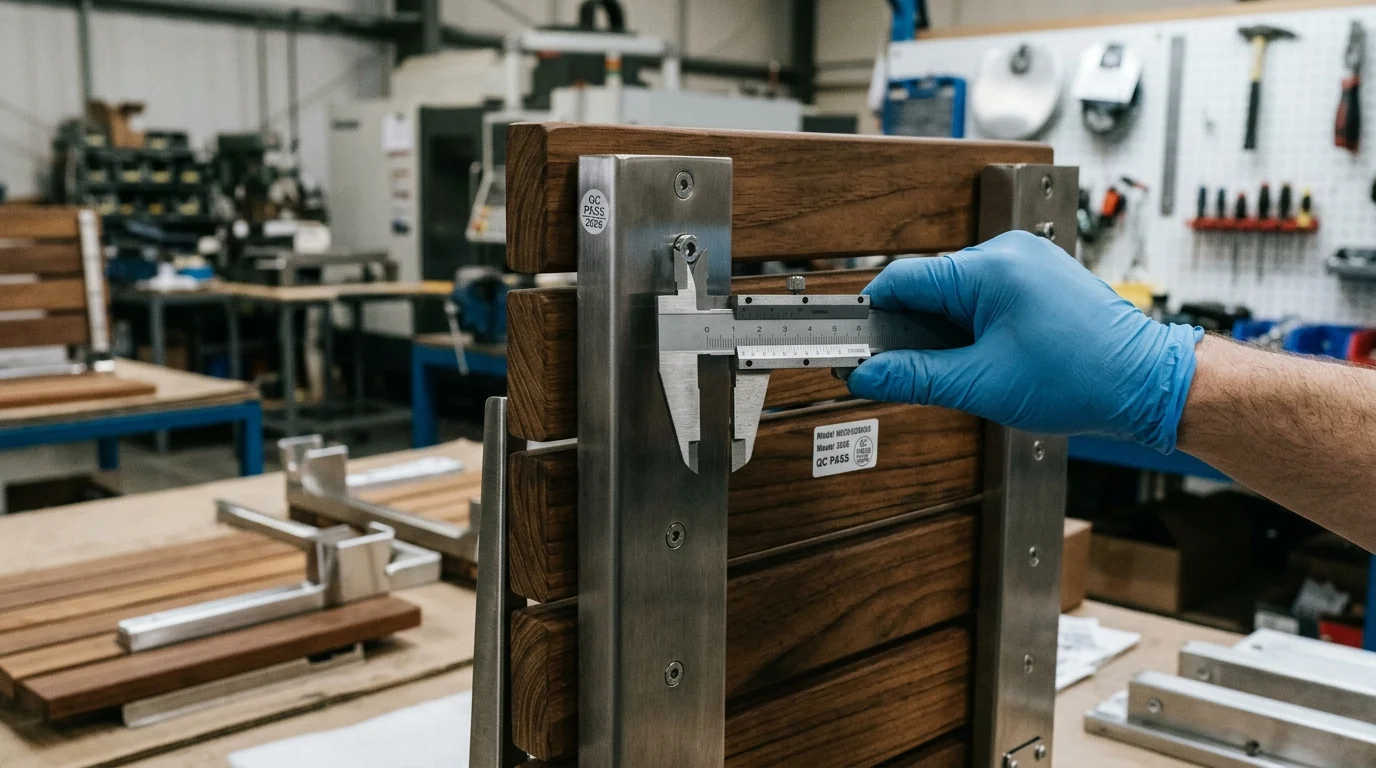
Why China Premium Shower Seat Manufacturers Are Strategic Partners
The global landscape for bath safety and accessibility products has undergone a fundamental transformation, shifting away from purely clinical designs toward high-end architectural integration. China has emerged as the strategic epicenter for premium shower seat manufacturing, moving beyond high-volume, low-cost production to dominate the value-added segment. In 2026, top-tier Chinese facilities are leveraging advanced metallurgy, precision engineering, and automated assembly to supply global sanitary ware brands and luxury hospitality developers. This transition is supported by substantial investments in specialized tooling and testing infrastructure, enabling Chinese manufacturers to capture an increasing share of the estimated $1.2 billion global market for premium mobility and bath safety hardware. Importers sourcing from these top-tier factories benefit from a consolidated supply chain that integrates raw material processing, surface finishing, and rigorous quality assurance under one roof.
How the Premium Shower Seat Market Is Evolving
The premium shower seat market is evolving, driven by the concept of “invisible accessibility.” End-users and commercial developers no longer accept the sterile, hospital-like aesthetics of traditional mobility aids. Instead, demand has surged for seats that seamlessly blend into high-end bathroom environments using matte black powder coatings, brushed gold PVD finishes, and warm tactile materials like teak wood or high-density phenolic panels. Furthermore, demographic shifts have altered structural requirements. While legacy standard seats were engineered for a maximum weight capacity of 250 lbs (113 kg), the 2026 premium baseline requires bariatric-grade load-bearing capabilities ranging from 400 to 500 lbs (181 to 226 kg). This necessitates advanced load-distribution engineering and superior wall-mounting bracket designs.
What Defines a Premium Shower Seat
A premium shower seat is defined by an uncompromising combination of material integrity, mechanical fluidity, and lifecycle longevity. Standard models often rely on thin-gauge aluminum and basic ABS plastics, which degrade under continuous moisture and thermal cycling. In contrast, premium variants utilize marine-grade 304 or 316 stainless steel frames, ensuring absolute corrosion resistance. The seating surfaces feature UV-resistant, antibacterial polyurethane (PU) padding or CNC-machined solid phenolic core materials that will not warp or delaminate. Mechanically, premium models incorporate soft-drop dampening hinges that prevent the seat from slamming against the wall, requiring precision-engineered torsion springs. To qualify as premium, these folding mechanisms must typically withstand a minimum lifecycle test of 50,000 continuous fold-and-deploy cycles without loss of tension or structural integrity.
Top China Premium Shower Seat Manufacturers to Know
Identifying the top 7 China premium shower seat manufacturers in 2026 requires looking beyond generic trading companies to find specialized factories concentrated in major sanitary ware hubs like Foshan, Xiamen, and Wenzhou. These leading manufacturers operate dedicated production lines for accessibility hardware, distinguishing themselves through vertical integration. By keeping critical processes such as die-casting, CNC machining, and Physical Vapor Deposition (PVD) coating in-house, these top-tier suppliers maintain strict control over both dimensional tolerances and cosmetic finishes. A defining characteristic of these elite facilities is their robust production capacity—often exceeding 50,000 premium units per month—combined with the flexibility to handle complex, bespoke OEM configurations for global brands.
How Leading Manufacturers Differ
Leading manufacturers differentiate themselves primarily through their specialized engineering capabilities and material focus. Some factories excel in the luxury hospitality sector, prioritizing aesthetic customization, complex PVD color matching, and seamless integration of exotic materials like certified sustainable teak. Others focus intensely on the healthcare and assisted living markets, investing heavily in antimicrobial surface technologies, ergonomic molding, and rigorous medical-grade compliance certifications. Additionally, the degree of R&D support varies; top-tier Original Design Manufacturers (ODMs) offer fully developed, patent-cleared proprietary designs ready for private labeling, whereas elite Original Equipment Manufacturers (OEMs) provide extensive reverse-engineering and rapid prototyping services to bring a buyer’s unique CAD drawings to mass production within weeks.
Core Strengths and Best Buyer Fit
Matching a buyer’s specific needs with a manufacturer’s core strengths is critical for a successful sourcing strategy. For luxury hotel developers or boutique architectural hardware brands, the ideal factory partner offers high-mix, low-volume production flexibility, accommodating Minimum Order Quantities (MOQs) as low as 100 to 300 units per custom finish. These buyers should prioritize suppliers with advanced surface treatment capabilities and strict cosmetic defect tolerances. Conversely, large-scale healthcare distributors or major retail brands require manufacturers capable of high-volume consistency, economies of scale, and ISO 13485-certified quality management systems. For these buyers, factories with highly automated robotic welding lines and MOQs starting at 500+ units offer the best fit, ensuring unit costs remain competitive while meeting stringent structural safety standards.
How to Compare Premium Shower Seat Manufacturers
Evaluating and comparing premium shower seat manufacturers requires a systematic approach that looks beyond the initial unit price. In the premium segment, the total cost of ownership (TCO)—which includes logistics, defect resolution, warranty liabilities, and brand reputation—far outweighs minor variations in factory-gate pricing. Professional importers must assess potential partners across a spectrum of both technical capabilities and commercial terms. A critical threshold for premium suppliers is their historical quality performance; acceptable defect rates in this category should be strictly maintained below 0.5%. Manufacturers unable to provide verifiable data supporting such low defect rates are unlikely to possess the stringent quality control protocols required for high-end accessibility products.
Key Technical and Commercial Evaluation Criteria
Technical evaluation criteria must focus on the hidden structural elements that dictate product safety. Wall mounting brackets, for instance, must feature a thickness greater than 3.0mm to support bariatric weight ratings without flexing. Buyers must also verify the exact alloy composition of the hinges and fasteners, ensuring the use of authentic 304 or 316 stainless steel rather than inferior 201 series steel, which will rust in high-humidity shower environments. Commercially, evaluation criteria include the supplier’s financial stability, production lead times (which typically range from 30 to 45 days for premium OEM orders), and their willingness to accept favorable payment terms tied to strict quality inspections before shipment.
How to Use a Comparison Table Effectively
A structured comparison table is an indispensable tool for normalizing data across multiple supplier bids. By plotting critical technical thresholds against commercial constraints, sourcing teams can objectively filter out manufacturers who cut corners on structural integrity to offer artificially low prices. Below is a comparative matrix illustrating the technical divergence between standard commodity seats and premium-grade alternatives.
Specification / Metric | Standard Shower Seat | Premium Shower Seat |
Frame Material | Aluminum or 201 Stainless Steel | Marine-Grade 316 or 304 Stainless Steel |
Mounting Bracket Thickness | 1.5mm – 2.0mm | > 3.0mm Heavy-Duty Flange |
Dynamic Weight Capacity | 250 lbs (113 kg) | 400 – 500+ lbs (181 – 226+ kg) |
Hinge Mechanism | Friction hinge, prone to dropping | Soft-drop dampening, >50,000 cycle life |
Defect Tolerance | 2.0% – 3.0% | < 0.5% |
Typical OEM MOQ | 1,000+ units | 100 – 300 units (high-mix flexibility) |
Compliance, Quality Control, and Supply Chain Risks
Sourcing bath safety products carries inherent liability risks. A structural failure of a shower seat can result in severe injury, leading to costly litigation and catastrophic brand damage. Consequently, compliance and quality control cannot be treated as optional bureaucratic hurdles; they are fundamental pillars of the sourcing process. Top Chinese manufacturers mitigate these risks by embedding international regulatory standards directly into their engineering and production workflows. Importers must proactively verify these compliance claims rather than relying solely on supplier-provided certificates, ensuring that every batch meets the strict mechanical and environmental demands of the target market.
Compliance and Testing Requirements to Verify
Premium shower seats must satisfy a matrix of regional and international testing standards. In the North American market, compliance with the Americans with Disabilities Act (ADA) guidelines is mandatory, requiring seats to withstand substantial static and dynamic loads. Premium manufacturers validate their designs through third-party static load testing, typically applying 1.5 times the rated capacity (e.g., 600 lbs for a 400-lb-rated seat) for a sustained period of 30 minutes without permanent deformation. Environmental resilience is equally critical; premium hardware must undergo rigorous salt spray testing. While standard products might pass a 48-hour test, premium 316 stainless steel components must endure 240+ hours of continuous salt fog exposure without exhibiting any signs of oxidation or pitting. Furthermore, suppliers targeting the healthcare sector should hold active ISO 13485 certifications.
How to Audit Production and Reduce Supply Risk
Reducing supply chain risk requires rigorous, independent oversight at the factory level. Importers should mandate third-party pre-shipment inspections using strict Acceptable Quality Limit (AQL) standards, typically setting critical defects at 0, major defects at 1.5, and minor defects at 4.0. During factory audits, inspectors must scrutinize the welding processes; premium frames necessitate flawless Tungsten Inert Gas (TIG) welding rather than inconsistent spot welding, ensuring joints are structurally sound and visually seamless after polishing. Beyond physical product checks, buyers must monitor raw material supply chain risks. Because premium seats rely heavily on high-grade stainless steel and specialized polymers, fluctuations in global commodity prices can severely impact production costs. Securing long-term pricing agreements and verifying the factory’s raw material buffer inventory are vital strategies for stabilizing costs.
How Importers Can Choose the Right Manufacturer
Transitioning from a broad market analysis to finalizing a manufacturing partnership requires a disciplined, phased approach. Importers cannot afford to rush the qualification process, especially when dealing with life-safety products like shower seats. The objective is to systematically validate the supplier’s capabilities, moving from digital communications to physical product verification, and ultimately to a scalable commercial agreement. This process also involves managing upfront capital investments, such as custom tooling. For instance, developing custom plastic injection molds for proprietary polyurethane seating pads can require an upfront tooling investment ranging from $5,000 to $15,000. Navigating these costs requires a partner who offers transparent amortization schedules and guarantees mold ownership rights.
A Step-by-Step Sourcing and Qualification Process
The sourcing lifecycle begins with a highly detailed Request for Quotation (RFQ) that explicitly states all material grades, weight capacities, and finishing requirements. Once initial quotes are aligned, buyers must procure off-the-shelf samples to assess baseline manufacturing quality. However, sample approval is insufficient for high-stakes sourcing. The next critical step is conducting a comprehensive factory audit—either in-person or via a qualified third-party agency—to verify production capacity, ethical labor practices, and in-house testing equipment. Following a successful audit, importers should commission a pilot run of 50 to 100 units. This low-volume trial stresses the factory’s mass-production lines and quality control systems without exposing the buyer to the financial risk of a full container load. Only after the pilot run passes independent inspection should the buyer authorize full-scale mass production.
Decision Criteria for Shortlisting Suppliers
When narrowing down a shortlist of capable factories, importers should utilize a weighted decision matrix to eliminate subjective biases. This matrix should balance technical competence, commercial viability, and communication efficiency. Below is an evaluation framework designed specifically for assessing premium shower seat suppliers.
Evaluation Criteria | Weight | Minimum Acceptable Standard | Premium Supplier Benchmark |
Quality Management | 30% | ISO 9001 Certified | ISO 13485, In-house Salt Spray & Load Testing |
Material Traceability | 25% | Basic material test reports | Certified mill test certificates for 304/316 SS |
Engineering Support | 20% | Can read provided CAD files | Dedicated R&D team, reverse-engineering capability |
Production Capacity | 15% | 10,000 units / month | > 50,000 units / month, automated robotic welding |
Communication & Lead Time | 10% | 60 days, basic English | 30-45 days, dedicated English-speaking account manager |
Key Takeaways
- The most important conclusions and rationale for Premium Shower Seat
- Specs, compliance, and risk checks worth validating before you commit
- Practical next steps and caveats readers can apply immediately
Frequently Asked Questions
What makes a shower seat premium in 2026?
Look for 304/316 stainless steel, soft-drop hinges, 400–500 lb load capacity, and 50,000-cycle durability testing. Premium finishes should also resist moisture and corrosion.
Why source premium shower seats from China manufacturers?
Top Chinese factories combine CNC machining, finishing, and testing in-house. That helps buyers get better quality control, faster OEM development, and competitive pricing.
Which materials are best for a long-lasting shower seat?
Marine-grade stainless steel frames and phenolic or antibacterial PU seating surfaces perform best. They resist rust, warping, and wear in wet bathroom environments.
How can Cassbern-style bathrooms integrate a shower seat elegantly?
Choose fold-down wall-mounted seats in finishes like matte black, brushed gold, or stainless. This keeps the bathroom practical while matching a modern, luxury look.
What should buyers check before choosing a manufacturer?
Confirm weight rating, corrosion resistance, lifecycle testing, finish quality, and OEM/ODM capability. Ask for factory certifications, sample evaluation, and lead-time details before ordering.


