

Introduction
Designers often favor premium wall-mounted shower seats because they solve several bathroom goals at once: accessibility, visual clarity, and a stronger sense of built-in quality. Unlike freestanding options, a fixed seat keeps the floor open, supports cleaner lines, and reinforces the calm, architectural feel expected in luxury showers. Material choice, mounting stability, and detailing also affect how safe, durable, and refined the space feels in daily use. This article explains why premium specifications matter, how wall-mounted seating supports modern bathroom layouts, and what performance and aesthetic advantages make it a preferred solution in high-end residential and hospitality projects.
Why Designers Specify a Premium Wall-Mounted Shower Seat
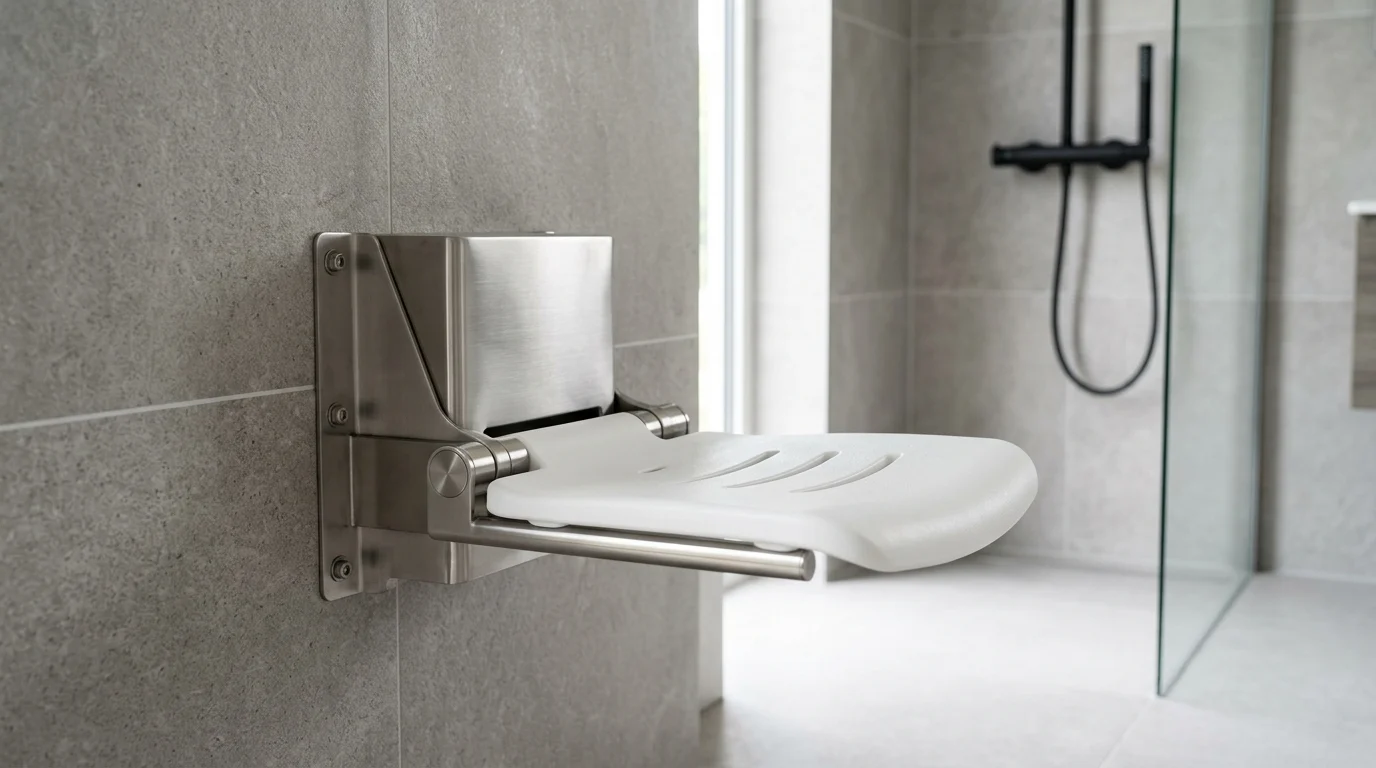
In high-end architectural and interior design, the bathroom has evolved from a purely functional space into a wellness-centric sanctuary. Central to this transformation is the integration of a premium wall-mounted shower seat, a fixture that bridges the gap between ergonomic necessity and architectural elegance.
How does a premium wall-mounted shower seat support design intent?
A premium wall-mounted shower seat directly supports minimalist and modern design intents by preserving clean sightlines and eliminating floor clutter. By suspending the seating element, designers can expose continuous floor tiling, visually expanding the shower enclosure. This floating aesthetic typically frees up 1.5 to 2.5 square feet of usable floor space compared to bulky freestanding benches, allowing for more flexible movement and seamless integration with zero-threshold shower pans.
Why does fixed wall mounting matter for perceived quality?
Perceived quality in luxury environments is heavily dictated by tactile feedback and structural rigidity. Fixed wall mounting eliminates the micro-movements, wobbling, and scraping noises associated with portable seating. When a user interacts with a securely anchored fixture, the immediate sensation is one of permanence and safety. This psychological comfort is a non-negotiable standard in five-star hospitality and ultra-luxury residential projects, where any shifting or instability instantly degrades the user experience.
What project-performance advantages justify premium selection?
Beyond aesthetics, the project-performance advantages of specifying high-end wall-mounted models are grounded in lifecycle return on investment (ROI) and risk mitigation. Commercial-grade premium seats boast an expected operational lifespan of 15 to 20 years, sharply contrasting with the 3- to 5-year replacement cycle of standard portable alternatives. Furthermore, fixed seating significantly reduces liability; institutional data indicates that secure, fixed shower seating can reduce slip-and-fall incidents by up to 30% in high-traffic commercial and healthcare environments.
What Defines a Premium Wall-Mounted Shower Seat
Distinguishing a true premium wall-mounted shower seat from commodity hardware requires a rigorous examination of its material composition, structural engineering, and finishing details.
Which materials and construction choices separate premium models?
The foundation of a premium fixture lies in its material selection, which must withstand constant exposure to moisture, heat, and cleaning chemicals. High-end models utilize marine-grade 316L stainless steel for their structural frames, which contains 2% to 3% molybdenum to provide superior resistance against pitting and crevice corrosion compared to standard 304 stainless. Seating surfaces typically feature solid phenolic resin, extruded aluminum, or sustainably sourced hardwoods like Burmese teak, which naturally secretes oils that repel water and prevent rot.
How do load capacity, wall anchoring, and corrosion resistance matter?
Structural integrity is defined by load capacity and anchoring mechanisms. While standard ADA compliance mandates a minimum static load capacity of 250 pounds, premium models are engineered to support 400 to 500 pounds safely. Achieving this requires robust wall anchoring systems, often necessitating pre-installation blocking using 2×8 or 2×10 solid timber between studs. The corrosion resistance of the internal mounting brackets and fasteners is equally critical, ensuring that the heavy load capacity does not degrade over decades of high-humidity exposure.
Which finish details and ergonomic features signal true quality?
True quality is communicated through meticulous finish details and ergonomic refinements. Premium seats feature completely concealed fasteners and seamless hinge joints, preventing the accumulation of soap scum and hard water deposits. Ergonomic features include subtly contoured seating surfaces for water runoff and soft-close friction hinges tested to withstand upwards of 50,000 folding cycles. These friction hinges prevent the seat from slamming against the wall or dropping abruptly, ensuring a silent, controlled operation that aligns with luxury acoustic standards.
How Designers Compare Premium Wall-Mounted Shower Seats
When evaluating manufacturers and specific models, architectural teams utilize stringent specification criteria to ensure the selected premium wall-mounted shower seat aligns with the project’s operational demands and aesthetic vision.
What comparison criteria belong in a trade specification table?
A comprehensive trade specification table must capture structural metrics, material provenance, and procurement logistics. Designers compare static load limits, hinge cycle testing, and ADA compliance certifications alongside aesthetic availability.
Specification Category | Bespoke Custom Seats | Branded Premium Models | Commercial/Contract Grade |
Static Load Capacity | 300 – 400 lbs | 400 – 500 lbs | 250 – 300 lbs |
Frame Material | Custom Brass / 316L SS | 316L Stainless Steel | 304 Stainless Steel / Aluminum |
Average Lead Time | 10 – 14 weeks | 2 – 4 weeks | 3 – 5 days |
Estimated Cost Band | $1,500 – $3,000+ | $700 – $1,400 | $200 – $500 |
How do teams balance aesthetics, maintenance, and accessibility?
Balancing aesthetics with maintenance and accessibility requires navigating specific design trade-offs. For instance, solid seating surfaces offer a sleek, monolithic appearance but require a slight forward pitch (typically 1 to 2 degrees) to prevent water pooling. Conversely, slatted designs facilitate an immediate drainage rate of over 0.5 gallons per minute (GPM) and offer superior slip resistance, though they may introduce more visual texture than a minimalist design dictates. Accessibility mandates also require that the seat depth and profile do not obstruct wheelchair turning radii within the shower enclosure.
What trade-offs appear between bespoke, branded, and contract-grade options?
The selection process often culminates in a choice between bespoke, branded premium, and contract-grade options. Bespoke solutions offer unparalleled aesthetic integration, matching exact plumbing finishes such as unlacquered brass, but introduce significant lead times and often lack standardized load certifications. Branded premium models hit the sweet spot for luxury projects, offering rigorously tested load capacities, 4-to-6-week lead times, and high-end finishes. Contract-grade seats, while cost-effective and readily available, often sacrifice concealed mechanics and utilize lower-grade plastics, making them unsuitable for environments where perceived value is paramount.
What Sourcing, Compliance, and Installation Factors Matter
Specifying a high-end fixture is only half the equation; successful deployment relies heavily on rigorous sourcing, adherence to compliance codes, and flawless installation execution.
Which accessibility, safety, and regional code requirements should be checked?
Regulatory compliance is a baseline requirement in commercial, hospitality, and multi-family residential projects. In the United States, the Americans with Disabilities Act (ADA) stipulates that a shower seat must be installed at a height of 17 to 19 inches from the finished floor to the top of the seat. Furthermore, the seat must withstand a vertical or horizontal force of 250 pounds applied at any point. Regional codes may impose stricter requirements; for example, certain healthcare guidelines mandate a minimum width of 24 inches for bariatric accommodations, pushing designers to source specialized premium models that meet these dimensional thresholds without looking institutional.
What should be verified in installation logistics and substrate compatibility?
Installation logistics hinge on absolute substrate compatibility. A premium wall-mounted shower seat is only as strong as the wall holding it. Installers must verify the presence of structural blocking—typically 3/4-inch marine-grade plywood or solid wood blocking—recessed behind the waterproofing membrane. For concrete or masonry substrates, specialized epoxy anchors or heavy-duty toggle bolts are required to achieve a minimum pull-out strength of 1,000 pounds per fastener. Failure to verify substrate integrity can lead to catastrophic failure, compromising the waterproofing envelope and risking severe user injury.
How do warranty terms, spare parts, and service support affect selection?
Warranty structures and post-installation support heavily influence procurement decisions, particularly in hospitality settings where downtime equates to lost revenue. Premium manufacturers typically offer robust warranties ranging from 10 years to lifetime coverage on structural components, compared to the 1-year limited warranties standard in the contract tier. Furthermore, designers must verify the availability of modular spare parts—such as replacement phenolic tops or hinge bearings—ensuring that localized damage can be repaired without requiring a full extraction of the wall-anchored frame, which would otherwise disrupt the shower’s waterproof seal.
How to Decide Whether a Premium Wall-Mounted Shower Seat Fits
Ultimately, the decision to specify a premium wall-mounted shower seat requires a holistic evaluation of the project’s target demographic, budget constraints, and long-term design goals.
Which project types and user profiles justify premium wall-mounted seats?
Certain project profiles inherently justify the investment in premium seating. In ultra-luxury residential builds and aging-in-place renovations, the seat serves as a critical wellness amenity, supporting multi-generational use without stigmatizing the space with clinical-looking hardware. In the hospitality sector, boutique hotels and luxury resorts utilize these fixtures to elevate the perceived value of their suites. Industry metrics indicate that integrating spa-like, accessible amenities can increase premium room booking rates by 12% to 15%, easily offsetting the initial capital expenditure of the fixture.
What decision framework aligns design intent, budget, and compliance?
Establishing a decision framework helps architectural teams align their specification with the project scope. This framework balances the overarching design intent with hard budget caps and compliance mandates.
Project Profile | Primary Driver | Recommended Seat Class | Budget Allocation (Per Unit) |
Ultra-Luxury Residential | Aesthetic Integration & Wellness | Bespoke or Branded Premium | $1,000 – $2,500 |
Boutique Hospitality | Durability & Perceived Value | Branded Premium | $700 – $1,200 |
High-End Healthcare | ADA Compliance & Infection Control | Premium Clinical / Solid Surface | $500 – $900 |
Multi-Family Dev. | Cost Efficiency & Basic Code | High-End Contract Grade | $300 – $600 |
How should the final recommendation be framed for clients?
When framing the final recommendation for clients, designers should pivot the conversation from upfront costs to Total Cost of Ownership (TCO) and lifestyle enhancement. By highlighting the 15-plus-year lifecycle, the elimination of slip-and-fall liabilities, and the preservation of a pristine, floating aesthetic, the premium wall-mounted shower seat is repositioned from a simple bathroom accessory to an integral architectural investment. Emphasizing the rigorous engineering—such as 500-pound load capacities and 316L stainless steel construction—provides clients with the quantitative reassurance needed to approve the premium specification.
Key Takeaways
- The most important conclusions and rationale for Premium Wall-Mounted Shower Seat
- Specs, compliance, and risk checks worth validating before you commit
- Practical next steps and caveats readers can apply immediately
Frequently Asked Questions
Why do designers prefer a wall-mounted shower seat over a freestanding bench?
It keeps floor lines open, reduces visual clutter, and can free up 1.5 to 2.5 square feet. That cleaner look fits Cassbern’s modern, elegant bathroom style.
What materials define a premium wall-mounted shower seat?
Look for 316L stainless steel framing, corrosion-resistant fasteners, and durable seat surfaces like phenolic resin or quality hardwood. These materials hold up better in wet, high-use showers.
How much weight should a premium wall-mounted shower seat support?
Premium models often support 400 to 500 pounds, above the 250-pound ADA minimum. Always confirm the tested load rating and installation method before specifying or buying.
What installation detail matters most for a secure wall-mounted shower seat?
Proper wall blocking is critical. Installers typically need solid in-wall support, such as 2×8 or 2×10 blocking between studs, to achieve long-term stability and safety.
How does a premium shower seat match Cassbern’s bathroom design approach?
It combines luxury with practical comfort: space-saving form, clean finishes, and dependable usability. That aligns with Cassbern’s focus on stylish, functional bathroom solutions with enduring elegance.


