

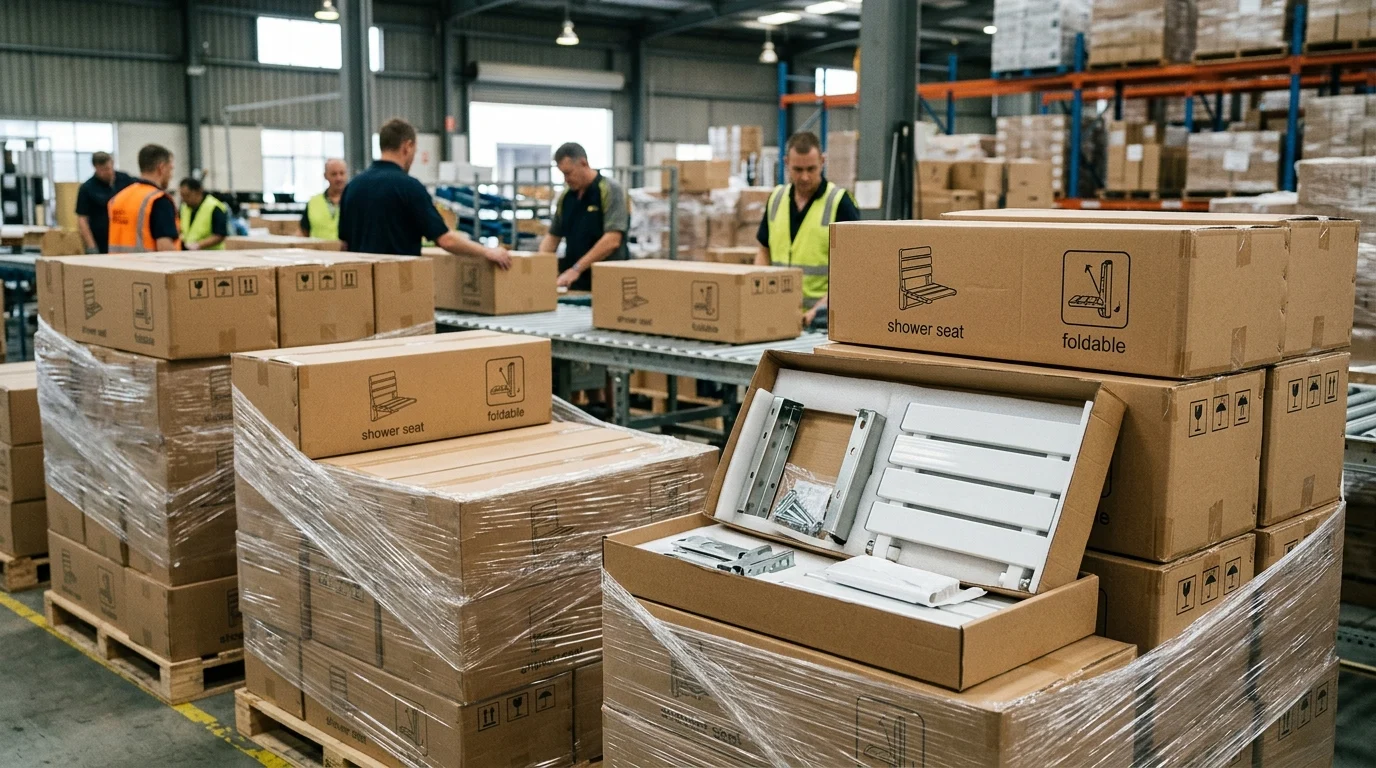
Choosing a commercial-grade foldable shower seat is a safety, compliance, and design decision—not just a product sourcing task. Wholesale buyers serving hotels, healthcare facilities, assisted living projects, and institutional developments must evaluate load capacity, ADA-aligned dimensions, corrosion resistance, folding performance, and installation requirements with the same care they apply to visible bathroom finishes. The right model can reduce liability, support accessible design, and still preserve a refined, modern look. This guide breaks down the specifications, buyer priorities, mounting formats, and quality signals that help distributors build a stronger catalog of wall-mounted foldable shower seats for high-volume commercial demand.
Defining the Best Wall-Mounted Foldable Seat for Wholesale Buyers
Procuring the best wall-mounted foldable shower seat for wholesale distribution requires a deep understanding of commercial buyer demands, structural engineering, and inclusive design standards. As the global population ages and accessible infrastructure becomes a mandatory requirement in commercial real estate, the demand for durable, high-capacity shower seating is expanding rapidly. Wholesale buyers must navigate a fragmented manufacturing landscape to identify products that balance ergonomic comfort with rigorous safety specifications.
For distributors, B2B suppliers, and institutional procurement officers, a shower seat is not merely a bathroom accessory; it is a critical safety device that carries substantial liability implications. Identifying the optimal product involves analyzing the mechanical stability of the folding mechanism, the inherent corrosion resistance of the materials, and the strict dimensional requirements mandated by international building codes. Establishing a firm definition of what constitutes a premium commercial-grade seat is the first step in building a resilient, profitable product portfolio.
Key Commercial Use Cases and Buyer Segments
Commercial applications dictate distinct product requirements that differ vastly from direct-to-consumer residential models. The primary buyer segments for wholesale shower seats include healthcare facilities, hospitality chains, assisted living developments, and institutional dormitories. In the hospitality sector, procurement officers typically order in volumes ranging from 500 to 2,000 units per project, specifically seeking models that comply with the Americans with Disabilities Act (ADA) while maintaining a sleek, modern aesthetic that does not resemble clinical medical equipment.
Healthcare and assisted living buyers prioritize infection control and maximum load thresholds. These environments require non-porous seat surfaces that withstand harsh chemical disinfectants and bariatric-rated frames capable of supporting heavy dynamic loads. Understanding these distinct buyer profiles enables wholesalers to segment their catalogs effectively, offering specialized SKUs for heavy-duty medical use and aesthetically refined SKUs for luxury hotel retrofits.
Common Seat Types, Folding Mechanisms, and Mounting Formats
The mechanical architecture of a foldable shower seat determines its longevity, ease of use, and installation footprint. Seat shapes generally fall into three categories: L-shaped (often required for ADA transfer compliance), rectangular, and U-shaped configurations featuring a hygienic cutout. The folding mechanism itself is a critical point of failure; premium models utilize friction hinges or spring-assisted gas struts that allow the seat to be raised or lowered with less than 5 pounds of force, preventing the seat from slamming against the wall or dropping dangerously.
Mounting formats also vary based on the structural integrity of the installation environment. Cantilevered wall-bracket mounts offer a clean, floating appearance but require substantial in-wall blocking to support the leverage forces. Conversely, models with floor-supported folding legs distribute the downward force directly into the shower pan, significantly increasing the maximum load capacity and reducing the sheer stress on the wall anchors. Wholesalers must stock a mix of both mounting formats to accommodate different architectural constraints.
Essential Specification Sheet Requirements
A comprehensive specification sheet is the primary tool used by architects and commercial buyers to approve a product for a project. Wholesalers must ensure their supplier’s spec sheets are exhaustive, accurate, and independently verified. Critical dimensional data must include the overall width, the minimum depth from the wall when deployed (typically requiring a minimum of 15 to 16 inches for commercial compliance), and the precise mounting height range (generally 17 to 19 inches from the finished floor to the top of the seat).
Furthermore, the specification sheet must clearly differentiate between static load ratings and dynamic load ratings. A seat may hold a 400 lb static weight but fail under a 250 lb dynamic drop test. Additionally, the spec sheet should explicitly state the material grades of all components, including the specific alloy of the metal frame, the polymer composition of the seat pads, and the type of wall anchors provided in the hardware kit.
Technical Specifications That Matter Most
Technical specifications form the definitive boundary between high-liability consumer products and reliable commercial infrastructure. For wholesale buyers, understanding the metallurgical and chemical properties of shower seat components is essential for minimizing warranty claims and ensuring long-term performance in high-humidity, high-salinity environments.
Frame Materials, Seat Surfaces, and Corrosion Resistance
The structural frame of a wall-mounted shower seat is typically constructed from stainless steel or extruded aluminum alloys. For premium commercial applications, 304-grade stainless steel is the industry standard, offering excellent tensile strength and oxidation resistance. In coastal environments or highly corrosive maritime applications, upgrading to 316-grade marine stainless steel is necessary due to its molybdenum content, which prevents pitting. Aluminum alloy frames (such as 6061-T6) offer a lightweight, cost-effective alternative, though they must be heavily anodized or powder-coated to prevent galvanic corrosion.
Seat surfaces must balance comfort, drainage, and hygiene. Phenolic resin is highly favored in commercial settings; it is exceptionally dense, waterproof, and inherently resistant to bacterial growth. High-Density Polyethylene (HDPE) is a common, cost-effective alternative that provides good durability but can scratch over time. For enhanced ergonomics, Polyurethane (PU) foam overmolded onto a rigid core offers a cushioned surface that does not absorb water. To verify corrosion resistance, wholesalers should require suppliers to provide salt spray test reports, looking for a minimum threshold of 96 hours for standard commercial use and up to 240 hours for premium marine-grade models.
Load Capacity, Safety, and Ergonomic Design
Load capacity is the most heavily scrutinized metric in shower seat procurement. While baseline regulatory standards like the ADA require a minimum static load capacity of 250 lbs (113 kg), modern commercial standards have pushed acceptable thresholds much higher. Wholesale buyers should target standard commercial models rated for 350 lbs to 400 lbs (158 kg to 181 kg), and specialized bariatric models engineered to withstand 500 lbs to 800 lbs (226 kg to 362 kg) of static downward force.
Safety and ergonomic design extend beyond weight limits. The physical design of the seat must mitigate the risk of skin tears and pressure ulcers for elderly or mobility-impaired users. This requires generously radiused edges, countersunk or concealed mounting hardware, and strategically placed drainage slots to prevent water pooling. If a slatted design is utilized, the gaps between slats must be narrow enough (typically under 0.5 inches) to prevent entrapment of fingers or skin.
Comparison Criteria for Stainless Steel and Alternative Models
Comparing different material combinations allows wholesalers to align their product offerings with specific market tiers. Stainless steel models with phenolic seats represent the pinnacle of commercial durability, while aluminum and HDPE combinations dominate the mid-market institutional sector. Value-oriented models often rely on powder-coated steel and standard ABS plastic, which carry a higher risk of premature failure if the coating is compromised.
The following matrix illustrates the comparative performance profiles of standard material configurations encountered during the sourcing process.
Material Combination | Frame Yield Strength | Typical Max Load (lbs) | Corrosion Resistance (Salt Spray) | Relative Cost Index |
316 SS + Phenolic | High | 500+ lbs | > 240 hours | $$$$ |
304 SS + PU Foam | Medium-High | 400 lbs | 120 – 168 hours | $$$ |
Aluminum Alloy + HDPE | Medium | 330 lbs | 96 hours | $$ |
Powder-Coated Steel + ABS | Low-Medium | 250 lbs | < 72 hours | $ |
Compliance, Testing, and Supplier Verification
In the commercial bathroom fixtures market, unsubstantiated claims regarding weight limits or material grades expose distributors to severe legal and financial risks. Implementing a rigorous framework for compliance verification, physical testing, and supplier auditing is non-negotiable for wholesale buyers managing large-scale procurement.
Relevant Standards and Certifications
Wholesale shower seats must adhere to a matrix of regional and international standards. In the United States, compliance with the ADA Accessibility Guidelines (specifically Section 4.21.3 for shower seats) dictates precise dimensions, structural strength, and operational force limits. In the European Union, products often require CE marking under the Medical Device Regulation (MDR) or adherence to EN 12182 standards for assistive products for persons with disabilities.
Beyond product-specific regulations, the manufacturing facility itself should hold ISO 9001 certification for quality management systems. If the seat incorporates plastic components or specialized antimicrobial coatings, the materials should comply with RoHS (Restriction of Hazardous Substances) and REACH directives to ensure no toxic compounds leach out under prolonged exposure to hot water and steam.
Factory Audits, Sample Testing, and Load Testing
Relying solely on supplier-provided specification sheets is insufficient; active verification is required. Wholesalers should mandate third-party factory audits via reputable inspection agencies (such as SGS, TUV, or Intertek) to verify production capabilities, raw material sourcing, and internal quality control protocols. During the sample validation phase, physical load testing must be rigorously executed.
Standard load testing protocols require the seat to be mounted to a simulated wall structure and subjected to a sustained static load (e.g., 500 lbs applied to the center of the seat for 30 consecutive minutes) without exhibiting permanent deflection or structural fracture. Furthermore, dynamic fatigue testing is critical for the folding mechanism. A high-quality commercial hinge should endure a minimum of 10,000 to 15,000 continuous folding cycles without losing its friction tension or exhibiting mechanical failure.
Warranty Terms, Spare Parts, and Product Traceability
The warranty terms offered by a manufacturer serve as a direct indicator of product reliability. Premium commercial shower seats typically carry a 3-year to 5-year structural warranty, whereas budget consumer models rarely offer more than 12 months of coverage. Wholesalers must negotiate explicit terms covering the replacement of defective units and secure a guaranteed supply chain for proprietary spare parts, such as replacement gas struts, mounting brackets, or seat pads.
Product traceability is equally crucial for managing post-market quality issues. Wholesale buyers should require manufacturers to implement permanent batch coding or serial number engraving on the underside of the frame. In the event of a manufacturing defect, traceability allows the distributor to isolate the affected production run rather than initiating a blanket recall. Acceptable Quality Limit (AQL) thresholds should be strictly defined in the purchasing agreement, typically set at 0 for critical defects, 1.5 for major functional defects, and 4.0 for minor cosmetic blemishes.
Sourcing, Cost, and Logistics Considerations
Optimizing the procurement of wall-mounted foldable shower seats requires a comprehensive analysis of the total landed cost. Wholesale buyers must look beyond the initial factory unit price and carefully model the cascading expenses associated with minimum order quantities, tooling investments, volumetric shipping constraints, and post-sale defect management.
MOQ, Tooling, Packaging, and Private Label Options
Supplier Minimum Order Quantities (MOQs) vary significantly based on the level of customization required. For off-the-shelf, standard OEM designs, factories typically enforce MOQs ranging from 300 to 500 units per SKU. However, if a wholesale buyer intends to develop a proprietary, private-label design requiring Custom Original Design Manufacturing (ODM), the MOQ often escalates to 1,000 or more units.
Custom designs also incur upfront tooling costs. Injection molding tools for proprietary HDPE or PU seat pads can range from $3,000 to $8,000, while specialized die-casting molds for aluminum brackets may require similar investments. Packaging is another critical cost driver. Shower seats are heavy and densely packed; therefore, wholesale buyers must specify ISTA 3A drop-test certified corrugated packaging. Inadequate packaging leads to scratched frames and bent brackets during transit, instantly eroding profit margins.
Freight, Carton, and Pallet Planning
Because shower seats contain significant empty space even when folded, freight optimization is a major logistical challenge. The folding profile directly impacts the cubic volume of the master carton. A seat that folds perfectly flat against its mounting bracket will allow for significantly higher container utilization than a bulky, contoured model.
Effective carton and pallet planning can drastically reduce the per-unit freight cost. A standard 40-foot High Cube (40HQ) shipping container can typically accommodate between 2,500 and 3,500 foldable shower seats, depending on the packaging dimensions and whether the goods are floor-loaded or palletized. Wholesalers must work closely with their freight forwarders to calculate the exact cubic meter (CBM) footprint of the goods and design master cartons that seamlessly tessellate within standard shipping pallets.
How to Compare Supplier Quotations Beyond Unit Price
Evaluating supplier quotations solely on the Free On Board (FOB) unit price is a common procurement pitfall. Wholesalers must transition to a Total Landed Cost (TLC) model that captures all hidden variables. A supplier offering a seat for $45 with an inferior hinge may ultimately cost more than a supplier charging $55 for a seat with a verified 15,000-cycle life when warranty replacement costs and administrative overhead are factored in.
Buyers must also evaluate the financial terms of the agreement. Standard industry terms require a 30% deposit with the remaining 70% payable against the Bill of Lading (BL) copy. However, wholesalers should also negotiate a warranty reserve—often 1% to 2% of the total Purchase Order value—provided as free replacement units or spare parts shipped alongside the main order to instantly service any immediate field failures without waiting for cross-border replacements.
Final Selection Framework for Wholesale Buyers
Successfully sourcing the best wall-mounted foldable shower seat requires distilling technical specifications, compliance data, and logistical modeling into a standardized, repeatable selection framework. By systematically filtering suppliers through a structured matrix, wholesale buyers can confidently build a product catalog that meets exact market demands while maximizing profitability.
Step-by-Step Purchasing Evaluation Process
The purchasing evaluation process should follow a disciplined, multi-stage approach. The process begins with a Request for Information (RFI) to filter out trading companies and identify genuine manufacturers with in-house metal fabrication and ISO-certified assembly lines. This is followed by a Request for Quotation (RFQ) that clearly outlines the required MOQs, material grades, and load capacities.
Once the initial quotations are normalized, the sample validation phase begins. Wholesalers should procure samples from the top three shortlisted suppliers and subject them to destructive load testing, salt spray exposure, and independent dimensional verification. Only after a sample passes these rigorous physical checks should the buyer proceed to a pilot production run of 100 to 200 units. This pilot run tests the factory’s quality consistency and packaging integrity before committing to a full-scale mass production order.
Decision Matrix for Compliance, Durability, and Cost
To objectify the final supplier selection, procurement teams should utilize a weighted decision matrix. This matrix balances upfront costs against long-term durability and compliance guarantees, ensuring that the chosen product aligns with the targeted commercial tier.
The following matrix outlines the baseline expectations for different product tiers, guiding buyers in matching their procurement strategy to their specific downstream customer base.
Evaluation Tier | Recommended Application | Minimum Load Rating | Expected Warranty Cycle | Target Defect Rate (AQL) |
Premium Commercial | Healthcare, Luxury Hospitality | 500 lbs (226 kg) | 5 to 10 Years | < 0.5% |
Mid-Range Institutional | Dormitories, Standard Hotels | 350 lbs (158 kg) | 2 to 3 Years | < 1.0% |
Value Residential | High-Volume Retail, DIY | 250 lbs (113 kg) | 1 Year | < 1.5% |
Choosing Premium, Mid-Range, or Value Models
The final decision rests on correctly aligning the chosen model with the intended market segment. Premium models are mandatory for healthcare and high-end commercial projects where liability risks are severe and budgets accommodate higher unit costs. These models must feature 304 or 316 stainless steel, heavy-duty bariatric load ratings exceeding 500 lbs, and sophisticated dampening hinges.
Mid-range models offer the highest volume potential for wholesale distributors. By utilizing optimized aluminum frames and durable HDPE seating surfaces, these models achieve a balance of ADA compliance, 350-lb to 400-lb load capacities, and competitive pricing suitable for standard hotel renovations and institutional housing. Value models, while possessing the lowest barrier to entry, should be approached with caution in the B2B space; they are best reserved for light-duty residential retail channels where dynamic load requirements and daily usage frequencies are significantly lower.
Key Takeaways
- Segment wholesale shower seats by end use, because healthcare, hospitality, assisted living, and institutional projects each require different load ratings, hygiene features, and design expectations.
- Stock both cantilevered wall-mounted seats and floor-supported folding-leg models to accommodate projects with different wall reinforcement, load capacity, and installation constraints.
- Prioritize folding mechanisms such as friction hinges or spring-assisted systems that operate with less than 5 pounds of force to improve safety and user comfort.
- Use complete specification sheets with dimensions, materials, load ratings, mounting requirements, and code references to help architects and commercial buyers approve products faster.
- For hotel and commercial projects that may require 500 to 2,000 units, evaluate not only unit cost but also durability, ADA suitability, corrosion resistance, and long-term liability risk.
Frequently Asked Questions
What makes a wall-mounted foldable shower seat suitable for wholesale buyers?
A wholesale-ready seat should combine verified load capacity, corrosion-resistant materials, reliable folding hardware, ADA-aware dimensions, clear specification sheets, and packaging that supports large project orders for hotels, healthcare, and assisted living facilities.
Which buyer segments typically purchase foldable shower seats in bulk?
Common bulk buyers include hospitality chains, healthcare facilities, assisted living communities, institutional housing, and commercial real estate developers. Hotel projects may order 500 to 2,000 units, while healthcare buyers often prioritize infection control and bariatric strength.
Are floor-supported folding legs better than cantilevered wall mounts?
It depends on the installation. Cantilevered wall mounts create a clean, modern look but require strong in-wall blocking. Floor-supported folding legs distribute weight into the shower base, increasing load capacity and reducing stress on wall anchors.
What folding mechanism should wholesalers look for?
Premium models use friction hinges or spring-assisted mechanisms that raise and lower smoothly, ideally with less than 5 pounds of force. This improves usability and helps prevent the seat from slamming or dropping unexpectedly.
Why is ADA compliance important for commercial shower seats?
ADA-aligned seating helps commercial projects meet accessibility requirements, reduce liability, and serve a broader user base. L-shaped seats are often used for transfer compliance, but buyers should always verify dimensions against local codes and project specifications.
Design Director
We focus on simplicity with every design. Our bathroom solutions blend modern elegance with functionality, ensuring that every piece serves a purpose while maintaining a clean, timeless look. You deserve a space that’s both beautiful and practical.
Choosing a commercial-grade foldable shower seat is a safety, compliance, and design decision—not just a product sourcing task. Wholesale buyers serving hotels, healthcare facilities, assisted living projects, and institutional developments must evaluate load capacity, ADA-aligned dimensions, corrosion resistance, folding performance, and installation requirements with the same care they apply to visible bathroom finishes. The right model can reduce liability, support accessible design, and still preserve a refined, modern look. This guide breaks down the specifications, buyer priorities, mounting formats, and quality signals that help distributors build a stronger catalog of wall-mounted foldable shower seats for high-volume commercial demand.
Defining the Best Wall-Mounted Foldable Seat for Wholesale Buyers
Procuring the best wall-mounted foldable shower seat for wholesale distribution requires a deep understanding of commercial buyer demands, structural engineering, and inclusive design standards. As the global population ages and accessible infrastructure becomes a mandatory requirement in commercial real estate, the demand for durable, high-capacity shower seating is expanding rapidly. Wholesale buyers must navigate a fragmented manufacturing landscape to identify products that balance ergonomic comfort with rigorous safety specifications.
For distributors, B2B suppliers, and institutional procurement officers, a shower seat is not merely a bathroom accessory; it is a critical safety device that carries substantial liability implications. Identifying the optimal product involves analyzing the mechanical stability of the folding mechanism, the inherent corrosion resistance of the materials, and the strict dimensional requirements mandated by international building codes. Establishing a firm definition of what constitutes a premium commercial-grade seat is the first step in building a resilient, profitable product portfolio.
Key Commercial Use Cases and Buyer Segments
Commercial applications dictate distinct product requirements that differ vastly from direct-to-consumer residential models. The primary buyer segments for wholesale shower seats include healthcare facilities, hospitality chains, assisted living developments, and institutional dormitories. In the hospitality sector, procurement officers typically order in volumes ranging from 500 to 2,000 units per project, specifically seeking models that comply with the Americans with Disabilities Act (ADA) while maintaining a sleek, modern aesthetic that does not resemble clinical medical equipment.
Healthcare and assisted living buyers prioritize infection control and maximum load thresholds. These environments require non-porous seat surfaces that withstand harsh chemical disinfectants and bariatric-rated frames capable of supporting heavy dynamic loads. Understanding these distinct buyer profiles enables wholesalers to segment their catalogs effectively, offering specialized SKUs for heavy-duty medical use and aesthetically refined SKUs for luxury hotel retrofits.
Common Seat Types, Folding Mechanisms, and Mounting Formats
The mechanical architecture of a foldable shower seat determines its longevity, ease of use, and installation footprint. Seat shapes generally fall into three categories: L-shaped (often required for ADA transfer compliance), rectangular, and U-shaped configurations featuring a hygienic cutout. The folding mechanism itself is a critical point of failure; premium models utilize friction hinges or spring-assisted gas struts that allow the seat to be raised or lowered with less than 5 pounds of force, preventing the seat from slamming against the wall or dropping dangerously.
Mounting formats also vary based on the structural integrity of the installation environment. Cantilevered wall-bracket mounts offer a clean, floating appearance but require substantial in-wall blocking to support the leverage forces. Conversely, models with floor-supported folding legs distribute the downward force directly into the shower pan, significantly increasing the maximum load capacity and reducing the sheer stress on the wall anchors. Wholesalers must stock a mix of both mounting formats to accommodate different architectural constraints.
Essential Specification Sheet Requirements
A comprehensive specification sheet is the primary tool used by architects and commercial buyers to approve a product for a project. Wholesalers must ensure their supplier’s spec sheets are exhaustive, accurate, and independently verified. Critical dimensional data must include the overall width, the minimum depth from the wall when deployed (typically requiring a minimum of 15 to 16 inches for commercial compliance), and the precise mounting height range (generally 17 to 19 inches from the finished floor to the top of the seat).
Furthermore, the specification sheet must clearly differentiate between static load ratings and dynamic load ratings. A seat may hold a 400 lb static weight but fail under a 250 lb dynamic drop test. Additionally, the spec sheet should explicitly state the material grades of all components, including the specific alloy of the metal frame, the polymer composition of the seat pads, and the type of wall anchors provided in the hardware kit.
Technical Specifications That Matter Most
Technical specifications form the definitive boundary between high-liability consumer products and reliable commercial infrastructure. For wholesale buyers, understanding the metallurgical and chemical properties of shower seat components is essential for minimizing warranty claims and ensuring long-term performance in high-humidity, high-salinity environments.
Frame Materials, Seat Surfaces, and Corrosion Resistance
The structural frame of a wall-mounted shower seat is typically constructed from stainless steel or extruded aluminum alloys. For premium commercial applications, 304-grade stainless steel is the industry standard, offering excellent tensile strength and oxidation resistance. In coastal environments or highly corrosive maritime applications, upgrading to 316-grade marine stainless steel is necessary due to its molybdenum content, which prevents pitting. Aluminum alloy frames (such as 6061-T6) offer a lightweight, cost-effective alternative, though they must be heavily anodized or powder-coated to prevent galvanic corrosion.
Seat surfaces must balance comfort, drainage, and hygiene. Phenolic resin is highly favored in commercial settings; it is exceptionally dense, waterproof, and inherently resistant to bacterial growth. High-Density Polyethylene (HDPE) is a common, cost-effective alternative that provides good durability but can scratch over time. For enhanced ergonomics, Polyurethane (PU) foam overmolded onto a rigid core offers a cushioned surface that does not absorb water. To verify corrosion resistance, wholesalers should require suppliers to provide salt spray test reports, looking for a minimum threshold of 96 hours for standard commercial use and up to 240 hours for premium marine-grade models.
Load Capacity, Safety, and Ergonomic Design
Load capacity is the most heavily scrutinized metric in shower seat procurement. While baseline regulatory standards like the ADA require a minimum static load capacity of 250 lbs (113 kg), modern commercial standards have pushed acceptable thresholds much higher. Wholesale buyers should target standard commercial models rated for 350 lbs to 400 lbs (158 kg to 181 kg), and specialized bariatric models engineered to withstand 500 lbs to 800 lbs (226 kg to 362 kg) of static downward force.
Safety and ergonomic design extend beyond weight limits. The physical design of the seat must mitigate the risk of skin tears and pressure ulcers for elderly or mobility-impaired users. This requires generously radiused edges, countersunk or concealed mounting hardware, and strategically placed drainage slots to prevent water pooling. If a slatted design is utilized, the gaps between slats must be narrow enough (typically under 0.5 inches) to prevent entrapment of fingers or skin.
Comparison Criteria for Stainless Steel and Alternative Models
Comparing different material combinations allows wholesalers to align their product offerings with specific market tiers. Stainless steel models with phenolic seats represent the pinnacle of commercial durability, while aluminum and HDPE combinations dominate the mid-market institutional sector. Value-oriented models often rely on powder-coated steel and standard ABS plastic, which carry a higher risk of premature failure if the coating is compromised.
The following matrix illustrates the comparative performance profiles of standard material configurations encountered during the sourcing process.
Material Combination | Frame Yield Strength | Typical Max Load (lbs) | Corrosion Resistance (Salt Spray) | Relative Cost Index |
316 SS + Phenolic | High | 500+ lbs | > 240 hours | $$$$ |
304 SS + PU Foam | Medium-High | 400 lbs | 120 – 168 hours | $$$ |
Aluminum Alloy + HDPE | Medium | 330 lbs | 96 hours | $$ |
Powder-Coated Steel + ABS | Low-Medium | 250 lbs | < 72 hours | $ |
Compliance, Testing, and Supplier Verification
In the commercial bathroom fixtures market, unsubstantiated claims regarding weight limits or material grades expose distributors to severe legal and financial risks. Implementing a rigorous framework for compliance verification, physical testing, and supplier auditing is non-negotiable for wholesale buyers managing large-scale procurement.
Relevant Standards and Certifications
Wholesale shower seats must adhere to a matrix of regional and international standards. In the United States, compliance with the ADA Accessibility Guidelines (specifically Section 4.21.3 for shower seats) dictates precise dimensions, structural strength, and operational force limits. In the European Union, products often require CE marking under the Medical Device Regulation (MDR) or adherence to EN 12182 standards for assistive products for persons with disabilities.
Beyond product-specific regulations, the manufacturing facility itself should hold ISO 9001 certification for quality management systems. If the seat incorporates plastic components or specialized antimicrobial coatings, the materials should comply with RoHS (Restriction of Hazardous Substances) and REACH directives to ensure no toxic compounds leach out under prolonged exposure to hot water and steam.
Factory Audits, Sample Testing, and Load Testing
Relying solely on supplier-provided specification sheets is insufficient; active verification is required. Wholesalers should mandate third-party factory audits via reputable inspection agencies (such as SGS, TUV, or Intertek) to verify production capabilities, raw material sourcing, and internal quality control protocols. During the sample validation phase, physical load testing must be rigorously executed.
Standard load testing protocols require the seat to be mounted to a simulated wall structure and subjected to a sustained static load (e.g., 500 lbs applied to the center of the seat for 30 consecutive minutes) without exhibiting permanent deflection or structural fracture. Furthermore, dynamic fatigue testing is critical for the folding mechanism. A high-quality commercial hinge should endure a minimum of 10,000 to 15,000 continuous folding cycles without losing its friction tension or exhibiting mechanical failure.
Warranty Terms, Spare Parts, and Product Traceability
The warranty terms offered by a manufacturer serve as a direct indicator of product reliability. Premium commercial shower seats typically carry a 3-year to 5-year structural warranty, whereas budget consumer models rarely offer more than 12 months of coverage. Wholesalers must negotiate explicit terms covering the replacement of defective units and secure a guaranteed supply chain for proprietary spare parts, such as replacement gas struts, mounting brackets, or seat pads.
Product traceability is equally crucial for managing post-market quality issues. Wholesale buyers should require manufacturers to implement permanent batch coding or serial number engraving on the underside of the frame. In the event of a manufacturing defect, traceability allows the distributor to isolate the affected production run rather than initiating a blanket recall. Acceptable Quality Limit (AQL) thresholds should be strictly defined in the purchasing agreement, typically set at 0 for critical defects, 1.5 for major functional defects, and 4.0 for minor cosmetic blemishes.
Sourcing, Cost, and Logistics Considerations
Optimizing the procurement of wall-mounted foldable shower seats requires a comprehensive analysis of the total landed cost. Wholesale buyers must look beyond the initial factory unit price and carefully model the cascading expenses associated with minimum order quantities, tooling investments, volumetric shipping constraints, and post-sale defect management.
MOQ, Tooling, Packaging, and Private Label Options
Supplier Minimum Order Quantities (MOQs) vary significantly based on the level of customization required. For off-the-shelf, standard OEM designs, factories typically enforce MOQs ranging from 300 to 500 units per SKU. However, if a wholesale buyer intends to develop a proprietary, private-label design requiring Custom Original Design Manufacturing (ODM), the MOQ often escalates to 1,000 or more units.
Custom designs also incur upfront tooling costs. Injection molding tools for proprietary HDPE or PU seat pads can range from $3,000 to $8,000, while specialized die-casting molds for aluminum brackets may require similar investments. Packaging is another critical cost driver. Shower seats are heavy and densely packed; therefore, wholesale buyers must specify ISTA 3A drop-test certified corrugated packaging. Inadequate packaging leads to scratched frames and bent brackets during transit, instantly eroding profit margins.
Freight, Carton, and Pallet Planning
Because shower seats contain significant empty space even when folded, freight optimization is a major logistical challenge. The folding profile directly impacts the cubic volume of the master carton. A seat that folds perfectly flat against its mounting bracket will allow for significantly higher container utilization than a bulky, contoured model.
Effective carton and pallet planning can drastically reduce the per-unit freight cost. A standard 40-foot High Cube (40HQ) shipping container can typically accommodate between 2,500 and 3,500 foldable shower seats, depending on the packaging dimensions and whether the goods are floor-loaded or palletized. Wholesalers must work closely with their freight forwarders to calculate the exact cubic meter (CBM) footprint of the goods and design master cartons that seamlessly tessellate within standard shipping pallets.
How to Compare Supplier Quotations Beyond Unit Price
Evaluating supplier quotations solely on the Free On Board (FOB) unit price is a common procurement pitfall. Wholesalers must transition to a Total Landed Cost (TLC) model that captures all hidden variables. A supplier offering a seat for $45 with an inferior hinge may ultimately cost more than a supplier charging $55 for a seat with a verified 15,000-cycle life when warranty replacement costs and administrative overhead are factored in.
Buyers must also evaluate the financial terms of the agreement. Standard industry terms require a 30% deposit with the remaining 70% payable against the Bill of Lading (BL) copy. However, wholesalers should also negotiate a warranty reserve—often 1% to 2% of the total Purchase Order value—provided as free replacement units or spare parts shipped alongside the main order to instantly service any immediate field failures without waiting for cross-border replacements.
Final Selection Framework for Wholesale Buyers
Successfully sourcing the best wall-mounted foldable shower seat requires distilling technical specifications, compliance data, and logistical modeling into a standardized, repeatable selection framework. By systematically filtering suppliers through a structured matrix, wholesale buyers can confidently build a product catalog that meets exact market demands while maximizing profitability.
Step-by-Step Purchasing Evaluation Process
The purchasing evaluation process should follow a disciplined, multi-stage approach. The process begins with a Request for Information (RFI) to filter out trading companies and identify genuine manufacturers with in-house metal fabrication and ISO-certified assembly lines. This is followed by a Request for Quotation (RFQ) that clearly outlines the required MOQs, material grades, and load capacities.
Once the initial quotations are normalized, the sample validation phase begins. Wholesalers should procure samples from the top three shortlisted suppliers and subject them to destructive load testing, salt spray exposure, and independent dimensional verification. Only after a sample passes these rigorous physical checks should the buyer proceed to a pilot production run of 100 to 200 units. This pilot run tests the factory’s quality consistency and packaging integrity before committing to a full-scale mass production order.
Decision Matrix for Compliance, Durability, and Cost
To objectify the final supplier selection, procurement teams should utilize a weighted decision matrix. This matrix balances upfront costs against long-term durability and compliance guarantees, ensuring that the chosen product aligns with the targeted commercial tier.
The following matrix outlines the baseline expectations for different product tiers, guiding buyers in matching their procurement strategy to their specific downstream customer base.
Evaluation Tier | Recommended Application | Minimum Load Rating | Expected Warranty Cycle | Target Defect Rate (AQL) |
Premium Commercial | Healthcare, Luxury Hospitality | 500 lbs (226 kg) | 5 to 10 Years | < 0.5% |
Mid-Range Institutional | Dormitories, Standard Hotels | 350 lbs (158 kg) | 2 to 3 Years | < 1.0% |
Value Residential | High-Volume Retail, DIY | 250 lbs (113 kg) | 1 Year | < 1.5% |
Choosing Premium, Mid-Range, or Value Models
The final decision rests on correctly aligning the chosen model with the intended market segment. Premium models are mandatory for healthcare and high-end commercial projects where liability risks are severe and budgets accommodate higher unit costs. These models must feature 304 or 316 stainless steel, heavy-duty bariatric load ratings exceeding 500 lbs, and sophisticated dampening hinges.
Mid-range models offer the highest volume potential for wholesale distributors. By utilizing optimized aluminum frames and durable HDPE seating surfaces, these models achieve a balance of ADA compliance, 350-lb to 400-lb load capacities, and competitive pricing suitable for standard hotel renovations and institutional housing. Value models, while possessing the lowest barrier to entry, should be approached with caution in the B2B space; they are best reserved for light-duty residential retail channels where dynamic load requirements and daily usage frequencies are significantly lower.
Key Takeaways
- Segment wholesale shower seats by end use, because healthcare, hospitality, assisted living, and institutional projects each require different load ratings, hygiene features, and design expectations.
- Stock both cantilevered wall-mounted seats and floor-supported folding-leg models to accommodate projects with different wall reinforcement, load capacity, and installation constraints.
- Prioritize folding mechanisms such as friction hinges or spring-assisted systems that operate with less than 5 pounds of force to improve safety and user comfort.
- Use complete specification sheets with dimensions, materials, load ratings, mounting requirements, and code references to help architects and commercial buyers approve products faster.
- For hotel and commercial projects that may require 500 to 2,000 units, evaluate not only unit cost but also durability, ADA suitability, corrosion resistance, and long-term liability risk.
Frequently Asked Questions
What makes a wall-mounted foldable shower seat suitable for wholesale buyers?
A wholesale-ready seat should combine verified load capacity, corrosion-resistant materials, reliable folding hardware, ADA-aware dimensions, clear specification sheets, and packaging that supports large project orders for hotels, healthcare, and assisted living facilities.
Which buyer segments typically purchase foldable shower seats in bulk?
Common bulk buyers include hospitality chains, healthcare facilities, assisted living communities, institutional housing, and commercial real estate developers. Hotel projects may order 500 to 2,000 units, while healthcare buyers often prioritize infection control and bariatric strength.
Are floor-supported folding legs better than cantilevered wall mounts?
It depends on the installation. Cantilevered wall mounts create a clean, modern look but require strong in-wall blocking. Floor-supported folding legs distribute weight into the shower base, increasing load capacity and reducing stress on wall anchors.
What folding mechanism should wholesalers look for?
Premium models use friction hinges or spring-assisted mechanisms that raise and lower smoothly, ideally with less than 5 pounds of force. This improves usability and helps prevent the seat from slamming or dropping unexpectedly.
Why is ADA compliance important for commercial shower seats?
ADA-aligned seating helps commercial projects meet accessibility requirements, reduce liability, and serve a broader user base. L-shaped seats are often used for transfer compliance, but buyers should always verify dimensions against local codes and project specifications.


