

Quick Answer: Falls in wet bathroom environments account for approximately 235,000 emergency room visits annually in the United States. Non slip shower seat design addresses this through high-traction surface engineering, structural load ratings, and ADA-compliant geometry. Modern spa bathroom installations in 2026 integrate textured drainage surfaces, corrosion-resistant stainless steel frames, and weight-rated capacities exceeding 350 lbs.
Key Takeaways
- Over 235,000 bathroom fall injuries per year in the U.S. drive demand for engineered non slip shower seat solutions
- Effective non slip design combines surface texture, drainage geometry, material grip, and structural load rating
- ASME A112.19.2, ADA, and UPC standards define the regulatory baseline for commercial and residential compliance
- Material selection determines long-term grip performance in wet conditions
- ADA-compliant shower seats require specific height, clearance, and structural mounting standards
- Commercial spa environments demand additional antimicrobial surface treatments
- Regular maintenance preserves slip resistance by preventing calcium buildup and surface degradation
- 2026 design trends include laser-textured surfaces, nano-coating treatments, and sustainable composite materials
Introduction
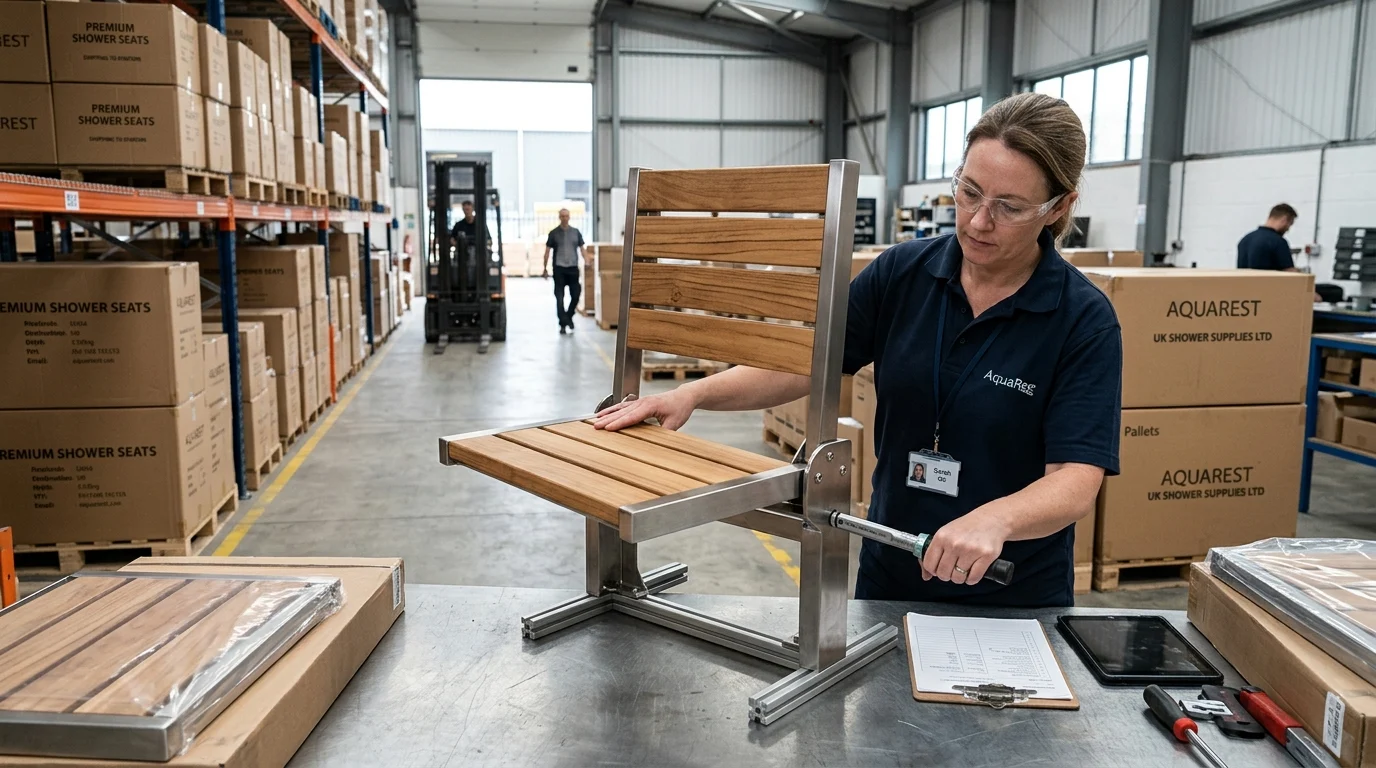
Bathroom safety has become a central concern for architects, hospitality operators, and homeowners as populations age and accessibility expectations rise. The shower seat—a seemingly simple fixture—sits at the intersection of ergonomic design, structural engineering, and wet-surface traction physics. When designed without non slip considerations, a shower seat creates a false sense of security while introducing new vectors for injury during transfer movements.
Non slip shower seat design in 2026 is no longer a feature-add; it is a discipline that spans materials science, fluid dynamics, and human biomechanics. This article provides an authoritative examination covering the scope of the safety problem, engineering mechanisms, regulatory frameworks, material selection criteria, installation requirements, maintenance protocols, and emerging design trends shaping the industry in 2026.
1. The Bathroom Fall Problem: Scope and Root Causes
Bathroom environments present a uniquely hazardous combination of hard surfaces, wet conditions, confined spaces, and dynamic body positioning. The Consumer Product Safety Commission (CPSC) reports that bathroom injuries account for approximately 235,000 emergency room visits per year in the United States alone. The World Health Organization places global bathroom fall fatalities at over 130,000 annually, with the highest rates among adults over 65.
1.1 Why Shower Seats Introduce Risk
A shower seat does not inherently prevent falls—it redistributes risk. The CDC identifies the primary fall risk factors in shower environments as:
- Wet, low-friction surfaces underfoot and on the bathing surface
- Reduced base of support during sitting and standing transitions
- Forward lean angles that shift the center of mass beyond stable footing
- Inadequate structural support leading to seat failure or unexpected tilting
- Improper seat height relative to the user’s biomechanical capacity to stand
Non slip shower seat design mitigates these risks through targeted engineering at each failure point.
1.2 The Spa Bathroom Context
Spa environments present distinct safety challenges. Multiple users per day stress surfaces and hardware. Higher-end finishes, including natural stone flooring, polished tile, and brass fixtures, often correlate with lower inherent slip resistance. Hospitality industry data from the American Hotel & Lodging Association (AHLA) identifies bathroom slip-and-fall incidents as one of the top three guest injury categories in premium spa properties, accounting for 18-22% of liability claims in this segment.
2. Engineering Non Slip: Core Design Mechanisms
Effective non slip shower seat design operates through four interlocking mechanisms: surface texture, drainage geometry, material grip properties, and structural integrity.
2.1 Surface Texture and Traction Coatings
Surface texture engineering operates on a microscopic and macroscopic level:
- Macroscopic texture refers to raised patterns, grooves, or ridges that increase the coefficient of friction (COF) by creating mechanical interference with skin contact. Industry-standard non slip shower seat surfaces achieve a dry COF of 0.8 or higher, measured per ASTM F462.
- Microscopic texture involves surface coatings or material formulations that enhance grip at the skin-to-surface interface through capillary adhesion with moisture.
- Anti-slip treatments applied to seat surfaces include polyurethane-based coatings, powder coating on metal frames, and acid-etched or laser-ablated textures on stainless steel.
| Surface Type | Dry COF (ASTM F462) | Wet COF (ASTM F462) | Typical Application |
|---|---|---|---|
| Smooth ABS plastic | 0.40-0.50 | 0.20-0.30 | Basic residential seats |
| Textured ABS with grooves | 0.65-0.75 | 0.40-0.50 | Standard wall-mounted seats |
| Non slip-coated steel | 0.80-0.90 | 0.55-0.70 | Commercial/institutional seats |
| GFRP molded texture | 0.70-0.85 | 0.50-0.65 | ADA-compliant seats |
| Teak wood slats | 0.60-0.70 | 0.35-0.50 | Luxury spa/residential |
| Laser-etched stainless steel | 0.85-1.00 | 0.60-0.80 | Premium commercial spa |
2.2 Drainage Geometry
Standing water on a shower seat creates a hydroplaning effect that reduces effective contact between skin and surface. Key drainage design principles for shower seats include:
- Longitudinal channeling: Grooves or slots running front-to-back direct water toward the shower base rather than pooling on the seat
- Peripheral collection: Raised seat perimeters or recessed drainage channels capture and redirect water from the seating surface
- Perforated seat surfaces: Laser-cut or molded drain holes maintain continuous drainage pathways even when the seat surface is partially blocked by a seated user
- Gap spacing: European standard DIN 18040-1 specifies maximum drainage gap dimensions to prevent finger entrapment while optimizing water evacuation
2.3 Structural Integrity and Load Ratings
Non slip performance is meaningless if the seat fails structurally. Industry-standard load ratings begin at 250 lbs for residential seats and 350 lbs for commercial and ADA-compliant seats. Cassbern’s wall-mounted shower seat product line offers models rated from 250 lbs to heavy-duty configurations exceeding 350 lbs.
2.4 Frame Rigidity and Wall Attachment
Quality non slip shower seat frames use stainless steel wall plates with minimum 3mm thickness, multiple-point mounting (minimum 4 bolts for wall-mounted seats), and backing plate engineering that distributes loads across the wall surface.
3. Material Science: What Non Slip Materials Work Best in Wet Environments
3.1 Stainless Steel
Stainless steel is the benchmark material for commercial spa shower seats due to structural strength and corrosion resistance. Relevant grades:
- 304 stainless steel: Most common for bathroom hardware; 18% chromium and 8% nickel, good corrosion resistance in freshwater environments.
- 316L stainless steel: Preferred for commercial spa and marine environments. Molybdenum addition (2-3%) improves chloride corrosion resistance.
- 316Ti stainless steel: Titanium-stabilized grade offering enhanced high-temperature performance.
Laser-ablated non slip textures create micro-groove patterns that maintain grip in wet conditions while preserving cleanability and antimicrobial surface properties.
3.2 Glass Fiber Reinforced Polymer (GFRP)
GFRP composite shower seats offer excellent non slip surface molding flexibility and corrosion resistance. The material can be formed with integrated non slip textures during manufacturing, eliminating post-molding coating processes. GFRP seats are widely used in commercial installations for favorable strength-to-weight ratio and seamless surfaces that reduce bacterial harboring.
3.3 Engineered Thermoplastics (ABS, Polypropylene)
ABS and polypropylene injection-molded seats dominate residential price points due to manufacturing cost efficiency. However, ABS surfaces require additive non slip coatings for competitive wet COF performance, as the material’s inherent surface energy is lower than stainless steel.
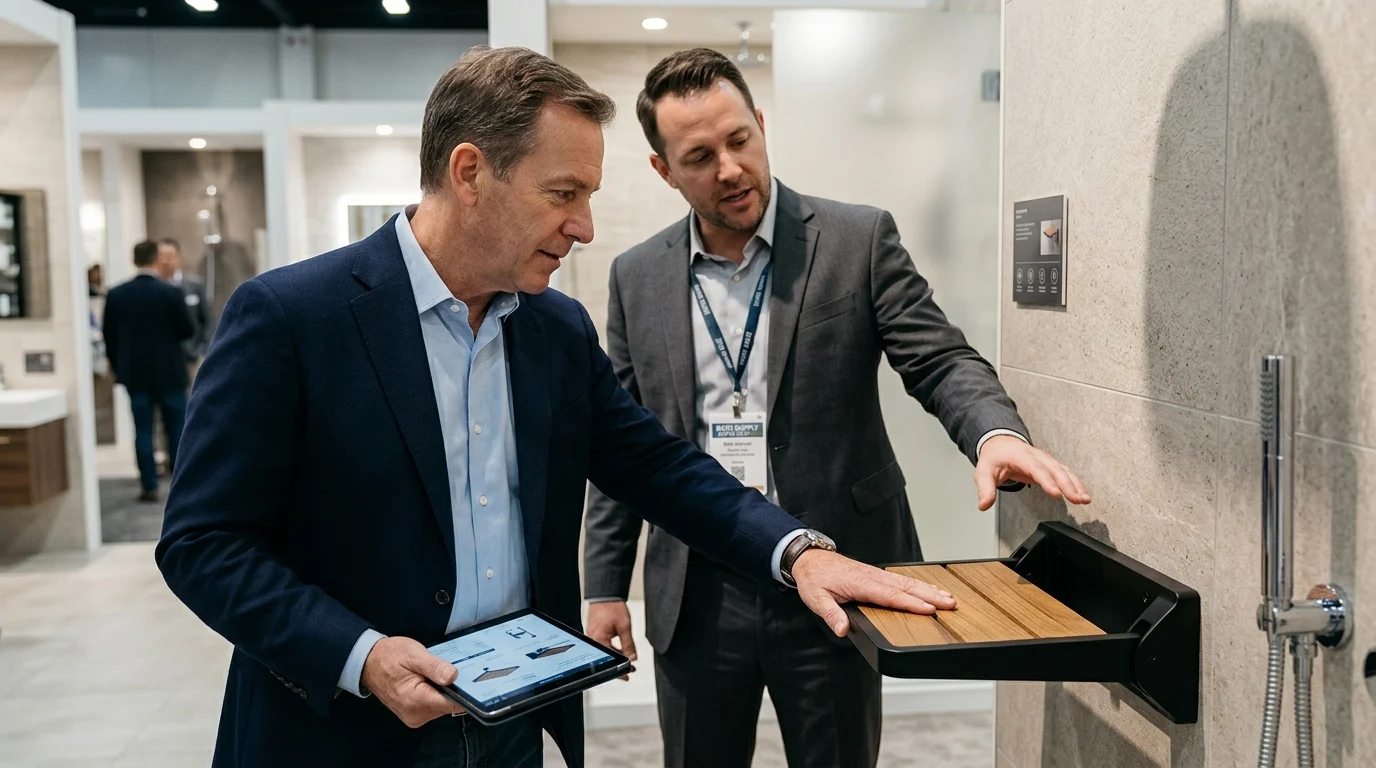
| Property | 316L Stainless Steel | GFRP Composite | ABS Thermoplastic |
|---|---|---|---|
| Wet grip (wet COF) | 0.60-0.80 | 0.50-0.65 | 0.25-0.45 (uncoated) |
| Corrosion resistance | Excellent | Very Good | Good |
| Load capacity (max) | 500+ lbs | 350 lbs | 250-300 lbs |
| Lifespan (commercial) | 15-20 years | 8-12 years | 5-8 years |
| Initial cost | High | Moderate | Low |
| Surface texture options | Laser, powder, etched | Molded-in texture | Molded-in texture |
4. Regulatory Standards: ASME, ADA, UPC, and DIN Requirements
Non slip shower seat design operates within a multi-layered regulatory framework. Compliance is mandatory for commercial installations and increasingly adopted as best practice in high-end residential installations.
4.1 ASME A112.19.2 — The Plumbing Fixture Standard
ASME A112.19.2 establishes performance criteria for shower seats including structural load requirements (250 lbs residential, 350 lbs commercial minimum), surface slip resistance COF requirements, dimensional tolerances, and mounting hardware specifications. The 2022 revision introduced enhanced non slip surface performance criteria aligned with ADA guidance.
4.2 ADA and ABA Accessibility Guidelines
The 2010 ADA Standards for Accessible Design defines minimum requirements for shower seats in public accommodations:
- Seat height: 17-19 inches (432-483 mm) from finished floor to top of seat surface
- Clear floor space: 30 by 48 inches minimum adjacent to the shower seat
- Structural attachment: Minimum 250 lbs applied vertically or horizontally at the front edge without collapse
- Seat configuration: L-shaped or corner seats are permitted; rectangular seats are prohibited in roll-in showers per Section 607.3
4.3 UPC Section 409.2 and DIN 18040-1
UPC Section 409.2 specifies wall mounting height, setback distances, wall reinforcement requirements, and installation methods preventing water penetration into wall cavities. DIN 18040-1 for international projects specifies non slip classification R9-R13 based on DIN 51130 Angle of Inclination Testing, with shower environments typically requiring minimum R10.
| Standard | Jurisdiction | Min. Load Rating | Height Requirement | Non Slip Requirement |
|---|---|---|---|---|
| ASME A112.19.2 | U.S. (plumbing) | 250 lbs res. / 350 lbs comm. | Not specified | COF per test protocol |
| 2010 ADA Standards | U.S. (public) | 250 lbs vert./horiz. at front edge | 17-19 in. seat height | Structural and clearance |
| UPC Section 409.2 | U.S. (Western states) | Per manufacturer rating | Per installation context | Wall mounting and backing |
| DIN 18040-1 | Germany / EU | Per manufacturer rating | 46-48 cm typical | R10 minimum for showers |
| ISO 17966 | International | Per manufacturer rating | 42-48 cm recommended | Surface texture guidelines |
5. Commercial Spa vs. Residential Applications: Key Differences
5.1 Commercial Spa Environments
Commercial spa properties operate under regulatory requirements for public safety, hygiene, and accessibility. Key considerations:
- High-frequency use: Commercial seats must maintain slip resistance through thousands of use cycles without surface degradation
- Antimicrobial surface requirements: Copper-impregnated surfaces, silver-ion additives in GFRP gelcoat, and antimicrobial powder coatings reduce bacterial harboring
- ADA compliance: Public-access shower facilities require compliant seat geometry, mounting, and clearance regardless of commercial classification
- Impact-resistant edges: Seat edges must resist impact damage from accidental contact in multi-user environments
- Insurance and liability: Shower seat selection is scrutinized during risk audits; documented compliance to ASME A112.19.2 and ADA provides liability defense
5.2 High-End Residential Spa Bathrooms
Luxury residential installations balance safety with aesthetic integration:
- Aesthetic cohesion: Shower seats in high-end residential installations are specified in finishes complementing overall bathroom design
- ADA-aligned geometry as premium feature: Many upscale residential projects incorporate ADA-compliant seat heights and clearance spaces as standard features
- Teak and natural material integration: Natural wood requires significantly more maintenance to preserve non slip performance; wood surfaces wear smooth and absorb water over time
6. Installation Best Practices for Optimal Non Slip Performance
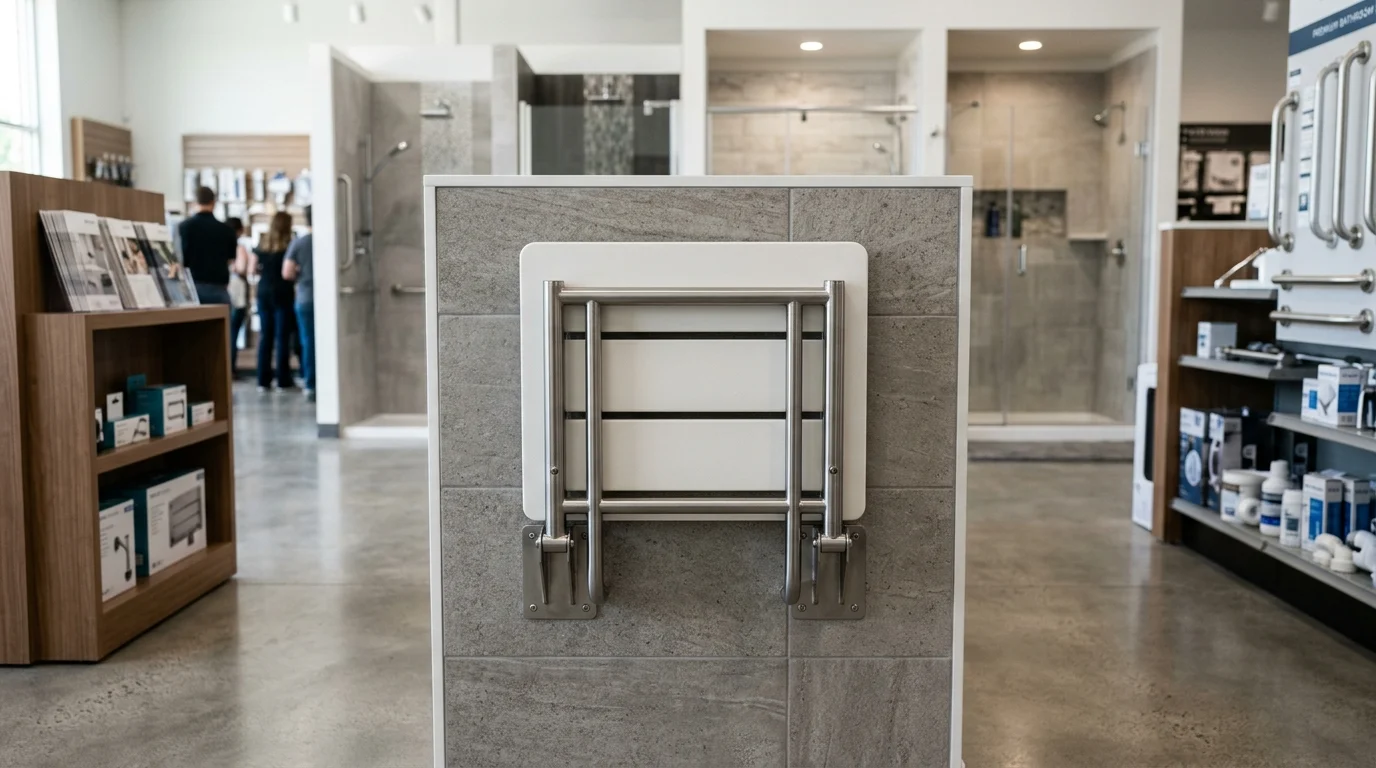
Even the best non slip shower seat design can underperform or fail if installation does not address the specific conditions of the installation site.
6.1 Wall Substrate Assessment and Reinforcement
The wall substrate is the primary structural determinant of shower seat performance. Before installation:
- Identify wall composition: Concrete, masonry, and solid wood stud walls can support standard mounting. Hollow wall constructions require blocking, backing plates, or specialized anchoring systems
- Install backing reinforcement: Wood-frame walls require 3/4-inch minimum structural wood panel or solid wood blocking between studs per 2018 IRC Section R320.4
- Use appropriate anchors: For concrete and masonry walls, use expansion anchors or epoxy-set threaded inserts rated for the seat’s load rating
6.2 Mounting Height and Position
ADA-compliant mounting height for shower seats is 17-19 inches from the finished floor. For non-ADA residential installations:
- 17-18 inches: Accommodates most users transitioning from a seated toilet position
- 15-17 inches: Preferred for users with knee-replacement recovery or severe hip mobility limitations
- 19-21 inches: Appropriate for taller users or those with knee pain requiring less hip flexion to stand
6.3 Integration with Shower Enclosure and Grab Bars
Research from the Journal of Safety Research indicates that shower seats combined with adjacent grab bars reduce fall risk during transfer by 34% compared to seats used alone. Cassbern offers complementary bathroom grab bars in corrosion-resistant 304 stainless steel, which can be integrated with shower seat installations for comprehensive safety systems.
7. Maintenance Protocols for Sustained Non Slip Performance
Non slip shower seat surfaces lose effectiveness over time due to soap and mineral residue buildup, surface abrasion from cleaning, and chemical degradation of coatings or surface treatments.
7.1 Cleaning Regimen
- Daily: Rinse the seat surface with fresh water to remove soap residue
- Weekly: Use a soft brush with pH-neutral cleaner to remove calcium and soap film buildup from texture grooves
- Monthly: Examine the seat surface, mounting hardware, and frame connections for signs of loosening, corrosion, or coating delamination
7.2 Surface Restoration
- For textured metal surfaces: Reapply a food-safe non slip coating certified per ASTM F462 to restore surface grip
- For molded composite surfaces: Surface restoration may require replacement of worn components rather than refinishing
- For wood surfaces: Sand with 220-grit minimum sandpaper and apply marine-grade penetrating oil treatment. Wood seat replacement should be scheduled every 3-5 years in commercial wet environments
8. 2026 Design Trends in Non Slip Shower Seat Engineering
8.1 Laser-Ablated Surface Textures
Laser ablation technology has migrated to shower seat surface treatment. Laser-ablated textures create precise micro-groove patterns on stainless steel surfaces with controlled depth, spacing, and geometry. These patterns achieve wet COF values exceeding 0.70 while maintaining cleanability and corrosion resistance.
8.2 Nano-Coating and Photocatalytic Surface Treatments
Advanced nano-coating technologies offer dual-function benefits:
- Hydrophobic properties: Nano-scale surface chemistry creates water-beading behavior that reduces surface wetness and associated slip risk
- Photocatalytic self-cleaning: Titanium dioxide-based nano-coatings break down organic soil and soap residue when activated by light
8.3 Sustainable Composite Materials
GFRP seats using recycled glass content and bio-derived polymer formulations incorporating rice hull or bamboo fiber are entering the market. LEED v4.1 and BREEAM certification systems provide credits for products with recycled content and environmental product declarations (EPDs).
8.4 Modular and Accessible Design Systems
Modular non slip shower seat systems allow flush-mounted installation eliminating gaps and projection hazards, integration with heated surface technology, consistent aesthetic coordination across the shower enclosure, and simplified replacement without wall reconstruction.
Conclusion
Non slip shower seat design in 2026 represents a convergence of materials science, structural engineering, regulatory compliance, and human-centered design. The safety mechanism operates through integrated surface traction systems—a layered combination of textured surfaces, drainage geometry, material grip properties, and load-rated structural systems.
For commercial spa environments, non slip shower seats must meet ASME A112.19.2, ADA accessibility requirements, and applicable plumbing codes while delivering high-frequency durability and antimicrobial performance. For luxury residential installations, emphasis is on aesthetic integration, premium materials, and ADA-aligned geometry supporting aging-in-place design philosophy.
Material selection should align with the installation context’s load requirements, maintenance capacity, and budget parameters. Regardless of material, proper installation on a structurally reinforced wall substrate is non-negotiable for safe performance. Maintenance of non slip performance is an ongoing obligation—systematic cleaning and periodic inspection are essential.
As laser-textured surfaces, nano-coating technologies, and sustainable composite materials mature, the performance ceiling for non slip shower seats continues to rise.
7 Frequently Asked Questions
1. What makes a shower seat non slip rather than just textured?
Non slip performance results from the interaction of surface texture, material surface energy, and drainage geometry. A textured surface alone—a stamped pattern in plastic—provides limited wet grip. True non slip design integrates high-friction surface treatments, drainage channels preventing hydroplaning, and materials with inherently high surface energy that create capillary adhesion with moist skin. Effective non slip shower seats achieve wet COF values of 0.50 or higher per ASTM F462.
2. Are all wall-mounted shower seats ADA-compliant?
No. Wall-mounted shower seats must meet specific geometric requirements—seat height of 17-19 inches, structural attachment capable of withstanding 250 lbs applied in any direction at the front edge, and clear floor space adjacent to the seat—to be considered ADA-compliant. Many residential and decorative shower seats are not designed to these specifications.
3. How much weight can a non slip shower seat support?
Residential shower seats typically carry load ratings of 250-300 lbs. Commercial and heavy-duty models are rated at 350-500 lbs. The load rating applies to the entire system—the seat surface, frame, mounting hardware, and wall attachment combined—not just the seat surface.
4. What is the difference between a shower stool and a wall-mounted shower seat?
A shower stool is a free-standing, four-legged assistive device sitting on the shower floor. A wall-mounted shower seat is fixed to the wall and folds up when not in use. Shower stools are portable but floor contact points create trip hazards and stability is lower than wall-mounted seats. Wall-mounted seats provide superior stability through rigid wall attachment, offer higher load capacities, and do not occupy floor space when folded.
5. How do I maintain non slip performance on a stainless steel shower seat?
Stainless steel shower seats maintain non slip performance through passive and active maintenance. Passive maintenance involves selecting passivated or electropolished stainless steel, which forms a chromium oxide surface layer that resists corrosion. Active maintenance includes weekly cleaning with non abrasive stainless steel cleaners, periodic inspection of mounting hardware, and reapplication of non slip coatings if surfaces show wear. Avoid chloride-based cleaners on stainless steel, as they cause pitting corrosion.
6. Do shower seats in hotel spas need to meet ADA requirements?
Hotels, resorts, and other places of public accommodation in the United States are required to provide accessible guest rooms with compliant shower facilities under the ADA. The scope of ADA compliance depends on facility classification, renovation history, and specific shower configurations. An accessibility audit by a qualified professional is recommended for commercial spa properties.
7. Can teak wood shower seats provide adequate non slip performance?
Teak wood has natural non slip properties due to high silica content and wood grain texture. Wet COF values for new teak surfaces range from 0.35 to 0.50—lower than engineered non slip surfaces but superior to smooth plastic or polished metal. However, teak’s non slip performance degrades significantly as the surface weathers and accumulates soap residue. In high-humidity shower environments, teak requires re-sanding and re-oiling every 6-12 months.


