

Introduction
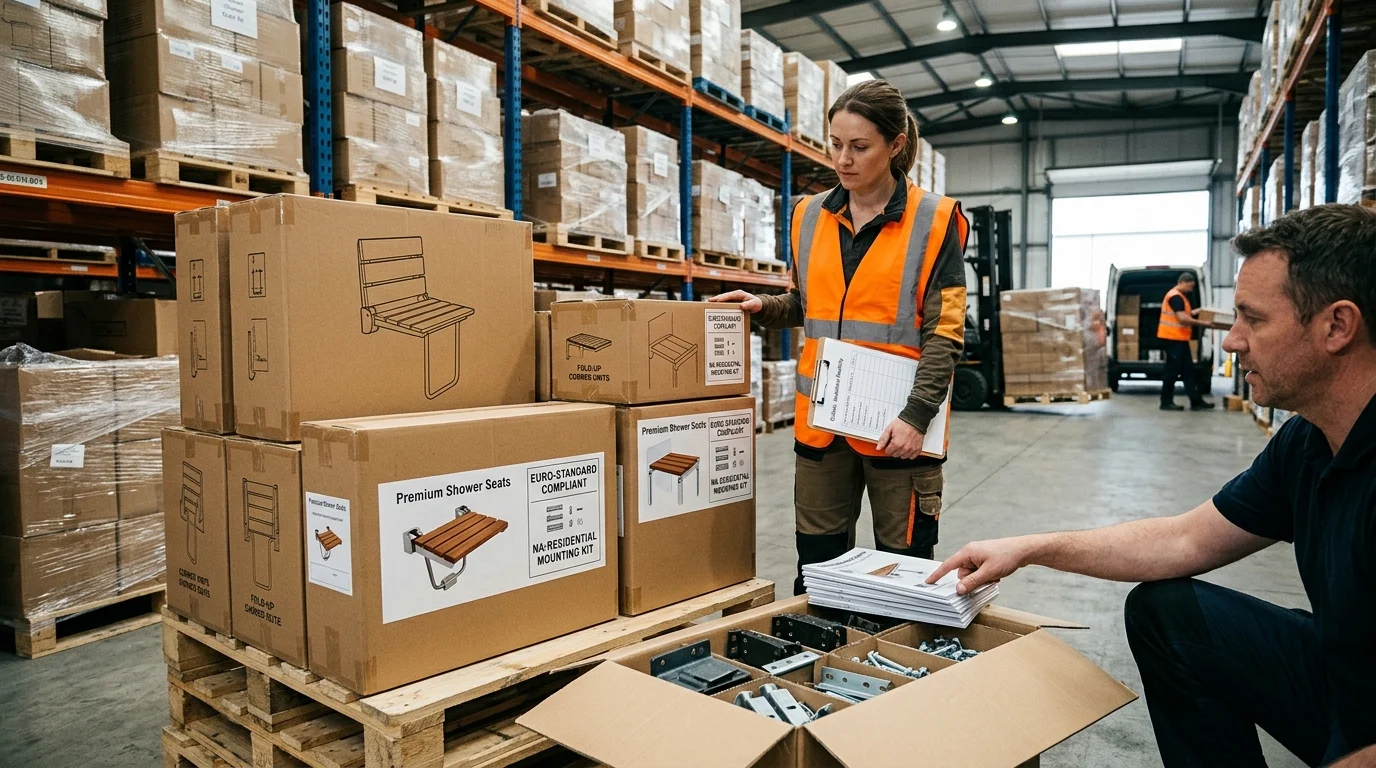
Specifying premium shower seats for North American and European projects requires more than selecting a refined finish or fold-down profile. Installation details must respond to different wall assemblies, substrate strengths, moisture-management standards, and accessibility requirements, especially in hospitality, luxury residential, and assisted-living environments. This article examines how custom installation solutions align seat performance with regional construction methods, helping architects, designers, and specifiers assess load support, code implications, and integration with high-end bathroom design. The result is a clearer framework for choosing systems that balance safety, durability, and aesthetics before moving into project-specific technical considerations.
Why Premium Shower Seats Are a Strategic Specification
The specification of shower seating in commercial and high-end residential architecture has evolved from a purely functional afterthought to a critical component of universal design. Premium shower seats now demand rigorous evaluation of structural integrity, moisture resistance, and architectural integration.
For architects and specifiers, treating these fixtures as strategic structural elements rather than generic accessories mitigates liability and elevates the user experience. This approach requires navigating complex variables, from load-bearing wall compositions to international accessibility codes.
Market drivers
The shift toward aging-in-place and inclusive hospitality design fundamentally alters procurement strategies. The global market for high-end, ADA-compliant bath accessories is expanding at an estimated 8.5% compound annual growth rate (CAGR).
This growth is heavily influenced by demographic shifts, notably the projection that over 20% of the North American population will exceed 65 years of age by 2030. Consequently, there is an escalating demand for architectural spaces that blend clinical safety with luxury aesthetics, completely avoiding the institutional appearance of legacy mobility aids.
Key project types
High-end residential builds, Tier-1 hospitality venues, and premium assisted-living facilities represent the primary verticals driving innovation in this sector. In the hospitality industry, designers seek to eliminate the stigma of traditional accessibility equipment by specifying concealed, fold-down units featuring bespoke finishes like brushed brass, matte black powder coating, or polished chrome.
In high-density luxury residential projects, space optimization is paramount. Fold-away premium seats allow compact urban shower enclosures to maintain a minimalist footprint while offering full accessibility compliance when deployed. Healthcare and assisted living environments prioritize infection control alongside aesthetics, driving the use of non-porous, highly durable surface materials.
What Defines a Premium Shower Seat
Distinguishing a premium shower seat from commodity hardware requires analyzing material composition, load-bearing architecture, and mounting adaptability. The premium tier is defined by its ability to perform flawlessly in high-moisture environments without compromising structural safety or visual appeal.
Materials and performance
High-grade systems abandon tubular aluminum and porous plastics in favor of 304 or 316L marine-grade stainless steel frames. These are typically coupled with seating surfaces crafted from phenolic resin, solid surface acrylics, or sustainably sourced teak.
A defining performance metric for premium units is a static load capacity exceeding 500 lbs (227 kg), significantly surpassing baseline regulatory minimums. Furthermore, premium hinge mechanisms utilize soft-close gas struts or precision-machined friction hinges to prevent sudden drops, enhancing user safety and product longevity.
Installation requirements
Structural variations between North American and European construction dictate distinct mounting solutions, heavily influencing product selection. North American installations predominantly rely on 2×6 or 2×8 timber blocking installed between 16-inch on-center wood or metal studs, positioned directly behind the waterproofing membrane.
Conversely, European architectural structures frequently utilize aerated concrete, hollow block, or solid masonry. These substrates require specialized chemical anchors and threaded rods rated for a minimum 15 kN pull-out force to ensure absolute structural stability under dynamic human loads.
Product comparison
Evaluating these tiers requires a direct comparison of physical and operational specifications to justify the capital expenditure.
Feature | Standard Commodity Seat | Premium Architectural Seat |
Frame Material | Powder-coated aluminum | 304 / 316L Stainless Steel |
Static Load Rating | 250 lbs (113 kg) | 500+ lbs (227+ kg) |
Hinge Mechanism | Basic friction-based | Soft-close gas struts |
Fastening System | Standard lag screws | Concealed flanges, chemical anchors |
Expected Lifespan | 3–5 years | 15+ years |
The stark contrast in load ratings and lifespan underscores why premium units are specified for environments requiring long-term reliability and zero maintenance overhead.
Codes, Accessibility, and Liability Considerations
Regulatory compliance and liability mitigation form the backbone of premium shower seat specification. The catastrophic failure of a load-bearing sanitary fixture presents severe injury risks and subsequent legal exposure for architects, general contractors, and facility owners.
Applicable standards
In North America, the Americans with Disabilities Act Accessibility Guidelines (ADAAG) and ANSI A117.1 dictate dimensional and structural baseline requirements. ADAAG mandates that shower seats must withstand a vertical or horizontal force of 250 lbs applied at any point.
However, to proactively mitigate liability in commercial settings, premium specifications routinely demand independent laboratory testing verifying structural failure thresholds well above 900 lbs. In European jurisdictions, adherence to EN 16139 for furniture strength and durability provides an equivalent layer of regulatory assurance and mechanical validation.
Required documentation
Procurement in commercial projects necessitates rigorous certification and traceable compliance data. Suppliers must provide Professional Engineer (PE) stamped mounting details that correspond to specific wall assemblies.
Furthermore, dynamic load testing certificates from accredited third-party laboratories and ISO 9001 documentation for manufacturing consistency are standard submittal requirements. For healthcare environments, additional documentation proving antimicrobial efficacy and material resistance to harsh hospital-grade disinfectants is often mandatory before specification approval.
Sourcing, Installation, and Total Cost
The total cost of ownership (TCO) for premium shower seats encompasses initial unit pricing, specialized installation labor, and long-term maintenance. Efficient sourcing and flawless installation workflows are critical to protecting the structural investment and preventing moisture-related building failures.
Supplier evaluation
Selecting a manufacturing partner requires assessing their capacity for custom finishes, logistical reliability, and quality control. Commercial suppliers typically operate with a Minimum Order Quantity (MOQ) of 50 to 100 units for custom Physical Vapor Deposition (PVD) finishes.
Lead times for these customized architectural runs generally range from 8 to 12 weeks. Evaluating a supplier’s manufacturing defect rate—ideally maintained below a strict 0.5% threshold—is crucial for minimizing project delays on large-scale hospitality or residential developments.
Installation workflow
The installation of wall-mounted seating must integrate seamlessly with modern, continuous waterproofing systems. The workflow demands precise coordination between framing carpenters, tile setters, and finish plumbers.
Fastener penetrations through the waterproofing membrane must be injected with specialized elastomeric sealants before driving the lag bolts or anchors. Failure to properly seal these penetrations invites moisture ingress, which can rapidly rot the structural blocking and cause catastrophic seat failure within a few years of installation.
Cost comparison
A holistic view of project costs reveals why premium units often present a superior long-term value despite higher initial capital expenditures.
Cost Component | Standard Seat (Per Unit) | Premium Seat (Per Unit) |
Initial Hardware Cost | $150 – $300 | $600 – $1,200 |
Installation Labor | $100 (Standard mounting) | $250 (Requires custom blocking) |
10-Year Replacement | 2 replacements ($300+) | 0 replacements ($0) |
10-Year TCO | $550 – $700+ | $850 – $1,450 |
While the premium tier requires roughly double the upfront investment in hardware and labor, the extended lifecycle, enhanced safety profile, and elimination of ongoing replacement labor bridge the financial gap over a standard ten-year operational window.
Decision Framework for Product Selection
Selecting the optimal premium shower seat requires a structured framework that balances architectural aesthetics with unyielding structural realities. Stakeholders must align on performance criteria early in the schematic design phase to avoid costly late-stage structural modifications or compliance failures.
Selection criteria
Key specification variables include wall composition, continuous moisture exposure ratings, and the mechanical reliability of fold-away components. For instance, premium folding mechanisms utilizing soft-close gas struts must be independently cycle-tested to a minimum of 50,000 deployment cycles to ensure longevity in high-traffic commercial environments.
Designers must also evaluate the seat’s retracted profile depth. Ensuring the folded unit does not protrude beyond acceptable limits is vital to maintaining ADA turning radius clearances within the shower enclosure, a common oversight that can lead to failed building inspections.
Recommendations by stakeholder
Architects and interior designers should prioritize units offering concealed mounting flanges and custom PVD finishes that perfectly match surrounding plumbing fixtures, ensuring a cohesive design language. General contractors must focus strictly on hardware compatibility, verifying that the manufacturer provides appropriate, certified fastening systems for the specific substrate.
Finally, facility managers should mandate non-porous seating surfaces, such as high-pressure phenolic resin. These materials resist biofilm accumulation, withstand aggressive daily sanitation protocols without degrading, and ultimately reduce the long-term maintenance burden on janitorial staff.
Key Takeaways
- The most important conclusions and rationale for Premium Shower Seats
- Specs, compliance, and risk checks worth validating before you commit
- Practical next steps and caveats readers can apply immediately
Frequently Asked Questions
What wall types need different shower seat installation methods?
North American wood or metal stud walls usually need 2×6 or 2×8 blocking. European masonry, hollow block, or aerated concrete typically need chemical anchors and threaded rods rated for the substrate.
What load rating should a premium shower seat meet?
For premium projects, specify at least 500 lbs static load capacity. This exceeds common minimum code expectations and better supports high-end residential, hospitality, and assisted-living use.
Which materials are best for premium shower seats?
Choose 304 or 316L stainless steel frames with non-porous seat surfaces like phenolic resin, solid surface acrylic, or teak. These resist moisture, wear, and corrosion better than basic aluminum or plastic.
How can a shower seat match a modern Cassbern bathroom style?
Use fold-down designs with concealed hardware and refined finishes like brushed brass, matte black, or polished chrome. This keeps the shower elegant, space-conscious, and aligned with Cassbern’s modern luxury aesthetic.
Why is professional installation important for wall-mounted shower seats?
These seats are load-bearing fixtures, not simple accessories. A qualified installer can verify blocking, anchor choice, waterproofing protection, and code alignment to reduce failure risk and liability.


